Logistics, Trade, Technological Potential: Eurasian Intergovernmental Council meeting held in Minsk
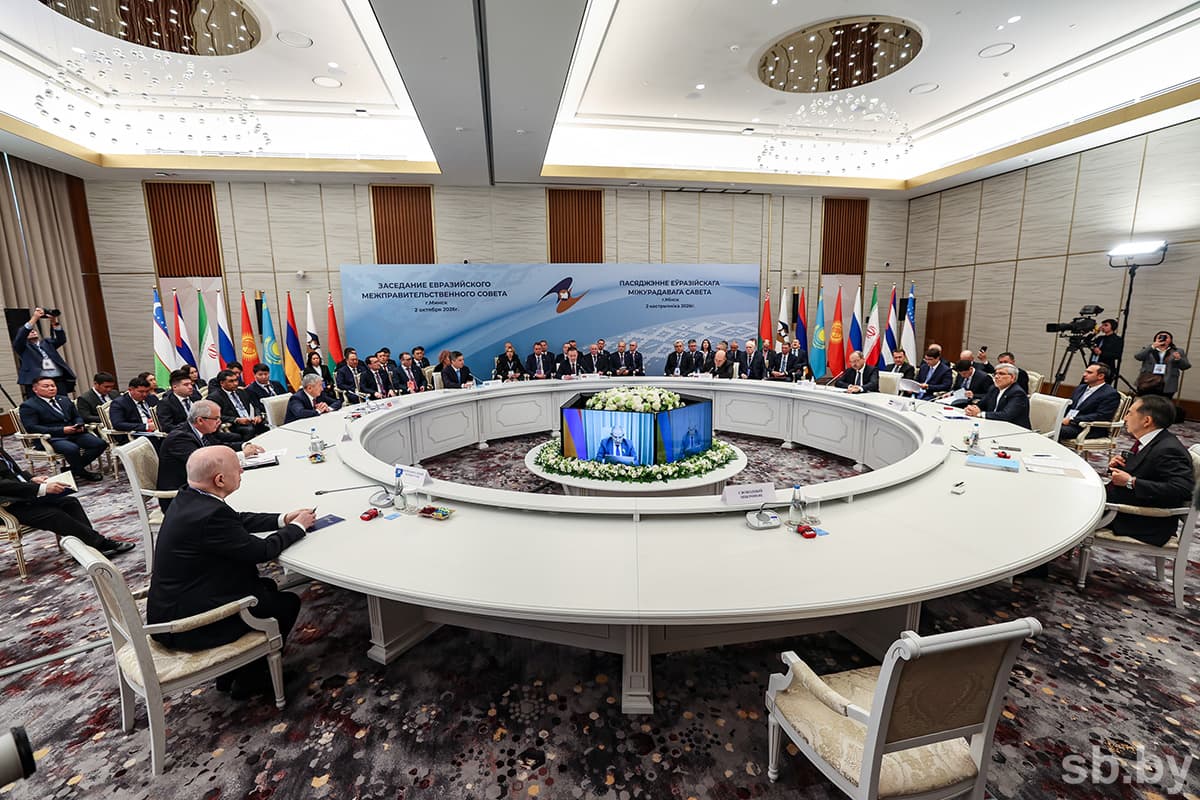
On October 2, a meeting of the Eurasian Intergovernmental Council was held in Minsk. The agenda of the event included 15 issues, including in the field of trade.
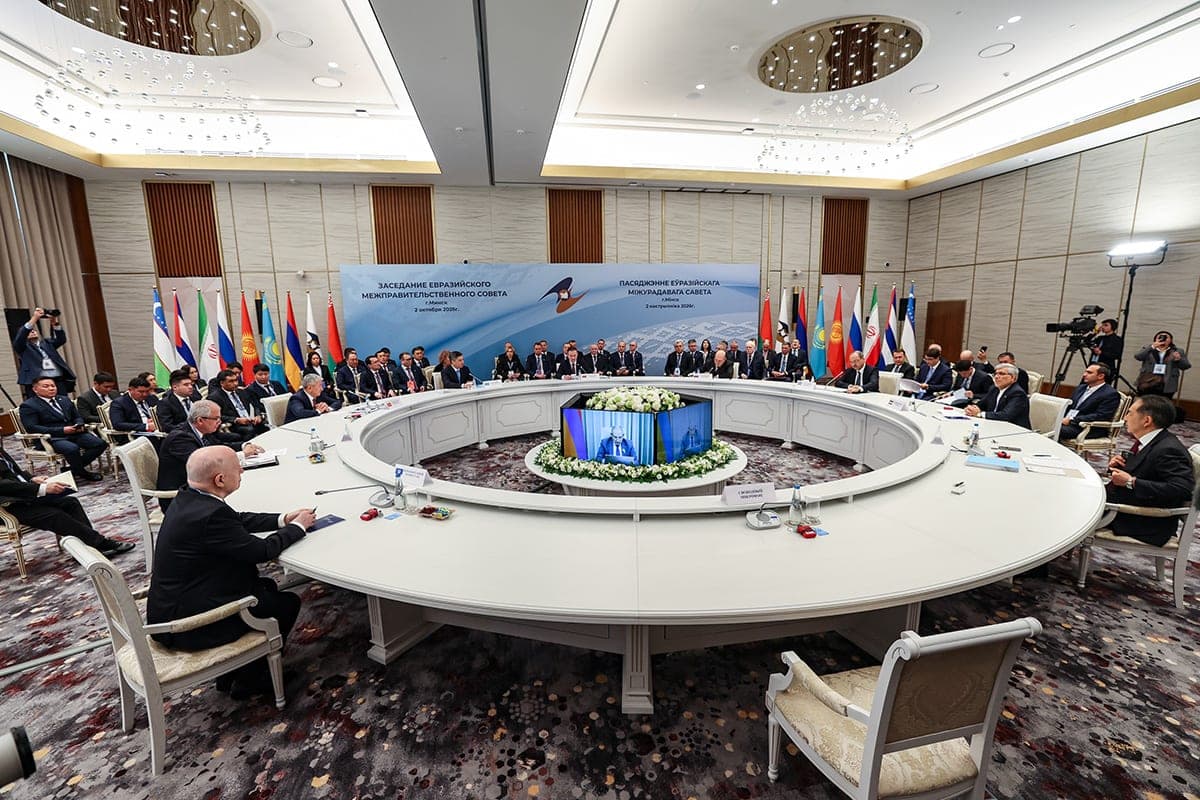
On October 2, a meeting of the Eurasian Intergovernmental Council was held in Minsk. The agenda of the event included 15 issues, including trade, industry, customs cooperation, financial policy, electricity market, transport and logistics. The meeting was held in a narrow and expanded format.
In turn, the Prime Minister of Kazakhstan Olzhas Bektenov noted that he expects that the results of the work will contribute to the solution of the tasks facing the countries of the Union:
- During the meeting in a narrow format, we will discuss a number of issues related to the EAEU foreign trade, transport connectivity of our states, as well as certain issues initiated by the member states that are important for the development of the economies of our states and increasing competitiveness. I look forward to a constructive and open exchange of views on the issues under consideration.
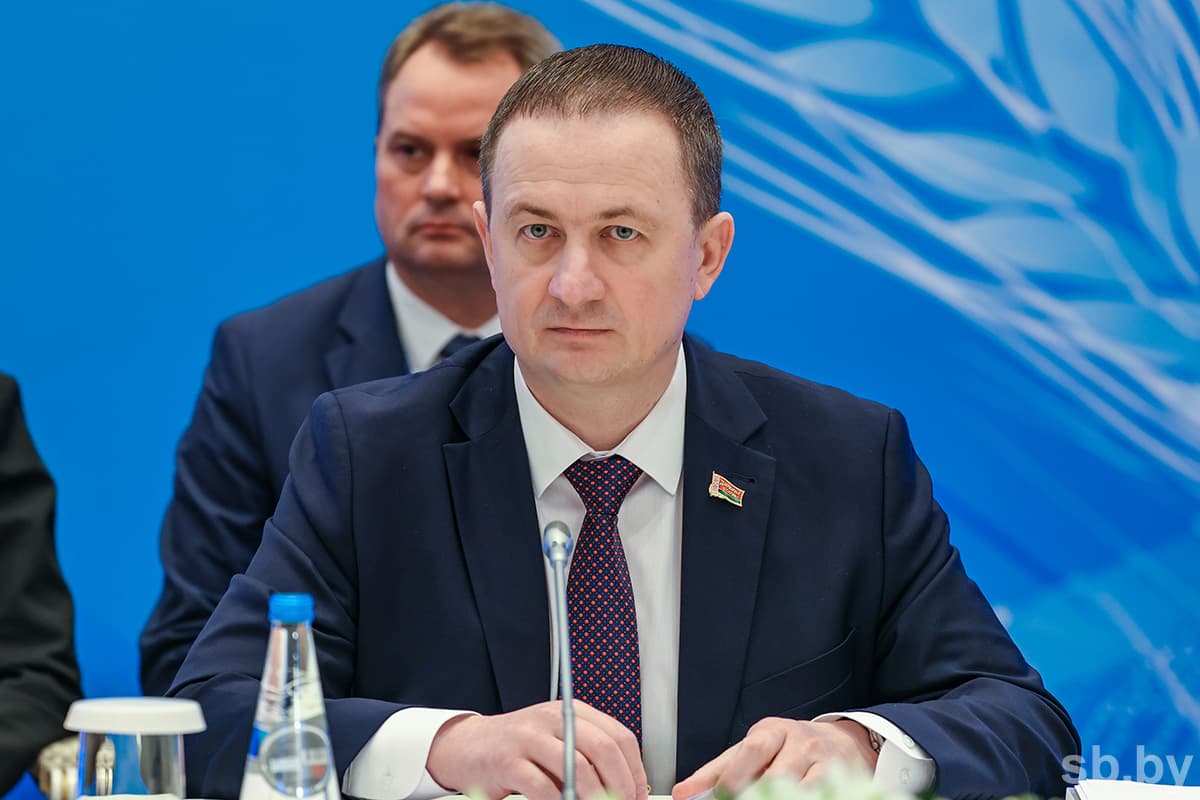
- Industry is the main foundation of economic stability and technological sovereignty of any state. Our industrial potential is growing at a faster pace and can be a locomotive of Eurasian industrial cooperation. Each of us has our own strengths, high competencies in a particular area. The priority task is to combine them competently and turn this potential into joint products, technologies and new markets.
To implement this, he put forward a number of proposals. The first is to reset the approach to industrial cooperation:
- Belarus sees significant potential for joint work in mechanical engineering, production of components and equipment, microelectronics, chemical industry, pharmaceuticals, biotechnologies, new materials and information technologies. However, the main criterion for the effectiveness of our work should not be the list of areas, but the emergence of real joint projects and products that are competitive both in the EAEU market and in foreign markets.
Oleksandr Turchin noted that within the framework of the EAEU, the first steps for this have been taken - the pilot mechanism for financing joint cooperation projects has been operating for the third year:
- However, in practice, its weaknesses have been identified. The administrative burden and lengthy procedures for selecting ECE projects reduce the attractiveness of the mechanism for medium-sized businesses. There are questions about the projects themselves – the lack of an innovative component, duplicating production. Any project should begin not with a search for a formal number of participants, but with a specific economic task: who will be the consumer of products, what competencies are needed, where production will be organized and what the final market will be. I believe that approaches to the financing mechanism for all or individual groups of cooperation projects can be improved without waiting for the pilot project to be completed. Moreover, the funds for this are in the budget of the Union.
In addition, the Prime Minister of Belarus proposed to create a conveyor from a scientific idea to serial production. According to him, the production of complex products requires not only production facilities, but also engineering solutions, software, modern materials and testing facilities. The EAEU already has scientific organizations, engineering schools, industrial enterprises and financial instruments. But there is still a gap between development and industrial implementation.
Eurasian technology platforms should not be a platform for discussion, but a mechanism for preparing a specific product. The result can be a prototype, a new technology, an industrial order or a ready-made production chain, Alexander Turchin said.
The head of the Belarusian government also proposed to make artificial intelligence a tool for productivity growth:
The EAEU countries have already outlined a common position on the responsible development of artificial intelligence. The next step is to move to industrial pilots. The most promising use of AI where the effect can be measured: in quality control, forecasting the condition of equipment, optimization of production modes, inventory management and energy consumption.
However, he urged not to compete in the number of such projects. We need solutions that reduce costs, reduce downtime and allow us to create new competitive products. Belarus has the necessary potential to participate in this work, combining the competences of residents of the High Technologies Park, academic science and IT departments of large industrial flagships.
Another proposal is to turn transport corridors into digital production and logistics chains
Logistics is the circulatory system of industry. It is no coincidence that today the three issues that have been identified for consideration are aimed at the development of Eurasian transport corridors.
Alexander Turchin drew attention to the fact that elements of the digital environment are being formed in the EAEU: navigation seals are being introduced, electronic data exchange is developing, and work is underway to digitalize multimodal transportation. The next challenge is to connect these solutions.
- It is necessary to move to a model in which the movement of goods, components and accompanying documents is carried out in a single digital information environment along the entire route: traceability of the movement of components, reducing the time of customs procedures, reducing the risk of delays, controlling the entire supply chain.
He also highlighted the protection of the EAEU internal market:
- Over the past few years, there has been a steady increase in interest in the EAEU market from third countries. This is reflected in the gradual increase in supply volumes, which puts a tangible competitive pressure on domestic producers in a number of industries. The EAEU provides for various mechanisms to restrict the import of foreign goods, if such imports carry significant risks for business entities of the member states of the Union. However, countries often impose unilateral non-tariff measures, since the introduction of protection for five countries is usually a longer and more complex procedure. So maybe we should move faster to five countries, rather than continue to segment in a national format?
He noted that technical regulation measures are an effective tool for protection. Here, the Commission should bring together all participating countries and develop agreed approaches in the field of standardization, conformity assessment and quality control.
- Today, a new type of integration is needed – integration in which science knows the needs of industry, financing follows the promising product, digital technologies increase productivity, and logistics and the common market provide scalability. The Union is ready for the implementation of such a large-scale task. We need only our united firm will to go along this path, Alexander Turchin summed up. The Chairman of the Board of the Eurasian Economic Commission Bakytzhan Sagintayev after the meeting of the Eurasian Intergovernmental Council in Minsk told reporters that the next meeting of the Eurasian Intergovernmental Council will be held in December in Moscow. He also said that during the current meeting of the heads of governments of the EAEU, a number of significant issues were considered:
- These are primarily trade, customs administration, transport infrastructure, industrial cooperation, the formation of common energy markets, the development of the agro-industrial complex.
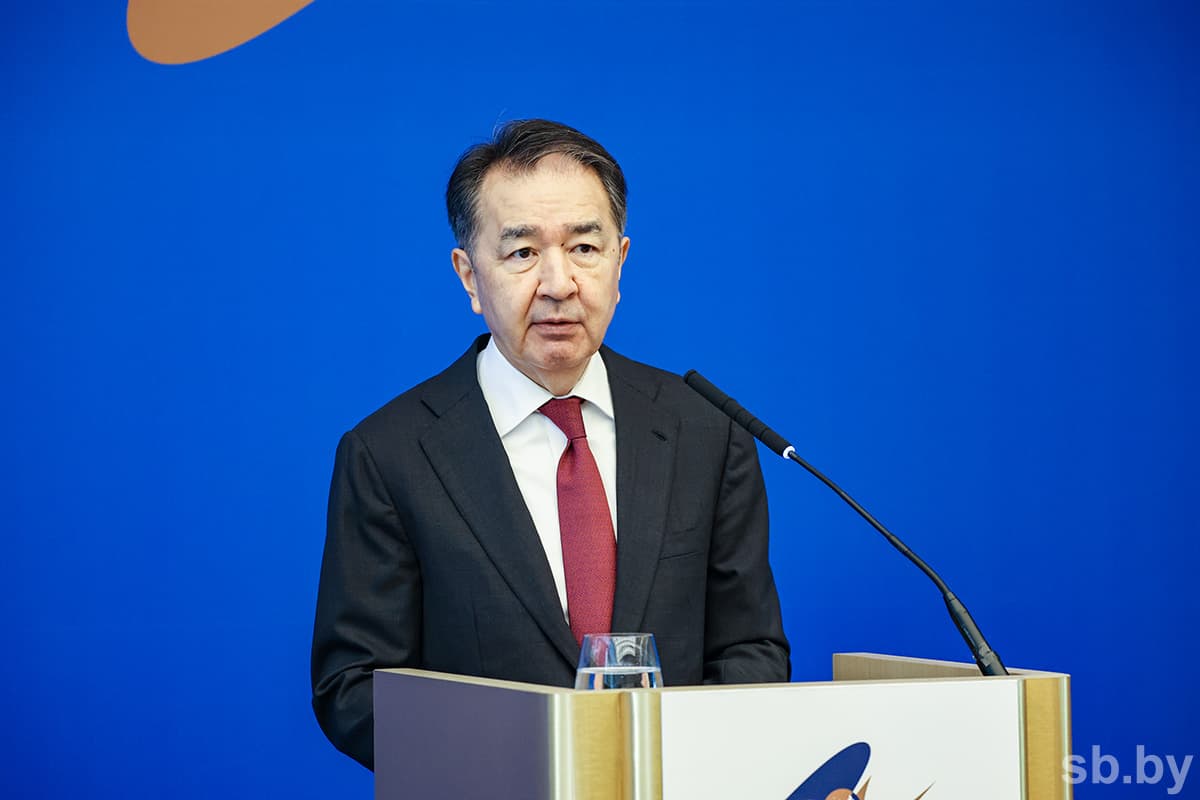
Bakytzhan Sagintayev noted that the heads of government were informed about the state of mutual trade within the EAEU. So, in 2025, this figure amounted to about $96 billion. Growth in comparison with 2020 is 74 percent, or 2 times the level of 2015. Mutual supplies of food and agricultural raw materials increased by 23 percent.
- At the same time, the EAEU continues to work on the development of cooperation ties between production complexes. This is one of the key factors in the systematic use of integration potential. Last year, the volume of mutual trade in cooperative goods approached $36 billion. At the same time, the share of settlements in national currencies has increased. This figure has already reached 95 percent, the speaker stressed.
According to him, the union consistently strengthens technological sovereignty. Exports of high-tech products increased by 10 percent over the year. The main contribution was provided by the electronic and pharmaceutical industries. Speaking about cooperation in industry and agriculture, Bakytzhan Sagintayev noted that in 2025 the total production volume increased by 1.5 percent, while the manufacturing sector showed an increase of 3 percent:
- The main result of 2025 was the transition to the practical plane of the program of financing joint cooperation projects. Since the beginning of the implementation of the mechanism, the EEC has received 23 applications with the participation of enterprises from all EAEU countries. Six projects are already being implemented, two more are being prepared for launch.
In parallel with the consideration of draft applications, systematic work is being carried out to raise awareness of business and financial organizations, including advisory support to enterprises in finding partners and forming production chains.
- As for the agricultural sector, the Intergovernmental Council approved forecasts for the development of the agro-industrial complex and the balance of demand and supply of agricultural products for 2026-2027. This document is aimed at ensuring the balance of the common market, using the potential of the member states for the development of mutual trade, the creation of new industries, said Bakytzhan Sagintayev.
The speaker said that in terms of expanding transport and logistics capabilities, the heads of government considered the development of transport infrastructure in the East-West and North-South directions:
- In particular, within the framework of the interface with the Chinese Belt and Road Initiative. The EAEU is actively forming a common transport space. One of the key areas of this work is the development of Eurasian transport corridors, including railway, road and port infrastructure. They account for about 70 percent of the volume of transit cargo traffic, so synchronization in the development of the national sections of the transport infrastructure of each country is very important.
Bakytzhan Sagintayev noted that in 2025, an increase in transportation was recorded in almost all EAEU member states. In particular, 21.5 million tons of cargo were transported along the North-South corridor. The dynamics of the Trans-Caspian route in terms of sea transportation is impressive: for 7 months of 2026, their volume exceeded 4.5 million tons. For comparison: this is 60 percent more than for the whole of 2025.
- According to expert estimates, the modernization of infrastructure will increase the capacity of the eastern route of this corridor to 20 million tons by 2030. This direction has great prospects given our interaction with China, Iran, the UAE, Mongolia, the speaker said.
The second stage of implementation of electronic document management in the seaports of Russia and Kazakhstan has been completed.
- Paper documents are in the past. The introduction of digital tools simplifies procedures and reduces costs for business, ensures maximum acceleration of the movement of goods. The Intergovernmental Council also approved a package of decisions on the formation of a common electricity market. The amendments touched upon the rules of mutual trade, electricity, information exchange and determination of capacity, interstate power lines. The adoption of these documents is a necessary condition for the actual launch of the common energy market from January 1, 2027, Bakytzhan Sagintayev summed up.
DIRECT SPEECH
Member of the Board (Minister) on Competition and Antimonopoly Regulation of the Eurasian Economic Commission Maxim ERMOLOVICH:
- The EAEU has a sufficiently developed system of cooperation between countries in the field of public procurement and the digitalization of these processes is actively developing. This really gives significant effects due to the fact that there are more participants. Digitalization, for example, in Kazakhstan led to an average increase in the number of participants in competitive procurement by half. This digitalization is seen by countries as a process of increasing competition in public procurement, which should lead to lower prices and improve the quality of budget expenditures, their efficiency.
However, in the process of digitalization, certain difficulties arise. Remote participation in public procurement by both the customer and the supplier is associated with the signing of documents by electronic digital signature (EDS). This problem has arisen recently. If earlier systems accepted documents in paper form, along with electronic, now they switch only to electronic format. It is critically important, while this transition period is in progress, to establish a system for the mutual recognition of electronic digital signatures, which is what ECE is doing. The challenge is to ensure the mutual recognition of digital signatures by all five countries.
Due to technical difficulties, it turned out to be quite problematic, and cooperation between Belarus and Russia was chosen as a pilot project. Today, Belarus and Russia, through their digital departments, through public procurement authorities, ensure the construction of the entire infrastructure for mutual recognition of EDS. We hope that this process will be completed by the end of the year, because there is already significant progress in ensuring mutual recognition of EDS. A number of technical issues remain: how to protect this interaction, how to protect communication channels. We expect that with the participation of the commission, with the participation of the security authorities of the parties, a solution will be found that this channel will make safe for both the supplier and the customer.
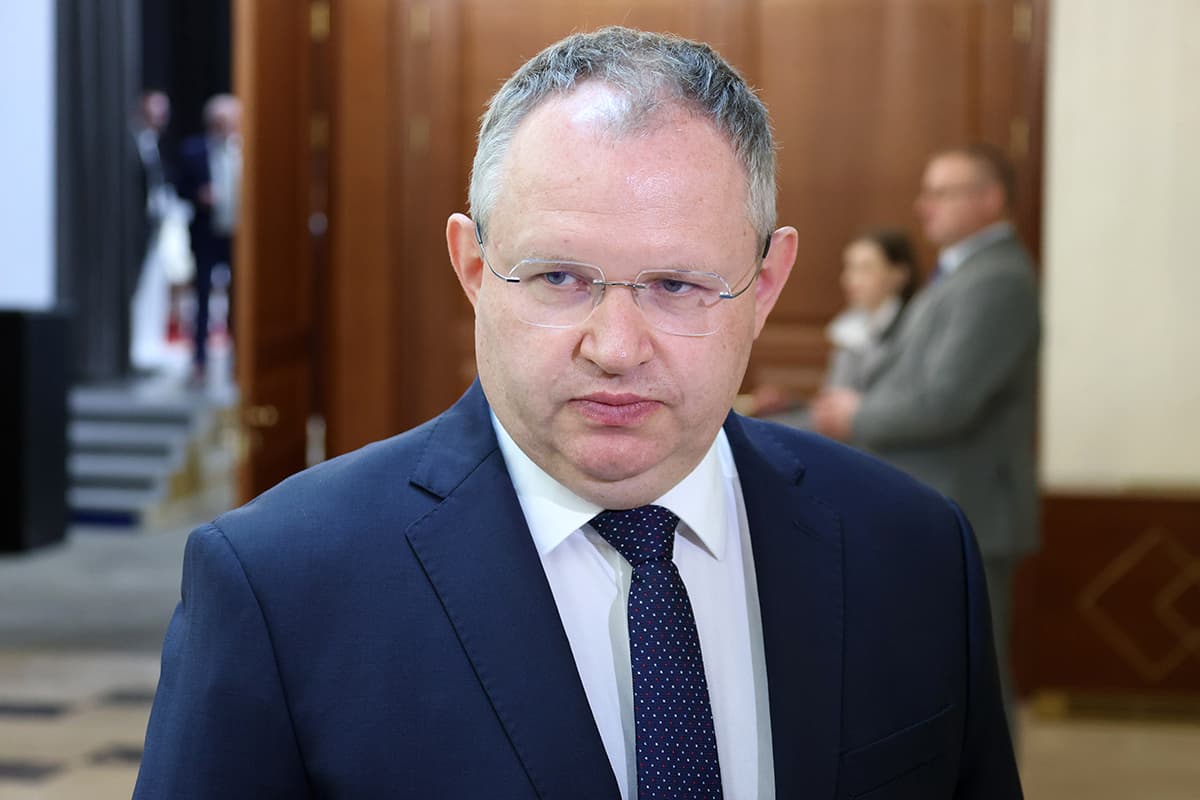
- Within the framework of the meeting, two issues related to the regulation of markets and the processes that occur in the field of trade in the territory of the EAEU were considered in a narrow format.
The first question concerned the development of a system for the formation and exchange of electronic passports of vehicles. Here, despite a short period when our countries worked separately, the legislative framework has already diverged quite far from each other. Now the most important thing is to collect everything under the same requirements so that everything works efficiently, without failures. So that all information about the passage of a car across the customs border, about production in the participating countries is moved barrier-free and anyone can access it, form an electronic passport.
The second issue concerns the mechanism of interaction of accreditation bodies. We are still a young union, and we naturally reveal some inconsistencies and roughnesses in the legislative framework. All these moments come up over time, and they are also discussed. We are trying to settle all this before anything enters the hot stage and make our union better, clearer, more transparent and more comfortable.
kryzhevich@sb.by