Bikini killer Charles Sobradge traveled on passports of dead tourists
In December 1975, Charles Sobraj, known as the Bikini Killer and the Snake, settled in the Kathmandu hotel on the passport of Henrikus Bintanji. The real owner of the document had already been killed in Thailand. Under a false name, Sobraj signed a hotel card. Almost 30 years later, her picture was used in the murder of an American tourist: the original could not be found, but investigators kept the photo and the negative.
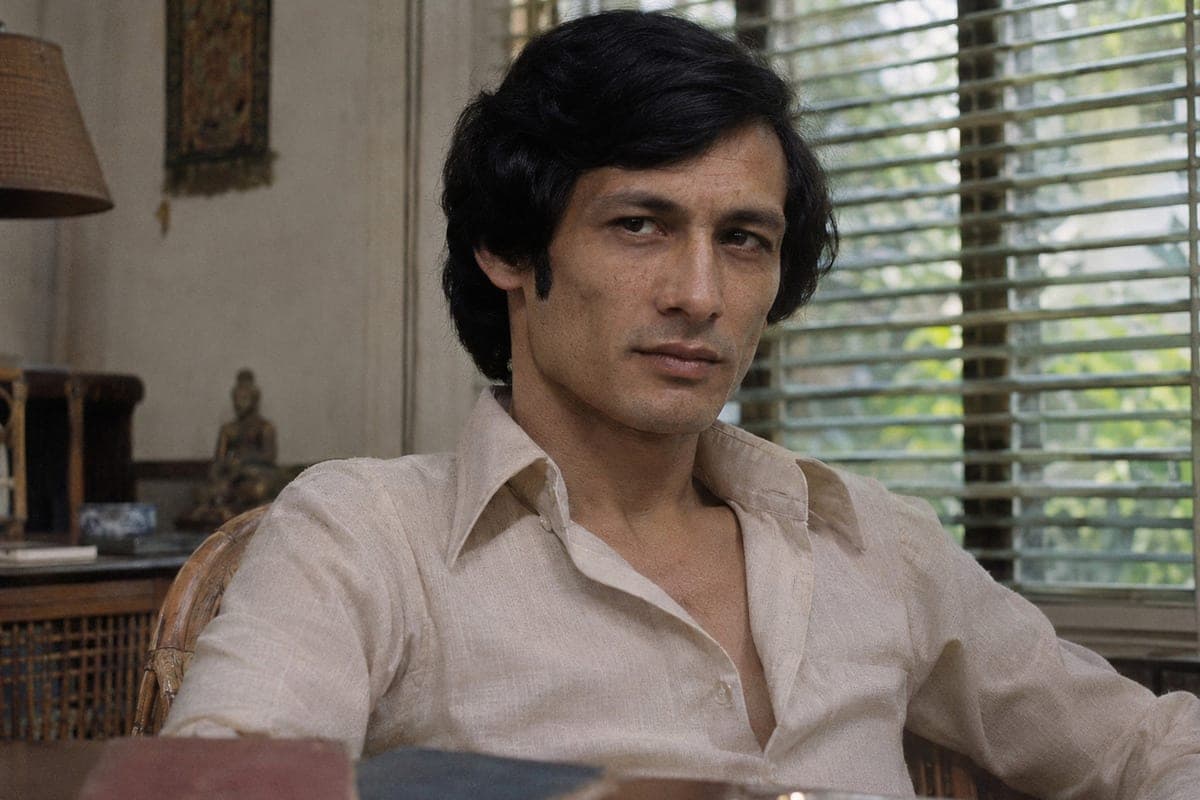
In the autumn of 1975, Sobraj lived in Bangkok. To foreign travelers, he introduced himself as Alain Gauthier, a jeweler. His companion, Canadian Marie-Andre Leclerc, was known as Monique. They met visitors and invited them to come.
Next door lived the French Nadine and Remy Gires. According to Nadine, Gauthier was pleasant in communication, seemed educated and spoke several languages. However, the guests in his apartment were constantly ill.
When Nadine asked why everyone was getting sick, Sobraj referred to an upset stomach over street food. This happens to travelers, he explained. Nadine did not know about the poisoning and falsification of passports at that time.
On December 11, the Dutch Henrikus Bintanja, whom their relatives called Hank, and Cornelia Hemker flew to Thailand. In the last message, they told about a Frenchman they met in Hong Kong. He sold them a jewel and invited them to Thailand.
Upon entering, the couple indicated a hotel, but stayed at Gauthier's. Soon both fell ill.
According to the Thai investigation, Sobraj did not allow other people to visit them. Not even a cleaner was allowed in the room. On the night of December 16, he and his acquaintance Ajay Chowdhury took the couple out in a car. The bodies of Bintanji and Hemker were found near a road in the Wangnoi area.
Later, these circumstances were included in the materials with which Thailand sought the extradition of Sobraj from India. They also described a search of his apartment, where the police found the belongings of the dead. Sobraj and Leclerc used their passports, replaced the photos of their owners and flew to Kathmandu.
At the Soaltee Oberoi Hotel, Sobraj registered under the name Bintanji, and Leclerc used the Hemker document. Another hotel, the Oriental Lodge, was home to American Connie Joe Bronzic and Canadian Laurent Carrier.
Bronzic told Australian Kirsty McMillan that she met a Soaltee Oberoi jeweler and went to meet him. McMillan later testified.
In December, Bronzic and Carrier were found murdered in various locations near Kathmandu. After his death, Sobraj flew on his passport to Bangkok and returned to Nepal.
One of the interviewees in the case suggested that Carrier could have killed Bronzic and left for Thailand. The Canadian was already dead.
Nepali police questioned Sobradj and Leclerc over a white car linked to the murder of an American woman. There were no grounds for arrest. They were told to contact the police before they left. Sobraj and Leclerc left the country by land, leaving some of their belongings in a hotel. Among those left was Carrier's wallet.
In early 1976, Henk and Cornelia's family sought help. There were no letters from travelers for about six weeks. There were no Christmas greetings or birthdays for Cornelia’s mother and sister.
Herman Knippenberg, the third secretary of the Dutch Embassy in Bangkok, was involved in the search. He found out that the couple never checked into the hotel indicated at the entrance. In the Thai morgue, the bodies of two foreigners remained unidentified.
Knippenberg requested dental records from the Netherlands. From the notes sent, the dentist identified Bintanja and Hemker.
Even before meeting Knippenberg, Nadine learned about the forgery of passports, the intoxication of visitors and the disappearance of the Dutch couple. According to her, this was told by other guests – the French Dominique and Yannick. Nadine and Remy paid for their tickets home.
Sobraj was away at the time. Upon returning, he and Leclerc met Nadine in the hotel lobby and offered a ride home. Sobraj asked where Dominic and Yannick had gone. Nadine continued to communicate with him, already knowing what the French had said.
This information she gave to a familiar journalist. Through him contacted a Belgian who communicated with Knippenberg. From a Belgian colleague, the diplomat learned about the apartment of a stone dealer, where they saw passports of the Netherlands.
Knippenberg gave the information to the Thai police. As he later said, he was told that the case was not a priority. The diplomat continued to look for witnesses and found Nadine and Remy. They saw Henk and Cornelia at Gauthier's and remembered that they had been ill for a long time.
Later, Thai officer Sompol Suthimai, who worked with Interpol, joined the investigation. In an interview with Agence France-Presse, he recalled seeing photos of dead travelers in the press, returning to Bangkok and meeting Knippenberg.
The diplomat handed him the collected materials, including the diaries and air tickets of the victims found in Sobraja's apartment. But the man has already left Thailand. Suthimai organized an international search.
In July 1976, Sobraj offered a guide to a group of French students in New Delhi. Then he and the accompanying women gave the tourists pills with intoxicating substances. Several students managed to hold Sobraj and wait for the police.
In Indian documents recorded the real name of Sobraja and his pseudonyms. Later, the Nepali court established who was hiding under the name of Alena Gauthier.
In India, Sobraj received a prison sentence in the case of the death of Frenchman Jean-Luc Solomon. In May 1982, he was sentenced to life in prison for the murder of Israeli Alan Aaron Jacobs. This sentence was subsequently overturned.
Thailand, meanwhile, sought his extradition. In 1985, Sobraj tried to stop extradition through the Delhi High Court, but his appeal was rejected. The final decision on the transfer to the Thai authorities rested with the Government of India.
In March 1986, Sobraj escaped from Tihar Prison. Under the pretext of celebrating his birthday, he treated the guards to sleeping pills and left prison.
He was arrested in Goa on April 6. The operation was led by Madhukar Zende, who had already arrested Sobraj in 1971. Upon learning that the fugitive was visiting the O’Coqueiro restaurant, a police officer came with staff disguised as tourists.
According to Zende, his attention was drawn to two men who arrived in the evening wearing hats from the sun. One he recognized as Sobraj. He denied that his name was Charles, but the officer recalled the previous arrest. The group did not have handcuffs, and Sobradja’s hands were tied with a rope found in the restaurant.
Extradition to Thailand was hindered by the case of escape. Indian law prohibited the extradition of a person while he remained accused in another case in India or was serving a sentence there. As early as April 1996, the Delhi High Court noted that Sobraj was both serving his sentence and remaining a defendant.
That same year, India's Supreme Court heard a complaint against his acquittal in the Jacobs case. An Israeli man was found dead in a hotel in Varanasi on January 6, 1976. Two foreigners used his passport and traveler's checks. The prosecution claimed that one of them was Sobraj.
However, hotel staff identified him in court more than five years later. During the investigation, the identification was not carried out, and witnesses did not see the guest for long. The conclusion of the handwriting expert, the court also did not consider sufficient without other reliable evidence. On 6 August 1996, the Supreme Court upheld the acquittal.
In February 1997, UNI reported that the prosecutor's office was asking for the escape case to be dropped. The maximum sentence was 10 years, and Sobraj, according to the prosecutor, had already spent more in custody. Even if convicted, that time would count as punishment, after which he should have been released in the case.
The government decided to drop the remaining cases in order to deport Sobraj. After his release on bail, he remained in the custody of the immigration service while the issue of documents was resolved. In April 1997, he was sent to France. By then he had been in Indian custody for more than 20 years.
It was never transferred to Thailand. As Knippenberg explained, by the time of release, the statute of limitations for the murder of Bintanji and Hemker had already expired. Sobraj has not appeared before a Thai court in this case.
Sobraj arrived in Nepal in September 2003. There he was detained in an old case: for the murders of December 1975, he could still stand trial.
Knippenberg was living in New Zealand at the time. During his diplomatic service, he transported five cardboard boxes from country to country. They contained testimony, hotel bills, passenger lists and border crossing documents. The diplomat handed over copies to law enforcement agencies, and kept his archive.
Upon learning of Sobraj's detention, he obtained documents and contacted New Zealand police. Two detectives from Wellington checked the materials for transfer via Interpol to Nepali authorities.
The Supreme Court of Nepal subsequently referred to an Interpol Wellington letter dated 14 October 2003. It confirmed the old correspondence of the hotel with the Embassy of the Netherlands in Bangkok: the guest of Bintanja left without paying the bill, and the hotel tried to collect the debt. Thanks to this correspondence, information about his residence under a false name was preserved.
Sobraj claimed that he had never visited Nepal before 2003. But his own testimony about a trip to Kathmandu and living under the name Bintanji is preserved in the materials of the Indian proceedings.
The original hotel card could not be found later, but investigators kept a photo and a negative. The expert compared the signature in the picture with Sobradzh’s signature in the 2003 passport and the samples obtained for the study. He found the resemblance.
The case involved a white Datsun from Gorkha Travels. The driver confirmed that Sobraj rented it under the guise of a Dutchman. Carrier's belongings were identified by the brother of the victim.
A police officer investigating Bronzic's murder recognized Sobraj in 1976 from a photograph published after his arrest in India. He said this in a report, which he later confirmed in court.
The judges also took into account McMillan's testimony about Bronzic's meetings with a jeweler from Soaltee Oberoi. They also took note of Sobraj's departure from Nepal, although police told him to stay in touch.
There was no witness to the murder. The Supreme Court of Nepal found this body of circumstantial evidence sufficient and in 2010 upheld a life sentence handed down in 2004 for the murder of Bronzic.
In 2014, the district court of Bhaktapur found Sobraj guilty of the murder of Carrier, setting a second life sentence. According to the court registrar, the case was previously closed due to the absence of witnesses, and then resumed.
A life sentence in these Nepalese cases meant 20 years. Sobraj served both sentences at the same time.
On December 21, 2022, the Supreme Court ordered his release early, taking into account his age, state of health and time already served. As reported by the newspaper The Kathmandu Post, citing the court decision, he served 95% of the sentence.
On December 23, Sobraj was released from prison. Nepal's Interior Ministry has banned him from entering the country for 10 years. From the immigration office, he was taken directly to the airport and sent to France with documents prepared by the French Embassy. Early release did not mean two convictions were overturned.
After returning, Sobraj continued to deny the killings. In 2024, Channel 4 presented a documentary project with his participation, in which former British detectives checked his explanations. In September 2025, The Indian Express reported that he lived in France.
22-year-old daughter of a farmer raped and beat to death workers – revealed details
Apartment cannibal Spesivtsev became a trap for children in Novokuznetsk
Four complaints ended in rejection, and then the husband killed his wife and six children
Slivko hung children under the guise of filming: Honored mentor hid death in the tourist club
"Prison romance" Madueva ended with nagan in "Crosses"
Chikatilo was released with a knife and ropes, after which the murders continued
They beat the family to death in a dream: Colonel of the Ministry of Internal Affairs Gosht was brutally killed along with his relatives
10 years of the blood of the rostov gang “amazon” – they killed and returned home
Angara maniac Mikhail Popkov took women to their deaths in his car for years
Major Yevsyukov shot people in a supermarket and became a symbol of the failure of the interior Ministry
Children's voices heard in the basement, but the police went home
Maniac took women to the forest and began hunting them: in the taiga found dozens of bodies
Supplemented sleeping pills and raped locked up: 2 years of hell from a good grandfather from Yakutsk
Reliable news is always at hand - in the channel "MK" in MAX