
Germany - Ear on charge - silence in retirement?
The hearing aid amplifies the sounds. However, with severe damage to sensitive cells of the inner ear, one volume will not help: noise is heard, speech is illegible. A cochlear implant (Cochlea-Implantat) may be useful. The classical system has two parts. Outside - a microphone and a speech processor, under the skin - a receiver, from which electrodes go to the cochlea of the inner ear. German news in Russian
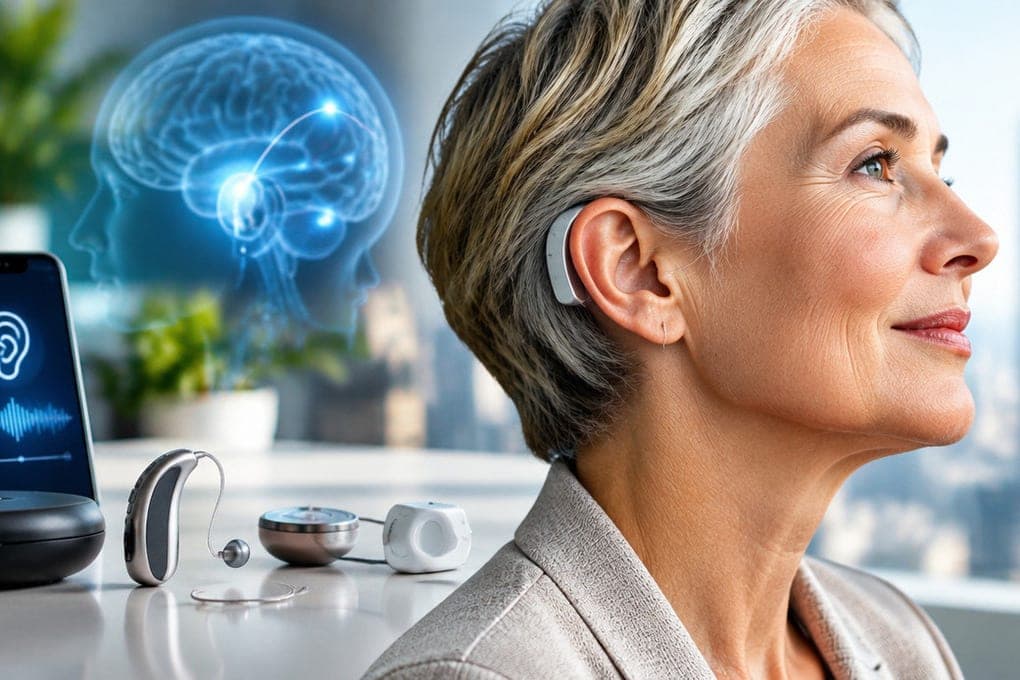
Humanity has learned to talk to artificial intelligence, send machines to distant planets and keep a whole library in your pocket. But getting the damaged ear to perceive sounds again turned out to be a much more stubborn task. I had to do a trick: connect electrodes, train the brain and hide electronics under the skin.
The smartphone can be upgraded, the computer can be restarted. But the ear was not provided with either a “reset” button or spare cells. Now scientists have even gotten to the genes. But to negotiate with nature is more difficult than with a capricious computer.
The price of a misunderstood word
The hardest thing about hearing loss is sometimes not the absence of sounds, but the loss of ease of communication. You have to ask questions, guess answers, watch your lips. Ordinary conversation becomes a challenge. A person avoids meetings, not because he has stopped loving people, but because it has become too difficult to understand them. And regaining confidence is sometimes no easier than being able to discern words.
Bypassing a broken link
The hearing aid amplifies the sounds. However, with severe damage to sensitive cells of the inner ear, one volume will not help: noise is heard, speech is illegible. A cochlear implant (Cochlea-Implantat) may be useful. The classical system has two parts. Outside - a microphone and a speech processor, under the skin - a receiver, from which electrodes go to the cochlea of the inner ear. Electronics converts sound into impulses that excite the auditory nerve. Next, the brain is taken up: it has to learn in new signals voice, doorbell, music. The dead cells do not recover, but it is possible to understand speech.
Who gets a chance
Such a system can help children with severe congenital hearing loss and adults who even properly selected devices do not allow to understand words. Causes range from heredity and infections to injuries and age-related changes. The decision is made in a specialized center after checking hearing, speech intelligibility and the condition of the inner ear and nerve. Under anesthesia, the receiver is placed under the skin behind the ear, electrodes are injected into the cochlea. Among the risks are infection, dizziness, taste disorders, loss of residual hearing. Before surgery, vaccinations are checked, especially against pneumococcus: after implantation, the risk of some forms of meningitis is increased.
Brain requires rehearsal
The surgeon finished his job. Does the person hear as before? This is not the final scene of the film. After healing, the processor is connected, configured and turned on for the first time. The native voice may seem metallic, and the music a strange set of signals. Then the classes begin: repeated adjustments, hearing training, exercises on understanding speech amid noise. It takes months, sometimes years, to get used to. The result depends on the age and cause of hearing loss, previous experience and training. Early care is especially important for children, but the implant does not reverse sign language.
Invisible under the skin
In a conventional implant, the processor is visible behind the ear. The Austrian MED-EL decided to hide everything. At the end of September, the company announced the release of TICI UNICO, the first commercially available fully implantable cochlear system. The microphone, processor and battery are under the skin. According to the manufacturer, you can hear it even in a dream and during water procedures. Charging is still necessary, but you can listen during it. The novelty received the CE mark and came to European clinics. However, it is not suitable for everyone, long-term experience is limited, and payment needs to be clarified.
Right on the nerve
Hanover went the other way. On August 26, 2026, the team of Professor Thomas Lenartz as part of the study installed the patient Auditory Nerve Implant (ANI). Unlike the usual device, the electrodes here act directly on the auditory nerve, bypassing the cochlea. This direction is intended for individual cases where conventional implantation is not possible or does not promise sufficient benefit. Scientists are still figuring out whether it will be possible to achieve a legible perception of speech. It's a long way from being widely used.
Deafness changes the code
Another news came from the United States. On April 23, 2026, the FDA accelerated the approval of Otarmeni, the first gene therapy for people with a certain inherited form of severe hearing loss caused by changes in both copies of the OTOF gene. The drug delivers a working copy of the gene to the cells of the inner ear to restore signaling. In the study, hearing improved in 80% of patients who were evaluated for effectiveness. However, there is no universal remedy for deafness: a confirmed genetic diagnosis and compliance with other medical conditions are necessary. The long-term effect is still being studied. The US approval does not mean that therapy is already available in Germany.
Who's paying for the new rumor?
For medical reasons, compulsory health insurance funds (gesetzliche Krankenkassen) usually cover standard implantation and follow-up. But the possibility of installing the latest system and the procedure for its payment must be clarified in advance. It is important to choose not only the device, but also the center, where you will provide settings and auditory rehabilitation.
Electronics do not guarantee the sound of the world. But being able to hear your name and engage in conversation again is life-changing. Miracle's not in the chip. It is a miracle when silence has an alternative.
This is what Germany says:
Germany - Warned. Checked. We didn't. For whom the school bell rings: the attack in Shongau forced Bayern to reconsider an old question
Germany - The exhaust deal. Merz saves engines, Macron defends factories, and China advances. Who will benefit from the car auction?
Germany: To save the average pensioner. The government is preparing exit reform: who will receive aid, who will receive higher contributions and why there is almost no time left?
Germany is the Magdeburg gambit. 44 votes with a sequel: why did the international agenda in Saxony-Anhalt turn out to be connected with the struggle for local power?
Germany - The Abyss - in Frankfurt. Salinger’s performance linked the two theaters and marked the beginning of a new creative friendship
German labor law allows dismissal during illness, but leaves the worker the tools of protection
Germany – From application to new address. How to prepare documents, choose a suitable region, meet deadlines and not lose the right to payments
Germany - 65 shades of doubt. Two-thirds of those polled expect Friedrich Merz not to remain chancellor until 2029. Why are even CDU/CSU voters increasingly disillusioned with their leader?
Germany - Green Evidence: What's the vegan burger hiding? Why eating without meat is not always healthier, and factory foods are not necessarily worse than homemade foods
Germany - Children - game, residents - count. Why there is no criminal liability, but civil liability is possible
The patient is more alive than healthy. Burnout of the state: diseases cost the country 528.5 billion euros, and mental disorders permanently knock workers off track
Germany: 91 seats. There's no one to sit! It cannot be ruled out: because of Vanessa Emde, the SPD and the Greens pressed the brake. Will the winners of the Berlin election miss the Red Town Hall?
