Germany is a suspended sentence. Unconditional tragedy
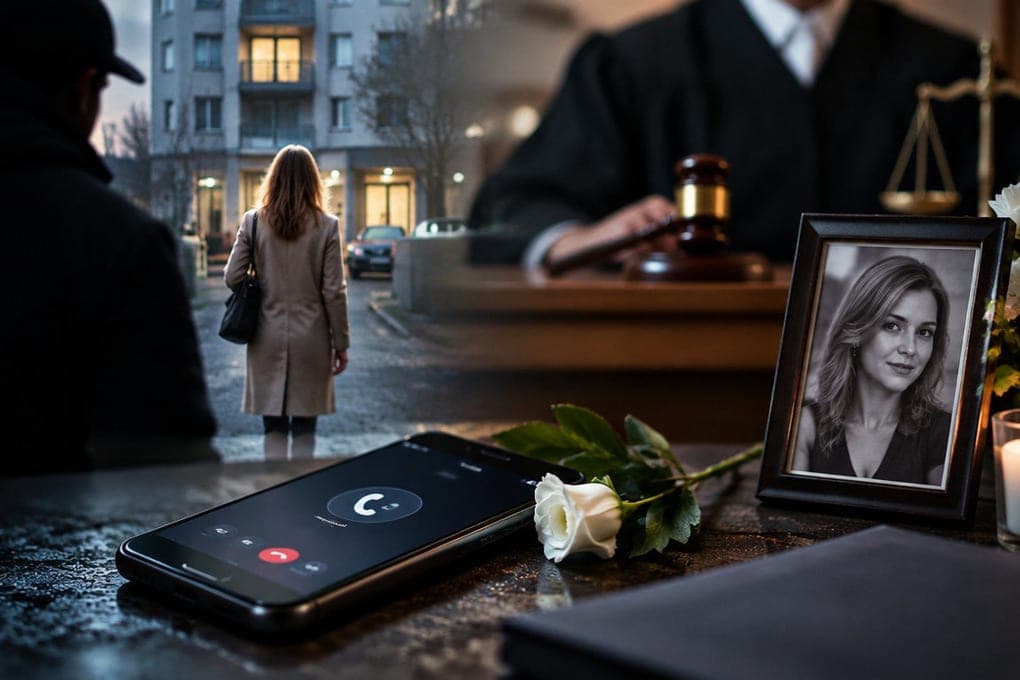
That December evening, a 45-year-old woman got out of a new life partner's car outside a house on Richard Strauss Strauss. The ex-husband, the court found, was already waiting nearby. Feeling threatened, she called her children. The man stabbed her at least 24 times. The sons of 17 and 23 years old tried to stop his father and seriously wounded him. A daughter came to the rescue. The woman was taken to hospital but died about an hour later. German news in Russian
He's already been sentenced. A separate decree prohibits seeking contact with the former spouse. Police and prosecutors knew about the persecution. The legal boundaries seemed clear. But the one who was ordered to observe them did not recognize the woman's right to leave and start another life.
On December 5, 2025, in Ingolstadt, he attacked her outside her home. The children rushed to help. On October 23, 2026, the court sentenced the killer to life imprisonment. Between the first sentence and the last verdict, the most painful question remained: why did the known danger fail to be stopped sooner?
Last call to the children
That December evening, a 45-year-old woman got out of a new life partner's car outside a house on Richard Strauss Strauss. The ex-husband, the court found, was already waiting nearby. Feeling threatened, she called her children. The man stabbed her at least 24 times. The sons of 17 and 23 years old tried to stop his father and seriously wounded him. A daughter came to the rescue. The woman was taken to hospital but died about an hour later. The attacker survived severe injuries and a coma. His lawyers argued that due to the damage, he did not remember what happened.
On October 23, the Ingolstadt State Court found the 50-year-old defendant guilty of Mord - murder from base motives - and imposed a life sentence, establishing a special gravity of guilt. The family held photos of the deceased in the room. But the history of the crime cannot be understood without what preceded the last evening.
Countdown after ban
Since splitting in 2024, the man has repeatedly threatened his ex-wife, insulted her, harassed and violated protective orders. Among the offences committed by law enforcement officers were also coercion and bodily harm. On October 6, 2025, the district court of Ingolstadt appointed him a year of suspended imprisonment. On October 14, the sentence went into effect. A further 16 days later, on October 30, the family court again banned the former spouse from contacting the woman under the Gewaltschutzgesetz law. 36 days before the murder.
This chronology does not prove the negligence of a particular police officer or judge: such findings require separate verification. But it shows the limit of written limitations when one intends to ignore them. What should happen after another violation, so that the order becomes not a warning, but a defense?
Surveillance as power
A GPS beacon on a car, secret listening to conversations, constant surveillance – this picture of years of control was restored by the court. The ex-husband did not accept the separation or the new relationship of the woman. Presiding Gerhard Reicherl called it extreme possessiveness, and the massacre a typical femicide. There is no separate corpus delicti with this name in the German Criminal Code: the legal qualification is Mord, with established base motives. According to the judge, the immediate impetus was the recent hearing in the family court. The man feared that for violations of the protective order will be in prison and will no longer be able to control his ex-wife.
The paradox is tragic: for a woman, turning to the law was an attempt to gain freedom. For the persecutor, the prospect of her independence, according to the court, became the motive of violence. The responsibility for the murder lies with the perpetrator.
Fifteen years is not the answer
The prosecutor's office demanded life imprisonment. The defense sought the qualification of Totschlag - intentional deprivation of life without signs of Mord - and announced its intention to appeal the decision. Therefore, the sentence has not yet entered into legal force. In Germany, a life sentence does not mean release in exactly 15 years. After this period, under certain conditions, parole can only be considered. The recognized special gravity of guilt - besondere Schwere der Schuld - excludes release immediately after fifteen years. At the same time, the court does not appoint a fixed additional period. No matter how long the incarceration lasts, it will not return the mother to the children. And it will not remove the question of measures that could protect people before the crime.
The bracelet is not on yet
In July 2026, Germany passed a federal law on electronic control in cases of serious threat of domestic violence. In statutory situations, family courts will be able to order tracking of the offender’s whereabouts to enforce injunctions on approach and contact. There are also mandatory programs against aggressive behavior and tougher sanctions. However, the main innovations, including electronic bracelets, will not be effective until July 1, 2027. At the time of the murder and on the date of the current conviction, this new federal instrument had not yet been applied. The bracelet does not stop the attack and does not guarantee salvation. But a timely signal could offer a chance to respond to a dangerous rapprochement sooner. The court has already determined the punishment of the guilty. And society has to find an answer to another question: how to make sure that the request for help does not remain just a document in the case? The judicial boundary was drawn in advance. But on that December evening, the distance between the aggressor and the woman was deadly short.
This is what Germany says:
Germany: Love and the Blue Pills. When to take, how long to wait and why not repeat the dose at your own discretion? Medical rules of the most intimate medicine
Germany - Mold is eating the treaty. When housing deficiencies allow you to require a reduction in rent or early termination
Germany: Don’t be born healthy, be born private. While patients with different insurances compete for a place with a specialist, the authorities want to make the queues fairer, but doctors are afraid of new restrictions
Germany – The investigation is conducted by gas stations. The treasury will miss 2.5 billion euros, drivers - the promised benefits. How not to overpay for a full tank?
Germany - Ear on charge - silence in retirement? Medicine opens up new ways to return to sound and human communication. What do modern implants give and why does the brain play a crucial role?
Germany - Who planted chlorine? After the alarm in the "Subtropical Bathing Paradise" under suspicion came chemistry. Two people were taken to hospital. But the main "suspect" found an unexpected alibi
Germany - Ivan Vasilyevich changes the excise tax. The German Ministry of Finance inadvertently moved the tobacco reform from 2027 to October 2026. How did one line of the law nearly stop factories and why can a pack of cigarettes cost almost €12?
In the morning money, in the evening chairs? Merz counted nearly 230 billion euros of investment. But the file found old promises. Who will make the real money, and when?
Germany – The smartphone is not a glove compartment. What the driver is obliged to do during the inspection and what to refuse
Germany is the anatomy of a single murder. And five more. How did a parental rights dispute turn into a shooting - and why would the alleged killer never stand trial?
Germany - At a pike tariff. Sit down, arrived, paid - and no complicated calculations. Authorities promise an almost magical ticket. Why can fulfilling a wish be too expensive?
Germany - 94 euros in the minus. Health in debt? The Bundestag approved the reform, which should reduce the queues. But where to get doctors, beds and money for the new order?