
How an 'immortal' jellyfish could help scientists search for eternal youth
“Immortal” jellyfish, capable of repeating their life cycle, are not the key to immortality or eternal youth. However, their study can potentially help in the fight for longevity
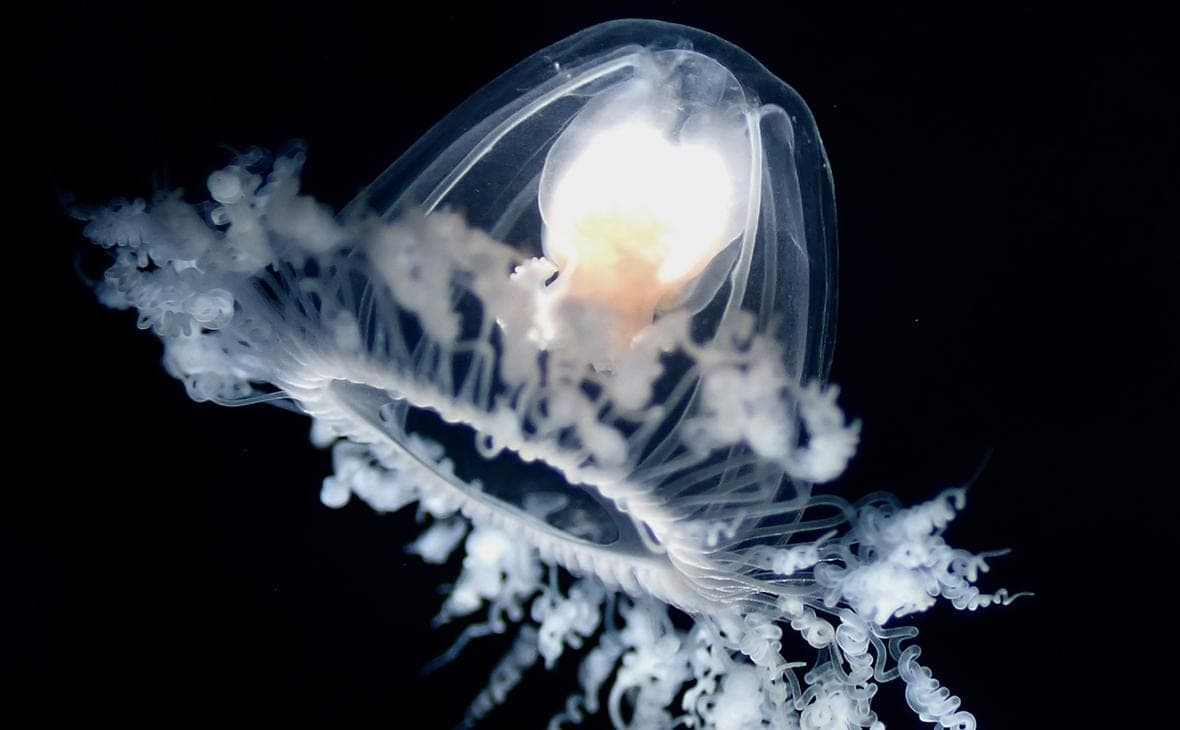
Turritopsis dohrnii jellyfish have attracted the attention of scientists for their ability to rejuvenate, resisting aging and death. The organisms, in particular, is studied by Maria Miglietta of Texas A&M University in Galveston, who tried to starve them and create adverse conditions for them, but they each time survived and gave new polyps, which then grew in the colony. She and other scientists are studying the processes that make it possible for Turritopsis dohrnii to return indefinitely to youth, and hope to figure out how to trigger them in humans.
The biologists interviewed by RBC told how the processes in the body of these jellyfish are arranged and whether it is possible to use knowledge about them to prevent human aging.
What is the "immortal" jellyfish Turritopsis dohrnii
These jellyfish live in waters of temperate and tropical climates. They have a bell-shaped shape with a maximum diameter of about 4-5 mm and about the same height as the width. Young individuals with a diameter of 1 mm have eight evenly spaced tentacles, adults - 80-90 tentacles.
The ability of these organisms to regenerate was first discovered in 1992 by an Italian scientist who studied them and forgot to feed them. A few days later, he returned to the lab, expecting that the jellyfish had died, but discovered new polyps.
“It has several stages of development: an adult jellyfish releases gametes into the water; if a sperm and an egg meet, embryonic development begins, a larva forms.” It settles to the bottom and turns into a sedentary polyp, from which new jellyfish sprout - over time they begin to multiply, explained RBC researcher at the Laboratory of Postgenomic Research of the Institute of Occupational Medicine named after N.F. Izmerov Candidate of Biological Sciences Andrei Devyatkin.
Why the "immortal" jellyfish doesn't age
As the director of the Institute of Biology of Aging and Healthy Longevity Medicine with the Clinic of Predictive Medicine, corresponding member of the RAS Professor, Doctor of Biological Sciences Alexei Moskalev, told RBC, with damage, adverse conditions or aging, such a jellyfish can return from the adult stage to an earlier stage of the life cycle - a polyp. Then the jellyfish are formed again.
“This cycle could potentially be repeated, although this animal is not protected from predators, infections and other causes of death,” he said.
According to Devyatkin, transcriptomic studies (study the full set of RNA molecules - transcriptome). - RBC) show that with such a reverse transformation of the jellyfish, gene networks are active, "overlapping with the "signs of aging" of mammals": DNA repair, maintenance of telomeres, transposon control, chromatin remodeling. Moskalev also noted that Turritopsis dohrnii revealed features of the work of genes associated with DNA repair, maintenance of telomeres, protection of cells from damage and regulation of cellular reprogramming.
Can the “immortal” jellyfish help rejuvenate a person
According to scientists interviewed by RBC, the existence of an “immortal” jellyfish proves the very possibility of rejuvenating cells and can help in the fight against diseases.
However, Moskalev stressed that even if we imagine that it will be possible to return a person to an earlier stage of development, as it happens in “immortal” jellyfish, this will not solve the issue of prolonging the life of a human personality, formed by memory, acquired knowledge, experience, social connections and the most complex organization of the brain. “What is the use of a young body if, when it is rejuvenated, a person loses memory, accumulated experience and individuality?”.
The realistic conclusion is that adult animal cells can return to a “young” state and become other cells, so such “switches” can exist in human cells, they only need to be found, says Devyatkin.
“Before the therapy of rejuvenation for humans is very far, but the experience of jellyfish can suggest how to make them safer,” he added.
How to better deal with human ageing
A more promising goal is not to radically return the body to the beginning of the life cycle, but to restore the functions of mature cells and tissues while preserving their specialization, especially in the case of the brain, Moskalev said.
“For the medicine of healthy longevity, it is fundamentally important to learn how to slow down brain aging, maintain the ability of neurons to form and maintain connections, protect them from damage, restore impaired functions and prevent the development of age-related diseases even before clinical symptoms appear,” explained the biologist.
Thus, he noted, the best approach is to learn not to reset the biological history of a person, but to prolong his full life, preserving physical capabilities, clarity of thinking, memory and personality.
Devyatkin, in turn, clarified that aging is not a universal law of life, but “the price of tissue specialization”, and the more there are examples of species with “disconnected aging”, the more reliable the conclusion that human molecular “switches” of rejuvenation exist. “The only question is how to safely use them,” he concluded.
Other species, examples of which can help in the fight against aging n
Devyatkin noted that, in addition to Turritopsis dohrnii, there are other living creatures that effectively fight mortality: hydras and planarians constantly renew their bodies with stem cells, some sponges and corals live for thousands of years, and mushrooms and trees do without “wear and tear”.
“One tinfish in Oregon has been growing for thousands of years: old patches of mycelium die off, but new ones grow in return.” Pine trees live more than 5 thousand years, and the clonal colony of Pando aspens - tens of thousands of years, - said the scientist.
Pando is a clonal colony of the aspen-shaped poplar in Utah (USA), which is considered a single living organism based on identical genetic markers and a common root system. It covers an area of 43 hectares, the mass of the plant is estimated at 6 thousand tons, making it the heaviest known organism. The age of birth is estimated at 80,000 years.
He added that the bacterial population as a whole is eternal, although individual cells with accumulated damage age and die.
Speaking about other species that can help prevent human aging, Moskalev drew attention to the research of the bowhead whale, which has found highly effective mechanisms for repairing DNA damage. “This is an example of a completely different strategy for longevity – not to start life anew, but to maintain the body’s resistance to the accumulation of damage,” he said.


