
Silent Karelian Land Reveals Secrets of the Unknown Front of the Battle of Leningrad
Karelian search engines spoke in the walls of the St. Petersburg Institute of History of the Russian Academy of Sciences before colleagues-historians with a story about the events that occurred on the Karelian land more than 80 years ago, became for the researcher not just a scientific report, but a “moment of truth” and “fulfillment of duty”
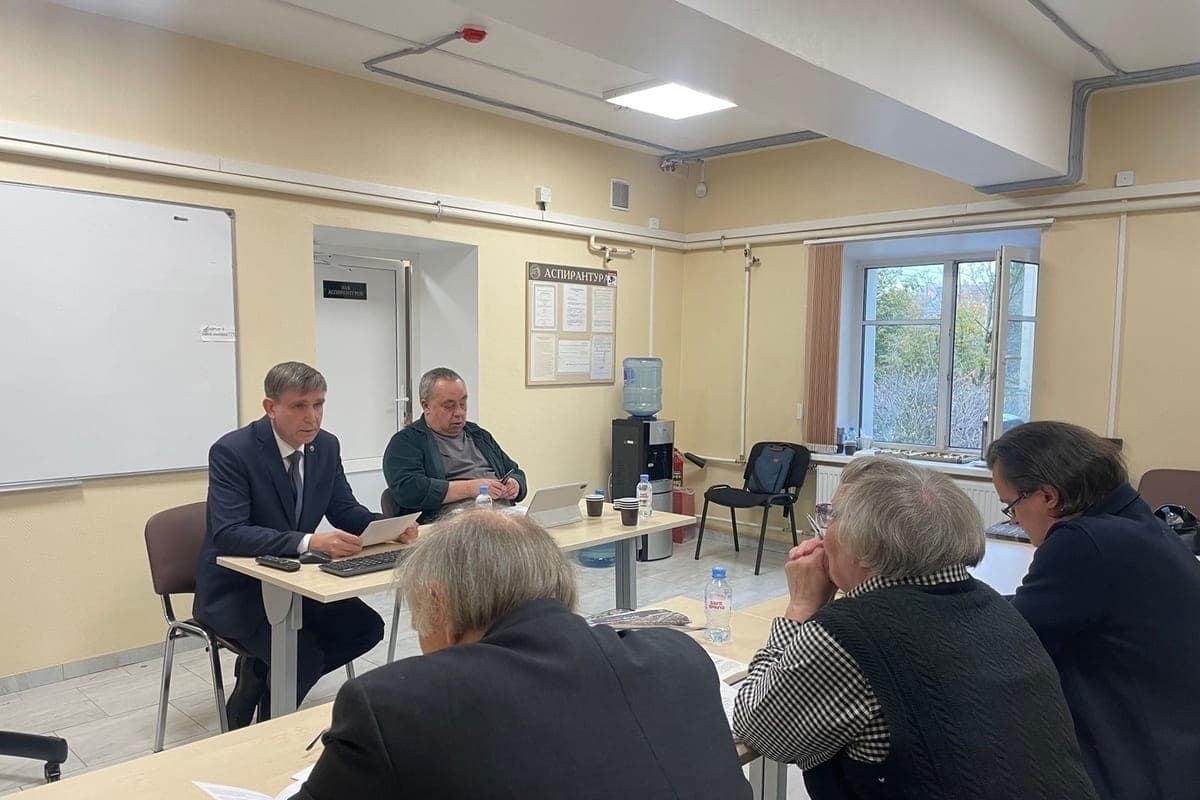
Karelian search engines spoke in the walls of the St. Petersburg Institute of History of the Russian Academy of Sciences before colleagues-historians with a story about the events that occurred on the Karelian land more than 80 years ago, became for the researcher not just a scientific report, but a “moment of truth” and “fulfillment of duty”. This event is participation in the All-Russian scientific conference "V. M. Kovalchuk - historian of defense and blockade of Leningrad". To the 110th anniversary of his birth, it made it possible to present to the general scientific community the results of many years of search work, revealing previously unknown pages of the battle of Leningrad.
Ilya Gerasev’s report, entitled “The Unknown Front of the Battle of Leningrad: 3rd Leningrad Division of the People’s Militia in the Battles for Petrozavodsk (based on the materials of search research),” was the result of painstaking work in the field. The author emphasizes that search activity is not just a hobby, but an important tool for studying the Great Patriotic War. Special memories are associated with trips to the area of the village of Weselga, where in 2010 was discovered a zone of fierce fighting.
“The picture was terrible: the killed soldiers lay a chain stretching from the railway to the road,” the researcher recalls. The land around was literally littered with shells, unexploded ordnance. A special place among the finds was occupied by heavy pieces of armor, hatches and parts of the suspension of the locomotive, which turned out to be the remains of the BEPO-52 armored train.
These findings allowed to shed light on one of the most tragic pages of the defense of Petrozavodsk in the autumn of 1941. The researchers found that units of the Red Army, including the remnants of the 3rd Leningrad Division of the People's Militia, made heroic, but, unfortunately, unsuccessful attempts to break into the city. The losses were huge. The armored train Bepo-52, having no chance of a breakthrough, was forced by the crew to explode.
“The archives of those days were practically silent. Information was lost, documents were not preserved, the author of the report notes. It was thanks to the search work, work in the field, the details of this tragic march and the death of the militia were able to come out of oblivion. “Earth does not lie,” the researcher emphasizes, saying that it is she who keeps the truth about past events.
It was possible to combine field search work with big science, thereby returning from oblivion the “unknown front of the battle of Leningrad”.


