
2026: the history of the holiday, the main traditions and what can be done on October 14
On October 14, Orthodox believers celebrate one of the most revered holidays – the Intercession of the Most Holy Mother of God
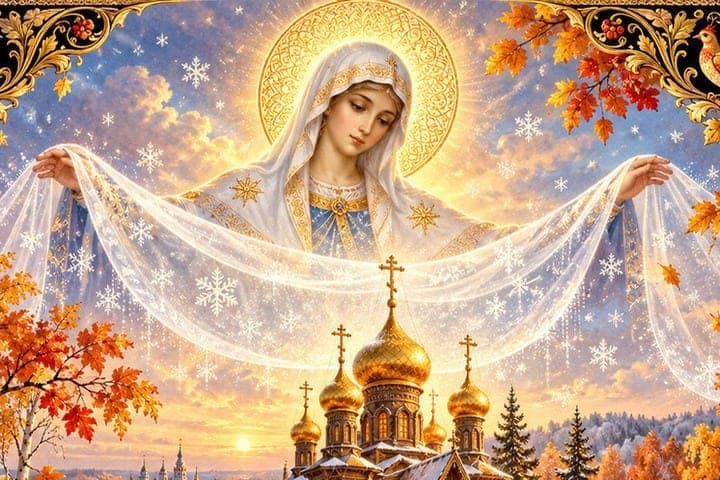
On October 14, Orthodox believers celebrate one of the most revered holidays - the Intercession of the Most Holy Mother of God. Despite the fact that it is not among the twelfth holidays, in folk tradition it is considered a symbol of immense maternal love, protection and intercession.
The holiday is set in memory of the event of the X century in Constantinople. When the city was besieged by enemies, and the garrison was small, residents gathered in the Vlachern temple for prayer. According to the clergyman of the Moscow Trinity Church near Saltykov Bridge, priest Nikolai Konyukhov, at the fourth hour of the morning St. Andrew Yurodivyi and his disciple saw a miraculous phenomenon: The Virgin removed the shining rod from her and spread it over the prayers. Soon after, the siege was miraculously lifted.
The outstretched omophorion symbolizes protection not only from physical enemies, but also from life’s adversity and sins. The main tradition of the day is a solemn service: in the evening of October 13, an all-night vigil is held, and in the morning of October 14, a festive liturgy is held.
In Russia, the season of weddings traditionally began with the Intercession: it was believed that the marriage concluded on this day would be under the special cover of the Virgin. Believers are encouraged to do good deeds: help those in need, visit single relatives and remember the dead.
You can visit the temple, pray in your own words or read the akathist Pokrov, reconcile with loved ones, arrange family dinners.
You can not swear, gossip, quarrel, indulge in drunkenness and revelry. On this day it is important to maintain peace in the soul and with others.
In 2026, the holiday falls on Wednesday - a fasting day. Therefore, believers should refrain from meat and dairy food, but fish is allowed.


