“Tears” of Halley’s Comet: Pskovites are invited to watch the peak of the Orionid meteor shower
Fans of astronomy and romantics get ready: on the night of October 22, one of the most beautiful celestial phenomena of autumn can be observed over the Pskov region - the peak of the Orionid meteor shower
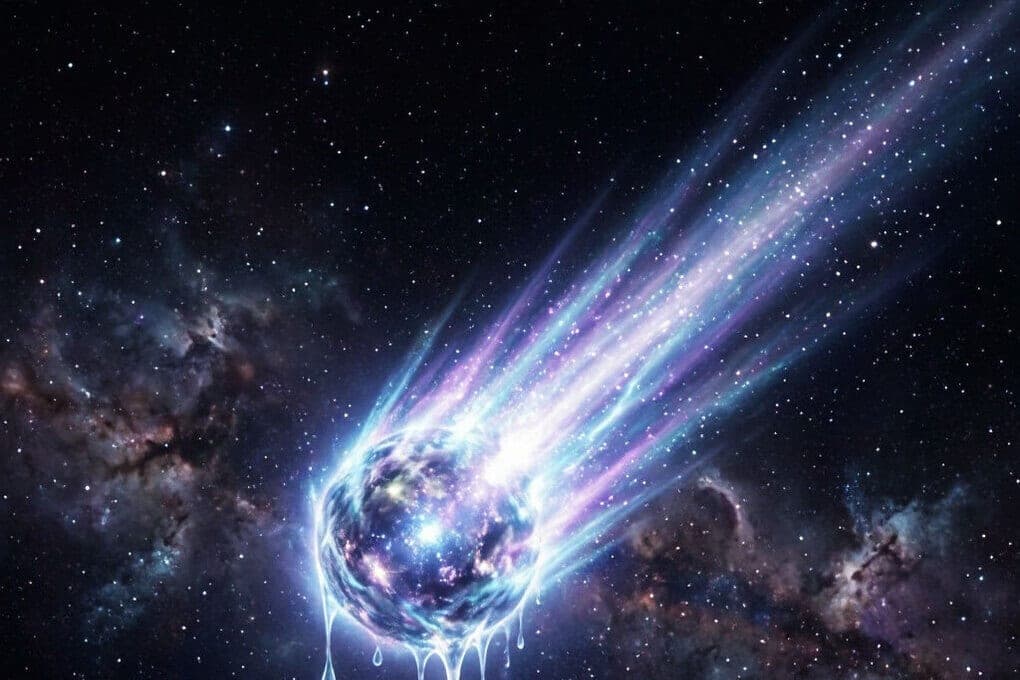
Fans of astronomy and romantics get ready: on the night of October 22 above the Pskov region you can observe one of the most beautiful celestial phenomena of autumn - the peak of the Orionid meteor shower.
As reported in the Laboratory of Solar Astronomy IKI RAS and ISZF SB RAS, the maximum intensity of the starfall will be overnight from Wednesday to Thursday. The "rain" of shooting stars is formed by particles that were once the tail of Halley's famous Comet. By the way, the icy nucleus of the comet will next approach the Earth only in 2061, so to see the “traces” of its journey is a great luck.
The radiant of the stream (the point in the sky from which meteors visually fly away) is located in the constellation Orion. An excellent reference point for observers will be the bright star Betelgeuse.
About 23:00 local time radiant will appear in the eastern part of the sky.
In the middle of the night, it will move southeast.
Before dawn, it will be best seen in the south.
Forecasters remind: although individual meteors can be seen even in the city, for a full-fledged “space show” it is better to get away from bright lanterns and find a dark area with an open horizon.
Don’t worry if the sky is cloudy on October 22nd. Orionids remain active for several days after the peak, so that Pskov citizens will have a spare chance to enjoy the spectacle in the following nights.