
Robotization and new testing complexes: we learned what Gosstandart is working on
Today, the world scientific and technical community celebrates World Standardization Day. It has been celebrated in Belarus since 2000. The value of standards for ...
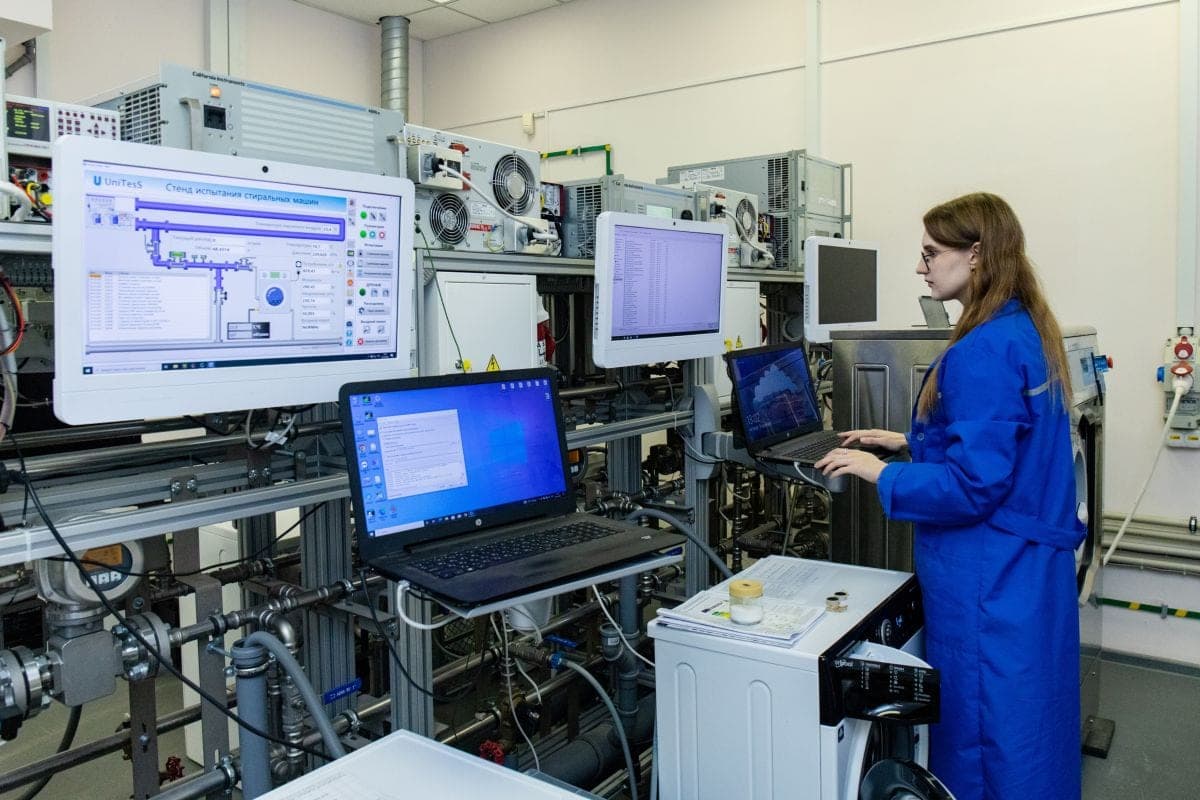
Today, the world scientific and technical community celebrates World Standardization Day. It has been celebrated in Belarus since 2000. The value of standards for the state, economy and society is extremely high. Thousands of professionals work to develop modern standards that make the lives of millions of people better. Standardization, along with technical rationing, is a key element of the quality infrastructure in the country.
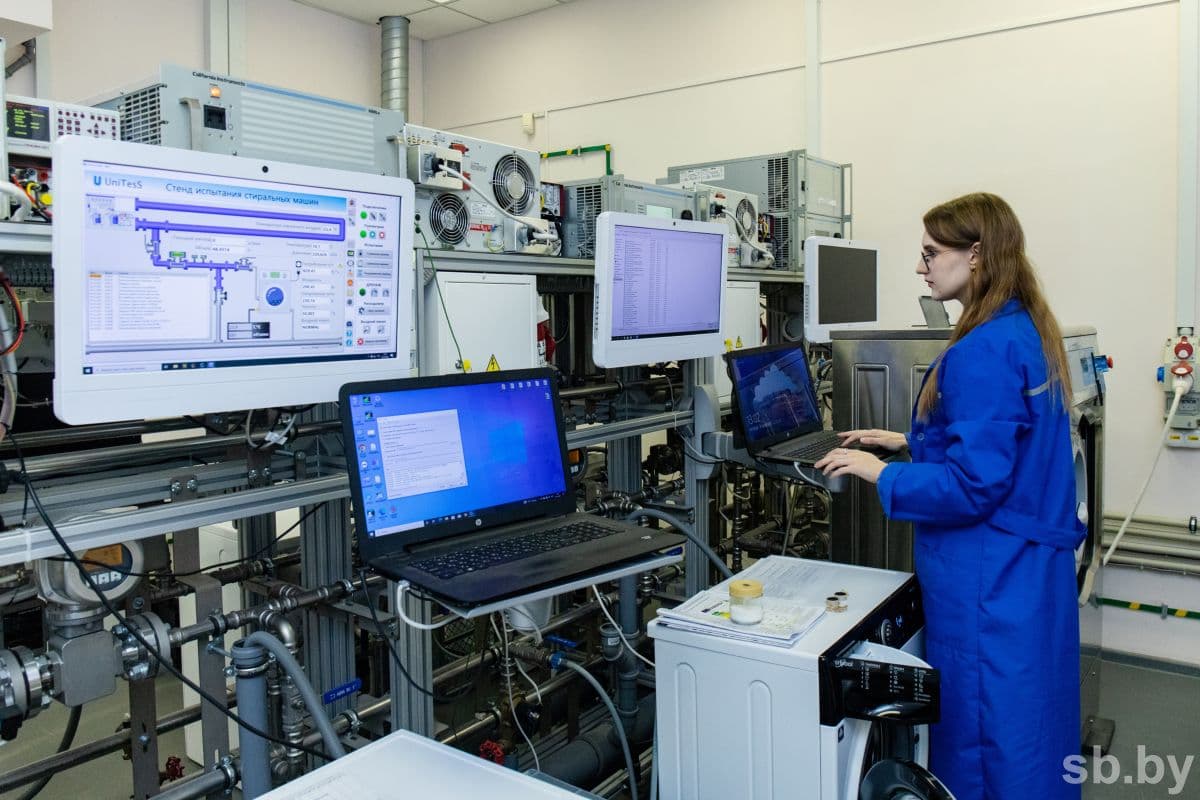
Speaking about the modern development of state standardization as the main element of the quality infrastructure in our country, it should be noted that in such strategic documents as the Government’s activity program, the Social and Economic Development Program of the Republic of Belarus for 2026-2030, it is standards that play a key role in supporting the development of industry, the development of new industries. To fulfill the tasks of innovative development of industry in standardization, emphasis is placed on the development of advanced standards in high-tech industries.
State Standard, together with industry regulators and practitioners, the National Academy of Sciences of Belarus, has developed and is implementing a program of advanced standardization in priority areas of the national economy until 2029. The program adopted at the end of 2025 has already been supplemented twice. The number of standards during this time has increased from 126 to 153 and includes such segments as digital technologies and artificial intelligence, innovative technologies in industry and agro-industrial complex, biological, chemical technologies, scientific, scientific and technical security of man, society and the state, said First Deputy Chairman of the State Committee for Standardization Alexander Burak.
As a result of the implementation of the program, it is planned to significantly reduce the average age of existing standards, as well as increase the level of their harmonization with international standards. One of the primary strategic tasks, the implementation of which is facilitated by advanced standardization, is the implementation of a systematic approach to the development of robotization in the country through the development of design standards, safety requirements, methods for testing robots, robotic systems.
- In total, it is planned to develop 22 state standards in this field, including on the basis of international requirements and national standards of the People's Republic of China. Three standards establishing basic requirements have already been developed and approved, the First Deputy Chairman of the State Standard noted. Today, artificial intelligence technologies as separate technical solutions are beginning to be introduced in the production and social spheres, which, respectively, requires terminology, semantic and technological unification. In accordance with the state standardization plan for 2026, five state standards in this area are being developed.
- One of them – on artificial intelligence management systems – has been adopted and will be put into effect from May 1, 2027. It defines requirements and provides guidance for the establishment, implementation, maintenance and continual improvement of an AI management system in an organization context. It can be used by companies that provide or use products or services that use these systems. The standard is based on a classic cycle of continuous improvement. Special attention is paid to the management of specific risks of AI, such as algorithm bias, distortion of model information, ethical aspects. The introduction of this standard will increase the competitiveness of the organization, explained Alexander Burak. By the way, since the beginning of the year, the State Standard has approved, put into effect 399 standards, 76 have been amended, 353 standards have been canceled, the requirements of which have ceased to be relevant. We are talking about requirements and methods of testing of cements, polyethylene pipes, requirements for roads, food, perfumery and cosmetic products, textile materials and products. The developed standards set high requirements for the quality and safety of products, contributing to curbing the import of low-quality and unsafe products to the country's market, as well as the introduction of new technologies based on international practice.
- The level of harmonization of state standards with international standards in Belarus is planned to increase to 65 percent by the end of 2026. Today, it is 63 percent, said Oksana Grishkevich, head of the Department of Technical Standardization and Standardization of the State Standard. In total, there are more than 32.6 thousand state standards in the country.
A state standardization plan has already been formed for next year. It includes 739 topics.
- Emphasis will be placed on the development of standards in high-tech industries containing modern requirements in support of the development of industry, social sphere, quality and safety of products, works and services, added Oksana Grishkevich. Today, additive technologies are one of the key areas within the framework of the Industry 4.0 concept. Successful implementation of these innovations in the real sector of the economy requires a reliable regulatory framework and modern laboratory support. Belarus is approaching the active introduction of relevant production to enterprises.
- Within several years, we plan to complete a large test complex, which will concern both the testing of materials directly used in additive technologies and products that are the result of such production, said Alexander Skuratov, Director of the Belarusian State Institute of Standardization and Certification. Recently, our specialists are sent to the Russian Federation for an internship to work out in detail the phased implementation of new standards and test methods.
An important step in systematizing this work will be the signing of a roadmap for the development of additive technologies at the scientific and practical conference, which will be held on October 16. The document is designed to ensure a planned and consistent transition to new requirements.
In addition, the Belarusian State Institute of Standardization and Certification is completing the creation of a base for testing DC charging stations.
- In 2024, BelGISS successfully implemented a direction for testing AC charging stations for electric transport in terms of electrical safety and electromagnetic compatibility. In 2026, work is completed to create a base for testing DC stations. Thus, the country will create a full complex for testing the infrastructure of electric transport. This is fully in line with the Government’s targets to increase the fleet of electric vehicles in the country. The introduction of new requirements for new generation charging stations will become a reliable support for domestic manufacturers and will strengthen their export potential, the head of the institute said.
Another promising area that the Institute is working on at the design stage of standards is the cybersecurity of unmanned electric vehicles. This topic is becoming key in the leading automotive countries due to the active penetration of digital technologies in the transport sector.
sichevich@sb.by


