Germany: Polyps and Prejudice
On November 28, the German Cancer Society (DKG) and the Federal Association AOK have released data for 2025. About 695,000 preventive colonoscopies were performed in the compulsory health insurance system. In 2019, there were 533,000. It's 30.6 percent. During a bowel examination, a doctor can detect polyps — some turn into malignant tumors over time — and remove them immediately. German news in Russian
Good statistics are able to effectively go on stage. Especially when it is accompanied by the words “growth”, “record” and “positive dynamics”. The audience is ready to applaud, but the attentive viewer notices a curious detail: behind the bright percentages are different age groups, changed rules and unequal methods of counting. And then the solemn report suddenly turns into an intellectual puzzle.
He has no name, biography or criminal record. There are only a few millimeters of tissue of interest to the doctor. As long as it's not cancer. He may never be one. But sometimes it is with such formations that a long history of the disease begins. Modern diagnostics allows you to intervene in the plot before the main troubles appear. For the patient, this may be the most important step.
Evidence in the gut
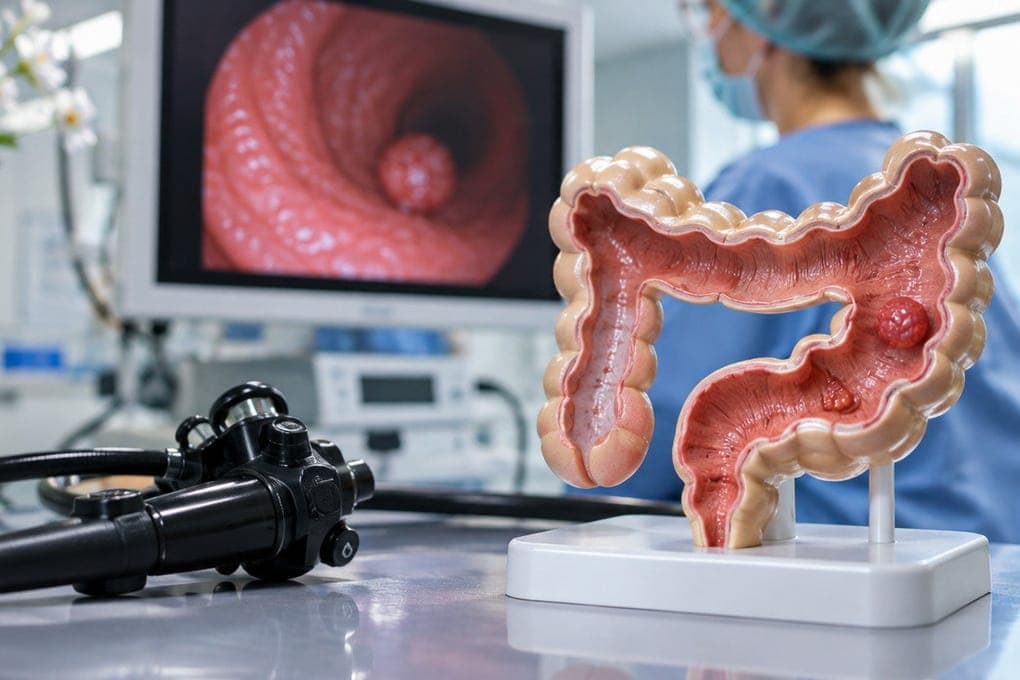
On November 28, the German Cancer Society (DKG) and the Federal Association AOK have released data for 2025. About 695,000 preventive colonoscopies were performed in the compulsory health insurance system. In 2019, there were 533,000. It's 30.6 percent. During a bowel examination, a doctor can detect polyps — some turn into malignant tumors over time — and remove them immediately. Sometimes it prevents the disease, rather than just learning about it sooner. But the procedure requires preparation, carries a small risk of complications and does not provide lifelong protection.
Where did the interest go?
Where did the growth come from? In April 2025, hospital funds began to pay for preventive colonoscopy for women from the age of 50, instead of 55, as before. For men, the age threshold remained the same. The expansion of the number of participants also affected the statistics. It is worth recalculating the studies per 100,000 insured, and instead of 30.6% we get 17.3%. Not changing numbers, but a different way of measuring. Now from the age of 50, women and men can choose: a stool test for hidden blood every two years or up to two preventive colonoscopies with a ten-year interval. A positive test is not a diagnosis. The result is usually clarified by colonoscopy.
Addition with a minus sign
Mammography is even more interesting. In 2025, about 3.25 million studies were conducted against 2.78 million in 2019: plus 16.8%. However, in terms of 100 thousand insured – a decrease of almost 2%. In 2024, the upper age limit of the program was raised from 69 to 75 years. Now women 50-75 years old have the right to be examined every two years; for the older group, invitations are introduced in stages, you can register yourself. The next expansion is scheduled for August 2027: women aged 45-49 will be able to join the program. Personal invitations are expected from January 2028. Mammography does not prevent the occurrence of breast cancer, but helps to detect it earlier. There is also the flip side: false alarms, additional checks, overdiagnosis - identifying tumors that would not cause harm.
Every man has his own test
Cervical cancer screening is the most common in Germany: approximately 14.9 million surveys in 2025. This is slightly less than in 2019. Women 20-34 years old are given an annual cytological smear, from 35 years - a combined test for cellular changes and human papillomavirus (HPV) every three years. The HPV vaccine recommended for girls and boys helps prevent some cancers. Tests for prostate cancer increased by 12.2%. But a cashier-paid annual checkup of men from age 45 is not the same as a PSA blood test. Updated medical guidelines put emphasis on PSA after discussing the benefits and risks with a doctor, although the standard cashier program still provides for a finger exam. Due to false alarms and overdiagnosis, an individual solution is especially important here. Skin screening has barely increased: plus 0.5%. From the age of 35, it is usually paid every two years.
Life behind the table
The main trap of the report is to take the number of procedures as the number of lives saved. The figures do not show how mortality has changed or how easy it is to get to a doctor in different lands. The AOK believes that interest in checking the intestines has grown, including thanks to letters-reminders from the health insurance offices. Sometimes this kind of letter helps to stop postponing an important conversation. But screening is designed primarily for people without complaints. If symptoms appear, you do not need to wait for a scheduled invitation: a diagnosis is necessary. Victory over the disease is not a record line in the report. It's the danger seen in time. Or a removed polyp that was never allowed to become cancer.
This is what Germany says:
Germany - Nice paradise. But in different apartments. Love without a common address: more than half of singles 60-69 years old admit a serious relationship with separation. Why do not even lovers rush to move?
Germany – The Greens have a Black Monday. A dozen participants. One stranger. Three victims. What was behind the mask, political hatred or something else?
Germany is the Godfather Stollen. Dad, you got a package! How did care for a fragile gift become a matter of parliamentary scrutiny?
Germany - Five-Year Plan - in eight years! The passport is being asked to wait: why does the old rules seem attractive to conservatives again and what prevents a deal with the SPD?
Germany -- Time, wait! Tablet against calendar: metastatic pancreatic cancer has received a new opponent. How does the drug work, who can it help and how much does hope cost?
Germany – The investigation is carried out by sensors. Police are investigating why carbon monoxide has accumulated in the Bad Grenenbach chapel. How did the service turn into a large-scale rescue operation?
Germany: Lessons of Defiance. Instead of school desks – city squares, instead of the usual complaints – mass actions. What do young people want, and why did the demonstrations not end peacefully?
Germany is not all net as gross. There was no sadness - the salary was raised. Why did the Zeders support the Greens and the CDU allies demand to find 4.2 billion euros first?
Germany is a quiet night, dear sip. In Munich for mulled wine with champagne ask 18 euros. How much does the holiday mood in different cities of Germany cost and what are buyers willing to overpay for?
Germany – The rich are afraid, too. Looking for a Lost Buyer: German trade looks to the wealthy and the 50+ generation. Why don't people with money rush to the checkout?
Germany: Citizenship and Prejudice. Offenbach, Saarbrücken, Berlin: German cities are becoming more multicultural. What do passport ratings show and what conclusions can not be drawn from them?
Germany is an indulgence for a gas station. The Minister of Economy wants to free gas stations on the highways from the future price ceiling. Why is the government willing to put up with high prices for the sake of uninterrupted fuel sales?