
En Yaroslavl, el vendedor de billetes falsos para los partidos de Lokomotiv escuchó el veredicto
The Frunze District Court of Yaroslavl considered a criminal case on charges of a 22-year-old local resident of fraud, including causing significant damage to a citizen (part 1, 2 of Art. 159 of the Criminal Code of the Russian Federation) and money wash acquired by criminal means (part 1 of Art. 174.1 of the Criminal Code of the Russian Federation). This is reported by the press service of the regional court.
The Frunze District Court of Yaroslavl considered a criminal case on charges of a 22-year-old local resident of fraud, including causing significant damage to a citizen (part 1, 2 of Art. 159 of the Criminal Code of the Russian Federation) and money wash acquired by criminal means (part 1 of Art. 174.1 of the Criminal Code of the Russian Federation). This is reported by the press service of the regional court.
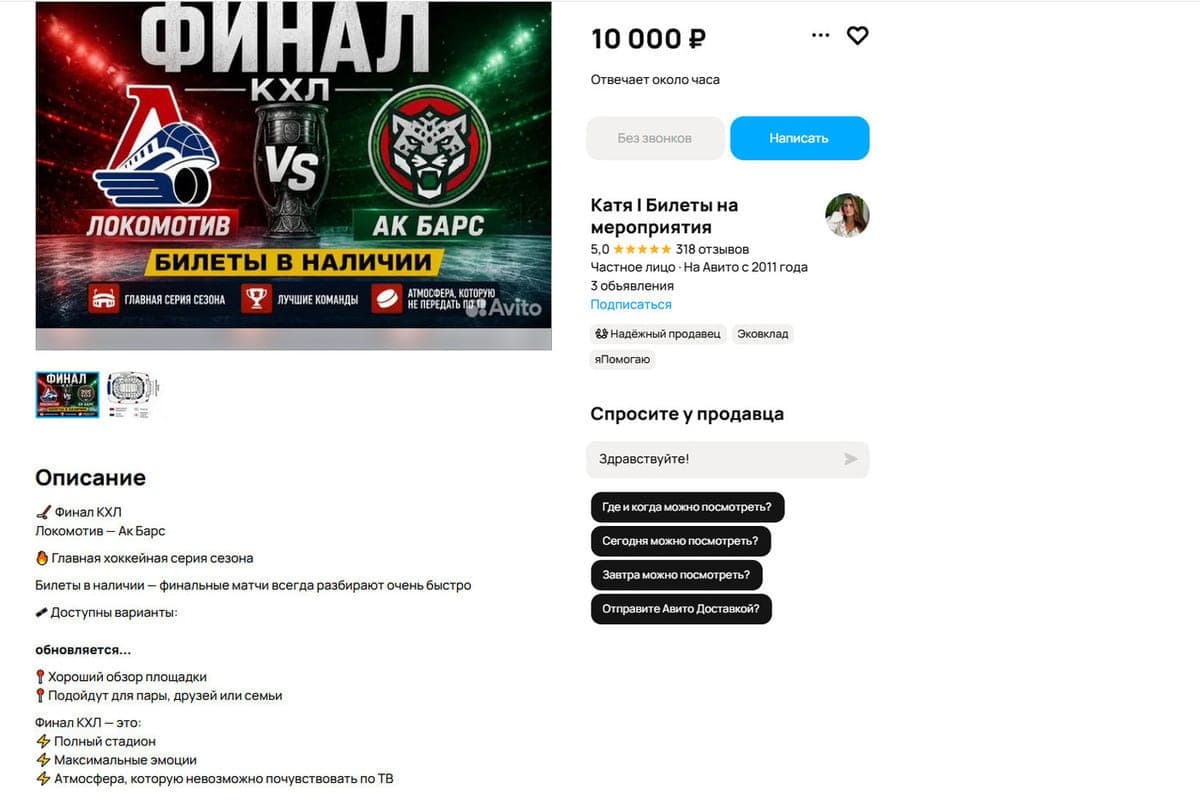
Billetes falsos para los partidos caseros de “Lokomotiv” no en moderación cunning ciudadano vendido en mayo 2026, durante la serie semifinal de playoffs. Fingió ser un hombre que realmente quería ir al partido, pero no pudo y puso entradas a un descuento. Con una prisa de demanda de partidos, los compradores fueron encontrados inmediatamente y no hicieron preguntas innecesarias. Envié un pago anticipado. El estafador hizo billetes falsos en un ordenador con un editor gráfico y los envió a los clientes en correspondencia.
“Para ocultar los rastros de la actividad criminal, el acusado obtuvo acceso a las cuentas bancarias de su hermana, que no sabía del robo. The victims’ funds received on these accounts were subsequently cashed, transferred to their own accounts in various banks, the press service of the court said.
Prohindey estaba vendiendo falsificaciones a gran escala. De las actividades del estafador 15 personas, el daño total ascendió a más de 130 mil rublos.
All illegally obtained funds the fraudster returned to the victims during the investigation.
The court, having considered the circumstances of the case, found the man guilty of 15 incidents of fraud, including causing significant damage (part 1, 2 of Art. 159 of the Criminal Code of the Russian Federation), as well as of legalizing money received as a result of committing a crime (part 1 of Art. 174.1 of the Criminal Code of the Russian Federation). He was sentenced to a final sentence of 320 hours of compulsory work with a fine of 30 thousand rubles.


