
In Yaroslavl, the seller of fake tickets for Lokomotiv matches heard the verdict
The Frunze District Court of Yaroslavl considered a criminal case on charges of a 22-year-old local resident of fraud, including causing significant damage to a citizen (part 1, 2 of Art. 159 of the Criminal Code of the Russian Federation) and money laundering acquired by criminal means (part 1 of Art. 174.1 of the Criminal Code of the Russian Federation). This is reported by the press service of the regional court.
The Frunze District Court of Yaroslavl considered a criminal case on charges of a 22-year-old local resident of fraud, including causing significant damage to a citizen (part 1, 2 of Art. 159 of the Criminal Code of the Russian Federation) and money laundering acquired by criminal means (part 1 of Art. 174.1 of the Criminal Code of the Russian Federation). This is reported by the press service of the regional court.
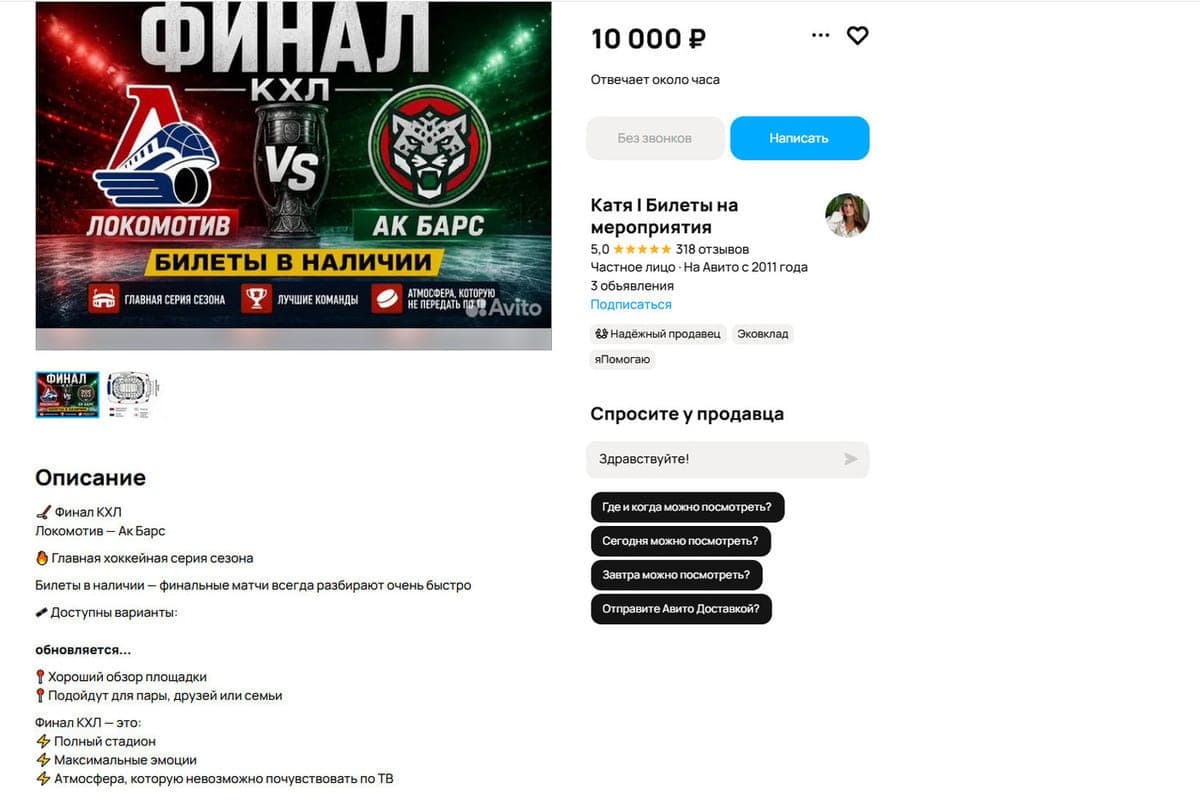
Fake tickets for home matches of “Lokomotiv” not in moderation cunning citizen sold in may 2026, during the semifinal series of playoffs. He pretended to be a man who really wanted to go to the match, but could not and put tickets at a discount. With a rush of demand for matches, buyers were immediately found and did not ask unnecessary questions. Sent a prepayment. The fraudster made fake tickets on a computer with a graphic editor and sent them to customers in correspondence.
“In order to conceal the traces of criminal activity, the defendant gained access to the bank accounts of his sister, who was unaware of the theft. The victims’ funds received on these accounts were subsequently cashed, transferred to their own accounts in various banks, the press service of the court said.
Prohindey was selling fakes on a grand scale. From the activities of the fraudster 15 people, the total damage amounted to more than 130 thousand rubles.
All illegally obtained funds the fraudster returned to the victims during the investigation.
The court, having considered the circumstances of the case, found the man guilty of 15 episodes of fraud, including causing significant damage (part 1, 2 of Art. 159 of the Criminal Code of the Russian Federation), as well as of legalizing money received as a result of committing a crime (part 1 of Art. 174.1 of the Criminal Code of the Russian Federation). He was sentenced to a final sentence of 320 hours of compulsory work with a fine of 30 thousand rubles.


