Gold overtook the dollar, stocks and housing in terms of profitability in Russia for 16 years
Investments in precious metals on a long horizon turned out to be more profitable than in stocks, residential real estate, the purchase of dollars, bank deposits and a number of other assets. The result of precious metals since 2010 was much better
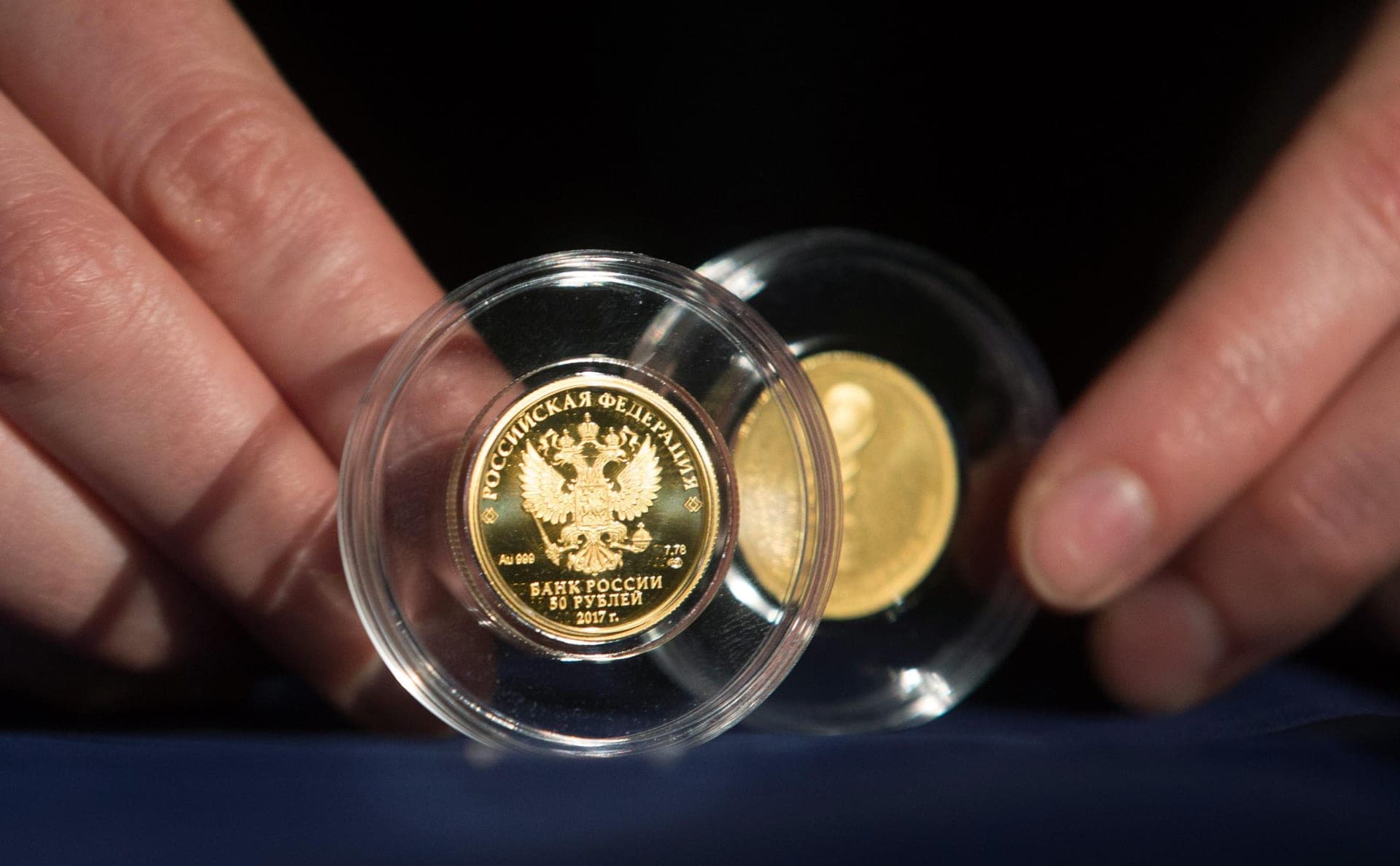
Investments in gold, silver and palladium from 2010 to the first half of 2026 showed in Russia a result that exceeded the effect of investments in US dollars, bank deposits, money market funds, shares of the main index of the Moscow Exchange (including dividend reinvestment) and residential real estate in Moscow. This is stated in the study of Alfa-Capital and the Department of Financial Markets and Financial Engineering of the Financial University “In the shadow of gold: investment characteristics of silver, platinum and palladium” (RBC Investments has).
Among the precious metals, the exception was platinum, the dynamics of which has long been restrained by a decrease in industrial demand. In particular, after the “dieselgate” of 2015, the use of platinum in the production of diesel cars decreased.
Results for 16 years
From 2010 to the first half of 2026, investments in gold brought 846%, taking into account the dynamics of the ruble exchange rate, 784% in silver, and 682% in palladium, follows from the data of the study. Platinum investment brought in 181%. Investments in precious metals were calculated on the basis of discount prices and the official rate of the Bank of Russia.
The bank deposit during the same time brought 330%. When calculating the income from bank deposits, deposits for three months were taken into account with a regular investment of the entire accumulated amount for the same period at the risk-free rate (RUONIA) in effect for the relevant period.
The index of full return (the index takes into account not only the growth in the price of the shares themselves, but also the reinvestment of dividends) during this time increased by 309%.
Investments in the dollar brought 159%, taking into account the official rate of the Bank of Russia.
The growth of investments in real estate in Russia for the period under study was 311%. The authors of the study took into account in investments in residential real estate in Moscow both the price of the property itself (1 sq. m.), and monthly rental income (per 1 sq. m., based on a rate of 3% per annum, taking into account the need for periodic repairs) and their investment at a risk-free rate (RUONIA).
According to the study, money market funds contributed 336% over the period. The increase in the value of the money market fund was modeled based on the values of the RUONIA term rate index.
The impressive result of investments in precious metals, which was obtained for the period from 2010 to the first half of 2026, is achievable in the Russian market using exchange-traded instruments. When buying bullion and coins, it is necessary to take into account the wide spreads between the prices of buying and selling metal – from 10% to 20% on bullion and from 20% to 40% on coins. In addition, when buying silver bars from 2024, you need to pay 22% VAT.
Geopolitical and macroeconomic uncertainty, growing demand from the AI industry and other factors have spurred interest in precious metals among Russian investors. Thus, in 2022-2025, the Russians purchased physical gold in an amount comparable to the gold reserves of Spain and Austria (about 300 tons). The volume of exchange trading in metals by the end of 2023 increased almost fourfold by 2022, and the trend continued in the future.
Opportunities for Russian investors to invest in gold are expanding. If at the beginning of 2022, metals in bars could be purchased in Russia in single banks, then in 2026 this can be done in dozens of banks, as well as at refineries and Goznak, including remotely. Opportunities for investing in precious metals and organized exchange trading have expanded.
Statistics for the third quarter of 2026 show that demand for investment gold in Russia remained at the level of last year. According to the World Gold Council (WGC), in July-September, Russians purchased 9.6 tons of bullion and coins - 1% more than a year earlier. For nine months, the volume of investment purchases reached 30.2 tons (+18% compared to the same period last year).
Investors should consider each precious metal as a separate asset. Gold, silver, platinum, and palladium, while sharing some common drivers, can respond differently to the industrial cycle, investment demand, geopolitics, and technological change.
For silver and platinoids, due to their industrial applications, the structure of final demand is particularly important. Long-term trends in automotive, electronics, energy, robotics and AI infrastructure can have a big impact on prices.
For a Russian investor, it is worth taking into account the currency factor and the way of investing. The dynamics of the ruble is added to the world price for the metal, and in the physical metals market - wide spreads in sales prices and the presence of VAT when buying silver bullion.
Dmitry Skryabin, portfolio manager of Alfa Capital, believes that silver now looks more vulnerable in the current phase of the market compared to gold. The outlook for silver prices is determined by the dual nature of the metal.
On the one hand, it maintains a high correlation with gold and reacts to the same factors:
expectations at the Fed rate, the yield of US Treasury bonds, the dollar rate.
Therefore, the current pressure on gold applies to silver, and due to greater volatility, silver, as a rule, reacts to changes in the monetary background more strongly, the expert said.
On the other hand, silver is much more industrial metal: a significant part of the demand falls on electronics, solar energy and automotive. This makes its dynamics more dependent on the outlook for the global economy. Tightening monetary policy and expensive oil raise the risks of a slowdown in global growth, which for silver means additional pressure through weakening industrial demand, while for gold this could be an argument in favor of purchases, concluded Scriabin.
At the same time, he recalled that the world’s central banks include gold in reserves, and demand from regulators keeps gold from falling deeper, and there is no such support in silver.