
To get sick or vaccinated - that is the question. What makes you afraid of vaccinations today?
At the end of the XVIII century, when vaccinology was just beginning, people drew caricatures of vaccinated with horns and cow muzzles. But what makes you afraid of injections.
At the end of the XVIII century, when vaccinology was just beginning, people drew caricatures of vaccinated with horns and cow muzzles. What makes you afraid of injections today?
Modern vaccinology was born in 1796 thanks to the English doctor Edward Jenner. In those days, smallpox raged - a disease from which they either died or became crippled. There were peasants living next door to Jenner. And this is what the doctor noticed: those who suffered much milder cowpox, then did not get sick with natural. The doctor decided to conduct experiments. First he opened a pustula (abscess) from a peasant woman and transferred the contents to the skin of an eight-year-old boy James Phips. The subject became infected with cowpox and became ill easily, and then Jenner suffered smallpox to the child. The boy survived. This situation was ambiguously perceived by doctors, scientists and priests. At first, people created caricatures out of fear: they drew people with horns, with cow faces. This is how vaccination will work for a person. Exactly 230 years have passed since then, but anti-vaxxers continue to scare the public.
We tend to collect different opinions and, unfortunately, focus on the negative. There are many misinformation and myths about vaccines. A spoonful of tar is added to social networks: we read that somewhere in familiar friends the child suffered a hard vaccination - and we decide not to give an injection to our own. Not even wanting to imagine what can happen if a person at risk becomes seriously ill.
- The main goal of the vaccine is not so much to reduce the risk of infection, as to prevent severe course and the risk of complications, — emphasizes the Department of influenza and influenza-like diseases Research Institute of Hygiene, Toxicology, Epidemiology, Virology and Microbiology of the Republican Center for Hygiene, Epidemiology and Public Health Natalia Shmeleva. Complications that can occur after the flu, first of all, include the addition of bacterial infections, especially pneumococcal. By preventing influenza, we indirectly prevent the incidence of bacterial infections. Accordingly, we reduce the risk of using antibiotics and indirectly prevent the development of antibiotic resistance. The interlocutor drew attention to the fact that the widespread use of antibacterial drugs contributes to the fact that pathogens become resistant and it becomes more difficult to fight them:
Flu vaccines are safe and approved for use in humans from six months of age. The only contraindication is an allergy to chicken protein. All vaccines used in Belarus are grown on chicken embryos. They are highly purified but may have minimal trace amounts of chicken protein. Is Vaccination Causing Autism? Scientists have long refuted this one of the most popular myths, but it is worth saying that it did not arise out of nowhere. In 1998, British doctor Andrew Wakefield wrote an article that the introduction of a vaccine against measles, mumps and rubella leads to autism. Moreover, his “scientific work” was published in the authoritative journal The Lancet. People began to refuse vaccinations, outbreaks of infections arose - proceedings began. It turned out that Wakefield, first, violated the methodology by conducting research on only 12 children, and secondly, he had a financial conflict of interest: he worked for lawyers who were preparing lawsuits against drug companies. This is how one man’s self-interest undermined the credibility of vaccination for years to come. In Denmark, more than 600,000 children were monitored over the next ten years. Similar studies were conducted in France, America, Japan. There is no link between vaccines and autism. However, anti-vaxxers continue to advocate the opposite. In the early 2000s, another myth was actively discussed: allegedly, people are chipped through vaccinations. They say that a person was injected with the drug and coded for a certain short life expectancy. And all this time the patient will be monitored by special services. It's all bullshit. But doctors are convinced that if such fears persist, doctors need to work more actively with people.
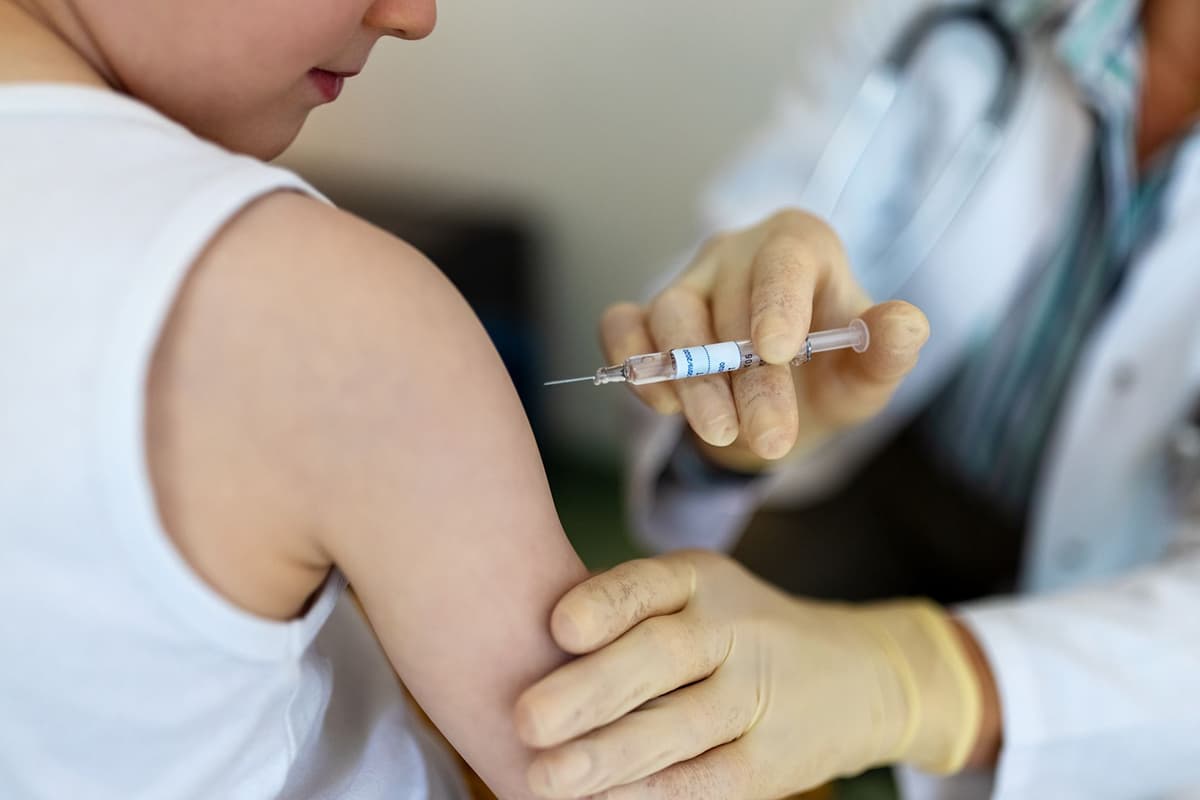
- These include children from six months to three years, the elderly over 65 years, people with chronic diseases, immunosuppressive conditions, pregnant women. Vaccination is indicated for children and adults who are in institutions with a round-the-clock regime of stay, as well as doctors, teachers, trade workers, catering and others. In general, vaccination is important for everyone.
Many years of experience in the prevention campaign have fully proved its effectiveness. Vaccination reduces the likelihood of getting sick by 60 - 90 percent, and it is difficult to transfer the disease until resuscitation - almost 100 percent. More than 2 million people are expected to be vaccinated annually in Belarus during mass influenza vaccination.
- Immunity is produced about 2-4 weeks, so you need to be vaccinated in advance. This can be done from October to December, says Inna Karaban. The drug works about six months. If you were vaccinated in 2025, it does not count.
There’s another reason to take an injection every year. The flu virus is variable, so vaccines are constantly updated. A feature of H1N1 influenza, which is expected to circulate this epidemiological season, is its easier penetration into the lower respiratory tract and faster attachment of bacterial infection. Favourable fact

KSTATI
The word "vaccination" comes from the Latin vacca - "cow". The term was coined by French chemist Louis Pasteur 100 years after the invention of Edward Jenner. We can say that vaccinology has a very long and successful path of development. Make the right choice: Why get vaccinated? I’d rather get sick, and the immunity will be stronger, too?

Sometimes, after a natural infection, a more stable immunity appears. But the side effects of vaccination are absolutely not comparable to what a person suffers during an illness. After vaccination, only redness and compaction at the injection site is possible, among the general reactions - weakness, headache, a slight increase in temperature. Vaccination is always safer than any previous infection.