Look at life with eyes wide open. In Minsk summed up the results of the contest “Eurasia.DOC: 4 minutes”
In the finals of the youth competition of documentary films “Eurasia.DOC: 4 minutes” passed 14 authors. The participants were young people from Belarus,...
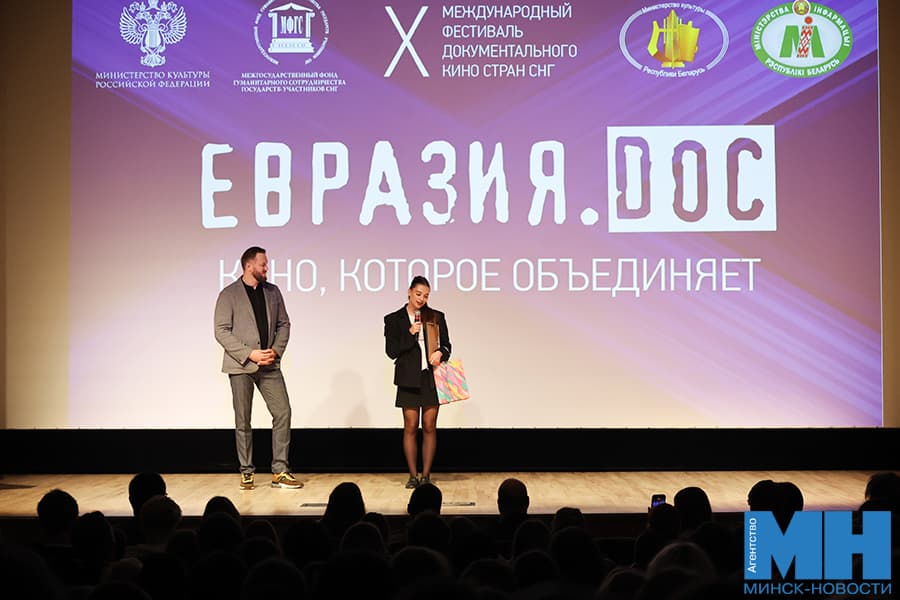
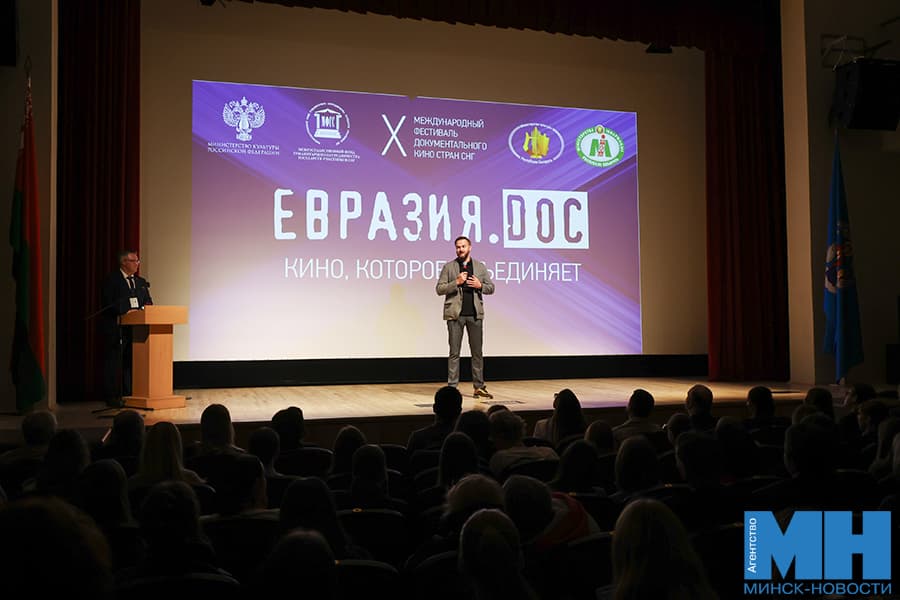
In the finals of the youth competition of documentary films “Eurasia.DOC: 4 minutes” passed 14 authors. The participants were young people from Belarus, Russia, Bulgaria and China. The results were summed up in Minsk on October 2, the correspondent of the Minsk-Novosti agency reports.
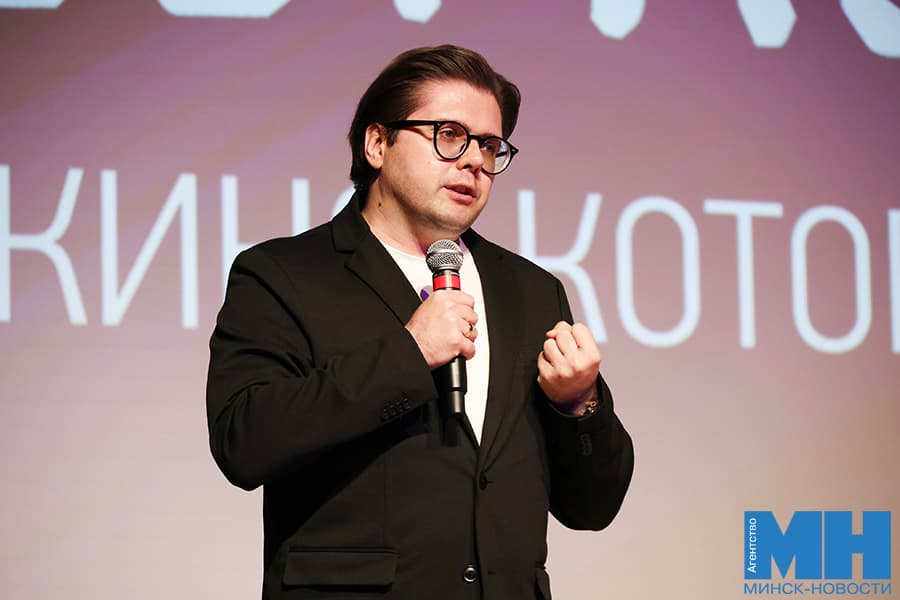
- The most amazing thing is that we do not have a generational gap in documentary between young authors and masters. Without colluding, both chose similar themes for their work – large documentaries and short four-minute films. One of the key topics was the 85th anniversary of the Great Patriotic War and the genocide of the multinational Soviet people, said Andrey Krivosheev, Director General of the Minsk-Novosti Agency, Executive Director of the Eurasia.DOC Festival.
According to him, some aspects in the works of the contestants were spiritual values and the importance of religion in human life. The youth also shared their response to military conflicts, which show the suffering of ordinary people – children, youth, pensioners, the pain of loved ones. Special attention was paid to traditional crafts, support of culture.

- Some of the paintings became youth manifestos. Among the 50 works, stories related to ecology, asceticism and loneliness on the Internet were shown. We, as organizers, did not impose a specific topic on any of the participants. Everyone chose what he liked, so the work done became more valuable, Krivosheev added.
Among the works of the jury noted the film “Mom, roll!” Ekaterina Nikitina (Russian Federation). It would seem a provocative name, but behind it is the desire of parents to be closer to their teenage children, including in extreme sports.
The international documentary film festival of the CIS countries “Eurasia.DOC” began in Smolensk (Russia), and ends in Minsk (Belarus). This year, both cities became youth capitals of Belarus and Russia, so the jury paid special attention to them.
According to A. Krivosheev, documentary films should be shot from the students. The experience gained may be useful later.
The authors were impressed by the fact that in a very short time they were able to convey a huge meaning. I would like to highlight the film “Mother Gabriel and 10 Princesses” by Daria Oshmankiewicz. I liked that the author touched on the topic of family, childhood and motherhood. We pay a lot of attention to this problem in public activities, said Alexander Kopelev, Chairman of the International Business Meeting of the Belarusian Public Association “Rus”, Advisor to the Chairman of the Board of the Republican Public Association “Belarusian Union of Cinematographers”. Although young authors have little experience, they look at this life with wide-open eyes, which is very important for their future.
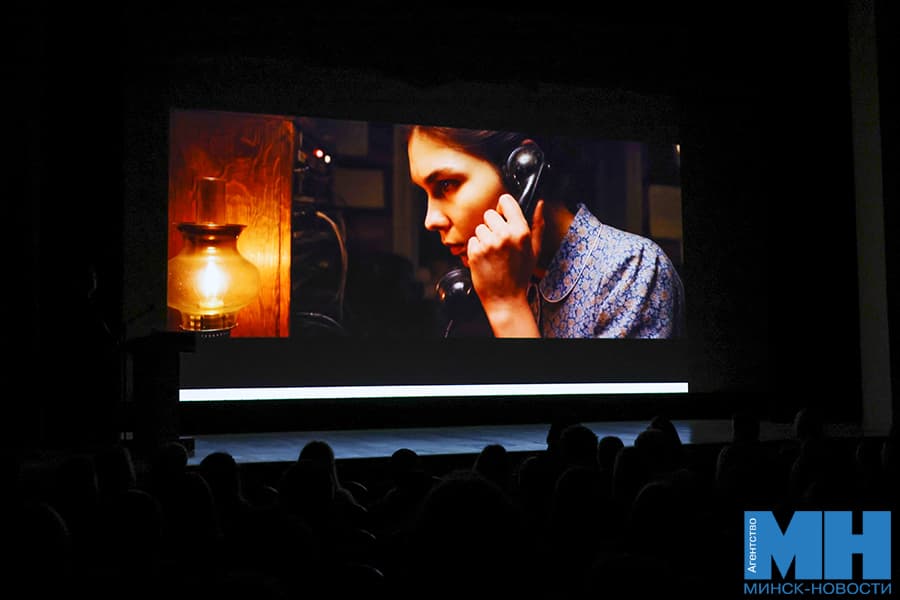

Editorial correspondent of multimedia projects and host of news video issues of the Minsk-Novosti agency Daria Oshmankevich comes from the Belarusian capital. On duty together with the operator went to Grodno. There, the girl learned about the abbess of the Holy Nativity-Theotokhodsky convent, Abbess Gabriel, who created a family-type orphanage. Today there are 10 girls whose mothers and fathers are deprived of parental rights.
- We really wanted to meet them. To my surprise, they welcomed us very warmly, despite all the pain they had endured. Initially, my film lasted nine minutes. The hardest part was to cut it down to four because I felt like I had to keep it all. Senior colleagues came to the rescue. I want to wish all young authors not to be afraid to declare themselves and talk about what seems very important, Oshmankevich said.
The author of the film, two cameramen, a producer and a sound director. That’s how many people worked on the film “Memory”.
We talked with the editor of the information broadcasting company Mogilev Egor Maleyko. He talked about his competitive work.
The heroes of my film were reenactors who dress up as soldiers of the Great Patriotic War, shoot, fight. And all so that people can see how terrible the fighting is. The material was collected for two years, Maleyko shared. To participate in the competition, it was necessary to cut the filmed videos, since the timekeeping should not exceed four minutes. I accomplished this task in a week. The action of the film takes place in the Kazimirovsky forest, where excavations are carried out, the bodies of fallen soldiers are found. Then we moved to the territory of the Bobruisk boiler and told about this place. Many people talk about the importance of historical memory. But how do you keep it? What do you have to do to do that? Who shows by example how to defend historical truth? In the film, I tried to answer these questions.
How professionally to use the neural network when creating films? The jury members of the Eurasia.DOC: 4 Minutes contest allow this, but it is important that the neural network does not falsify information and does not change the author’s position. When technology is used for good, it is only a plus. When working on films dedicated to the Great Patriotic War, to show with the help of AI tears, pain and bitterness is expensive.
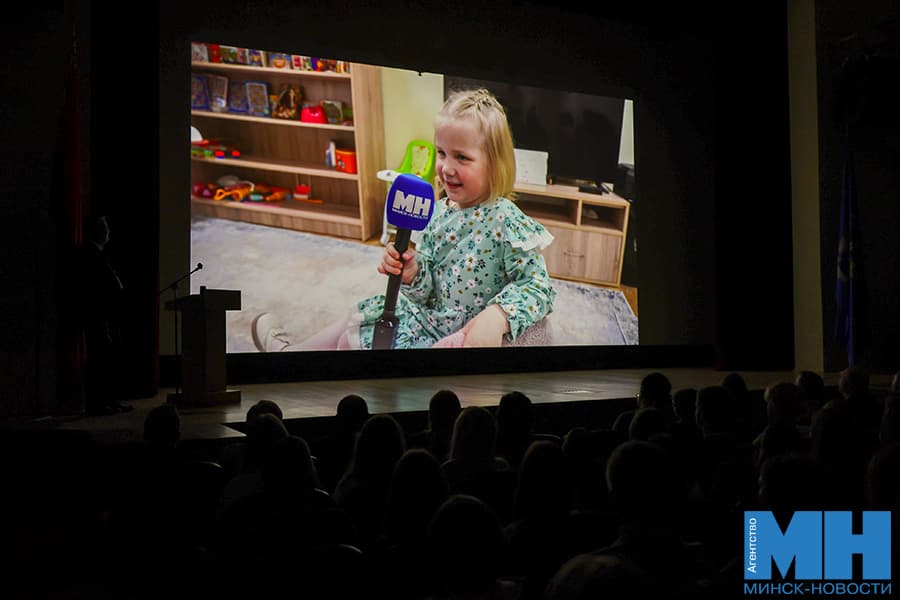
Students of the Department of Journalism of the Faculty of History, Communication and Tourism of Yanka Kupala Grodno State University have prepared an unusual project dedicated to their city.
- Our documentary is dedicated to the sound diversity of Grodno. It's called "The City That Sounds." We collected the most significant sounds for each Grodno citizen. Among them is the battle of the clock of the Cathedral of St. Františka Xavieria (Front Church); the famous phrase “Assyarozhna, Dzvreyajuetsa”, which sounds in public transport. And a trumpeter on a fire tower and fanfare, which are heard daily for many centuries in Grodno, said one of the creators of the film, student Karina Mistyuk.
- We started from the fact that people, especially the younger generation, are heavily immersed in the information sphere – an endless media flow, Karina continued. This does not allow us to fully enjoy life, so we decided to focus on the world around us. The film was shot for two days, after which they took up editing. We had to climb to the highest points of the city - Kalanchu, the tower of the Farnoy Church. The weather made its adjustments to the work - frequent showers and gusty wind. But the team spirit helped to cope with the tests. Five people worked on the film.
Photo by Elizaveta Davidovskaya