
Supermoon in 2026: how the Beaver Moon on November 24 differs from the usual full moon
Full moon November 24, 2026 will come at 17:53 Moscow time
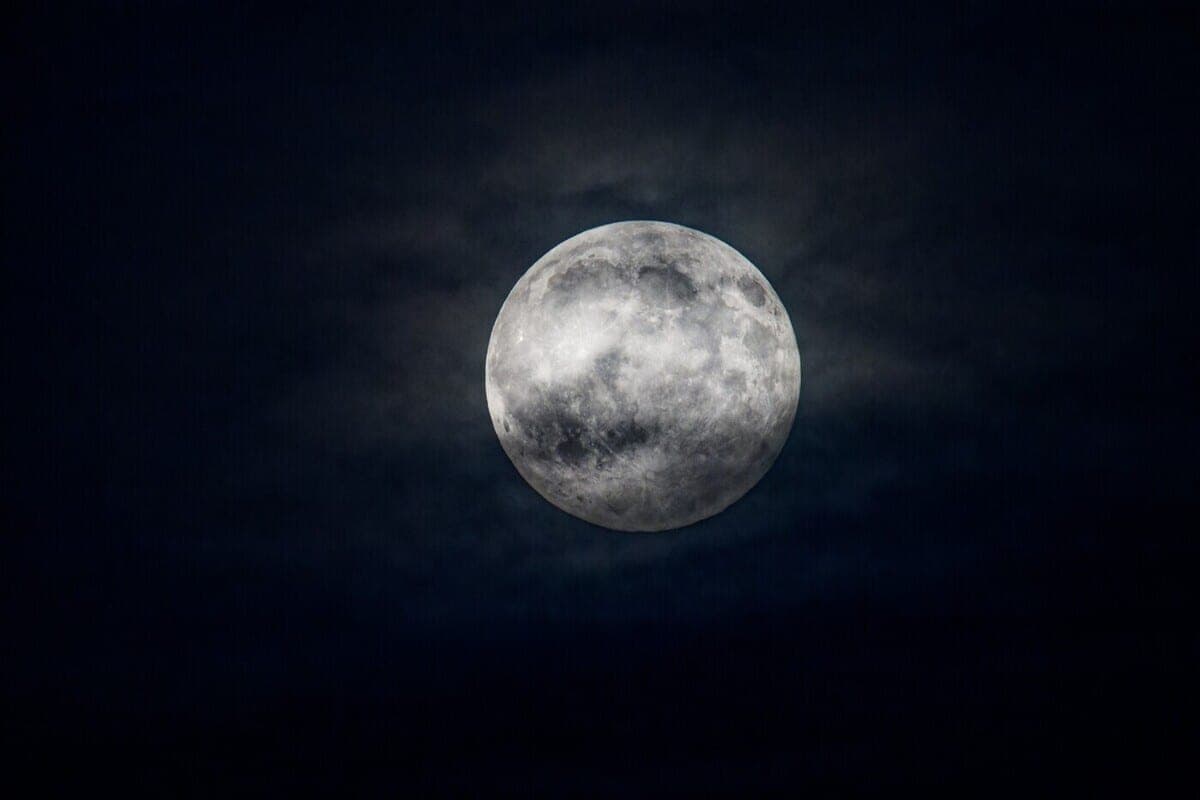
A supermoon is called a full moon or new moon, which occurs near perigee - the point of the lunar orbit, where the Earth's satellite is closest to it, astronomer Elizaveta Parfenova told mk.ru.
Three digits are enough to represent the scale. The average distance from the Earth to the Moon is 384,400 kilometers. At perigee, it is reduced to 356-370 thousand, and at apogee, the most distant point of the orbit, it grows to 405-406 thousand. Between the closest and farthest full moon of the year, the visible disk of the moon differs by about 14% in size and 30% in brightness.
In practice, a supermoon is almost always called a full moon. The new moon at perigee also fits the definition, but it can not be seen: in this phase, the moon faces the Earth with an unlit side.
It's important
There is no astronomical definition of the term supermoon. NASA uses the wording "full moon within 90% of perigee", but there is no single standard. Some sources consider the full moon to be a supermoon within 356,600 km of Earth, others within 360,000 km or even 370,000 km.
The term appeared in 1979: it was coined by American astrologer Richard Nolle for an article in the journal Dell Horoscope, and the rule “90% of perigee” is also his, chosen arbitrarily.
The supermoon is an interesting phenomenon, but ordinary: it happens from three to six times a year, often in series - two or three in a row. Each supermoon lasts three to four days, which is why the moon appears full for several nights, although the moment of the full moon itself is a point.
There is also the reverse phenomenon - a micromoon: a full moon at the apogee, when the disk, on the contrary, seems slightly smaller than usual. In 2026, there are three micromoons.
The nearest supermoon is November 24, 2026, the moment of the full moon at 17:53 Moscow time. There are three in 2026.
362,312 km
360,768 km
356,740 km
The first supermoon, Wolf Moon, took place on January 3, the second - November, the third will be on December 24. December will be the closest and brightest for the year: the Moon will approach the Earth at 357 thousand kilometers against 361 thousand in November.
The supermoon is visible throughout Russia under clear weather conditions. The differences between the regions relate only to the time of moonrise and what hours of day the full moon is.
When to watch the supermoon in November 2026
november 24, 16:53
november 24, 17:53
november 24, 18:53
november 24, 19:53
november 24, 21:53
november 24, 22:53
november 25, 00:53
november 25, 02:53
The best conditions for observation:
The telescope is optional – the supermoon is perfectly visible to the naked eye.
As noted in an interview with mk.ru astrologer Svetlana Wright, even in ordinary binoculars on the surface of the moon you can see dark areas - lunar seas. The name may be misleading: there is no water there, these are vast plains that were formed as a result of ancient outpourings of lava, over time frozen on the surface.
The telescope allows you to see much more details – large craters, mountainous areas and light rays that diverge from some relatively young craters.
On the phone
The DSLR camera
Tides and flooding risks
A supermoon is a coincidence of a full moon with perigee, the closest point to Earth in lunar orbit. The attraction of the moon at this moment is slightly stronger than usual, and on the tides it is reflected noticeably. This tide is called perigee syzygy, behind it the colloquial name king tide - "royal tide".
According to NOAA, the US National Oceanic and Atmospheric Administration, coastal flooding does not occur at every perigee syzygy tide. But combined with seasonal sea-level rise, such tides are capable of flooding low-lying areas. And if the perigee tide is stormy, flooding can be much stronger than it would be without it.
As it looks in practice, showed the fall of 2025: according to Fox Weather, royal tides, coinciding with the supermoon, led to flooding on the coast from Florida to North Carolina.
Influence on well-being and behavior - a myth
The effect of the supermoon/full moon on well-being and behavior is not supported by scientific evidence. The most famous test is a 1985 meta-analysis in the journal Psychological Bulletin: psychologists James Rotton and Ivan Kelly collected 37 studies where the phases of the moon were compared with ambulance calls, crimes, suicides and psychiatric visits. The moon phase accounted for no more than 1% of the differences, and the connections that individual authors found were explained by statistical errors and unaccounted for factors.
Why the belief in the lunar effect holds, the researchers explain selective memory: a strange event on the night of the full moon is remembered and retold, the same event in another phase – no.
Relation to earthquakes
It is important to distinguish the two phenomena. The moon does create tidal stresses in the Earth's crust, so scientists are studying whether changing these stresses could affect faults already in critical condition. Current research shows that tidal and other external loads can modulate seismicity in some conditions, but this does not mean that a supermoon can cause a strong earthquake on its own.
The maximum we can talk about is a slight change in the mechanical load on the earth’s crust.
The beaver moon is not an astronomical term, but the popular name for the November full moon. Such names came from the traditions of the Native American peoples, especially the Algonquins, were picked up by colonists, later they became popular thanks to the media.
There are two explanations: in October and November, beavers finish building huts and dams until the water freezes, and for hunters this is the prey season. The November full moon was also called in another way - the Frost Moon, the Frost Moon, the Shiga Moon, but the Beaver Moon took root.
The beaver moon of November happens every year, and the supermoon becomes only when the full moon coincides with perigee. In 2026, both coincided – hence the Beaver Supermoon.
The series of close full moons will continue in 2027.
When is the supermoon in November 2026?
november 24 at 17:53 moscow time.
What does a supermoon look like?
The moon appears to be 7–8% larger, and its brightness is about 15–16% higher than the average full moon. Especially spectacular is the moon, which is low above the horizon.
Is there a supermoon in Russia?
Yes, throughout the country in clear weather.
Does the supermoon affect your health?
There's no scientific evidence.


