In the Arkhangelsk region develop the “Imperial route” through the ancient monastery
Governor of the Arkhangelsk region Alexander Tsybulsky and Chairman of the Supervisory Board of the Elisaveta-Sergius Educational Society Anna Gromova visited the Holy Trinity Anthony-Sii Monastery
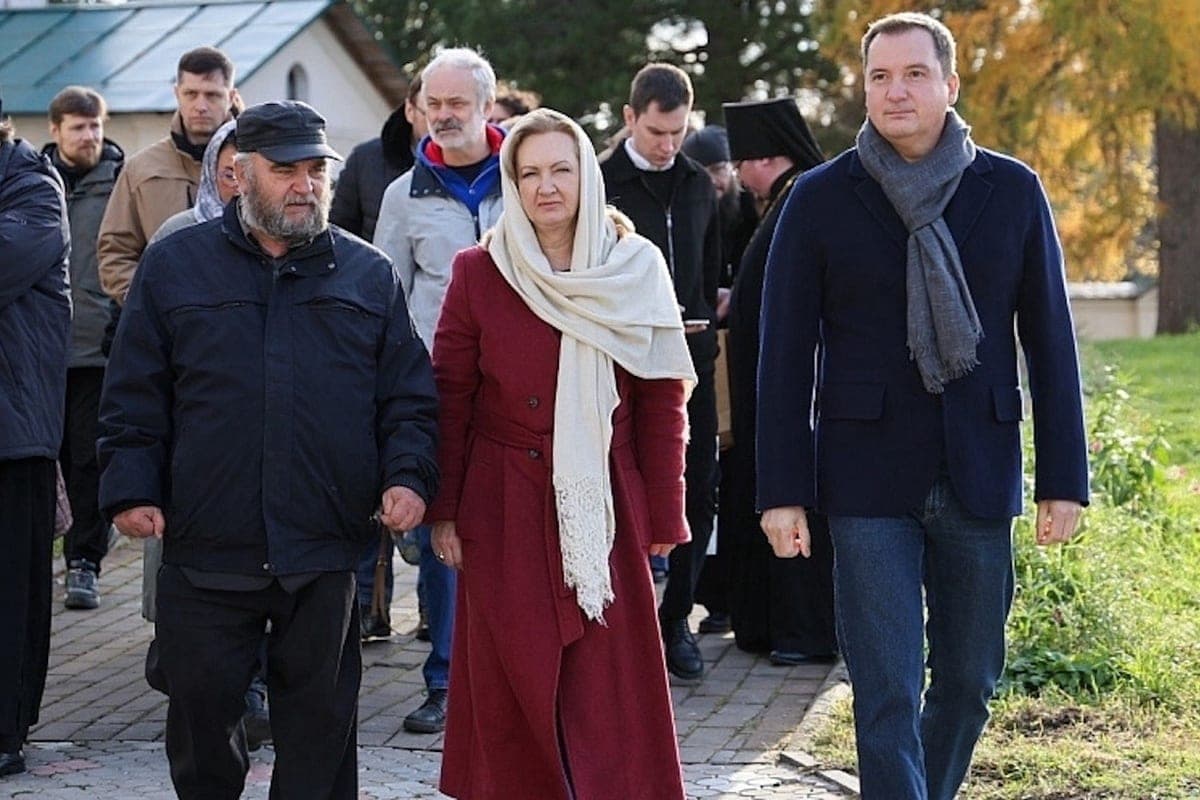
The Governor of the Arkhangelsk region Alexander Tsybulsky and the Chairman of the Supervisory Board of the Elisaveta-Sergius Educational Society Anna Gromova visited the Holy Trinity Antoniev-Siisky Monastery. They examined the historical buildings of the monastery and discussed the prospects for the development of the tourist project “Imperial Route”.
The monastery, founded in 1520, became one of the key objects of the route in Pomorie. Its history is closely connected with the Romanov dynasty. In the late XVI - early XVII century, boyar Fyodor Nikitich Romanov, the father of the first tsar from the dynasty Mikhail Fedorovich, was in exile here. Taking monastic tonsure with the name Filaret, he later became Patriarch of Moscow and All Russia. In the XIX century, the monastery was visited by Emperors Alexander I and Alexander II, as well as the Grand Dukes.
Alexander Tsybulsky noted that the inclusion of the monastery in the “Imperial Route” helps to acquaint travelers with the history of the Russian North and preserve the memory of representatives of the royal family. According to him, the region will continue to work to protect the spiritual and cultural heritage and develop interest in historical sites.
During the visit, the Governor and Anna Gromova visited the architectural ensemble of the monastery. It includes the Trinity Cathedral, the Annunciation Church with a refectory and the Sretenskaya Church - objects of cultural heritage of the peoples of Russia. Guests also visited the monastery museum.
The progress of the restoration and the history of the monastery was told by her viceroy, Hieromonk Luke (Kostolomov). After a period when various institutions were located on the territory of the monastery, including a labor commune and a children's colony, monastic life is revived here. Now in the monastery daily services are performed, educational activities are conducted.
Anna Gromova stressed that the importance of the Imperial Route goes beyond the tourism industry. The project helps to preserve historical memory and unites the regions around a common goal – respect for cultural heritage. She expressed confidence that the history of the monastery will be interesting for travelers coming to the Russian North.
Arkhangelsk region joined the federal project in June 2024. For the region, an interregional route "Arkhangelsk North - under the scepter of the Romanovs" was developed. It includes the Arkhangelsk Gostiny Yards, the embankment of the Northern Dvina, the oldest steamer-wheeler “N.V. Gogol”, the Antoniy-Siysky Monastery, the Kholmogory and historical places of Kargopol.
For five centuries, the monastery became not only the spiritual, but also the cultural center of Podvinje. Books were copied here, icon-painting and engraving workshops worked, one of the largest monastic libraries of the Russian North was formed.
Today the monastery continues its spiritual, educational and social activities. Every year it is visited by up to five thousand Russian and foreign pilgrims. Tours around the territory with a visit to the museum and the bell tower are organized for tourists.
In June 2026, the monastery gave the icon of the Life-giving Trinity, created in the traditions of the ancient image of St. Anthony of Siysk. In addition, the monastery was included in the program of the regional section of the tourist project “The Great Russian Northern Way – along the Dvina land to the Holy Archipelago”.
Cooperation between the regional authorities and the Elisaveta-Sergius Educational Society is aimed at preserving the historical heritage and developing educational tourism in the Arkhangelsk region.