Potanin warned of an imbalance in the economy in the “headwind”
The Russian economy has long lived in conditions of “strong headwind”, said businessman Vladimir Potanin in an interview with RBC TV channel. There is now a "certain imbalance" - but authorities are making efforts to cut costs
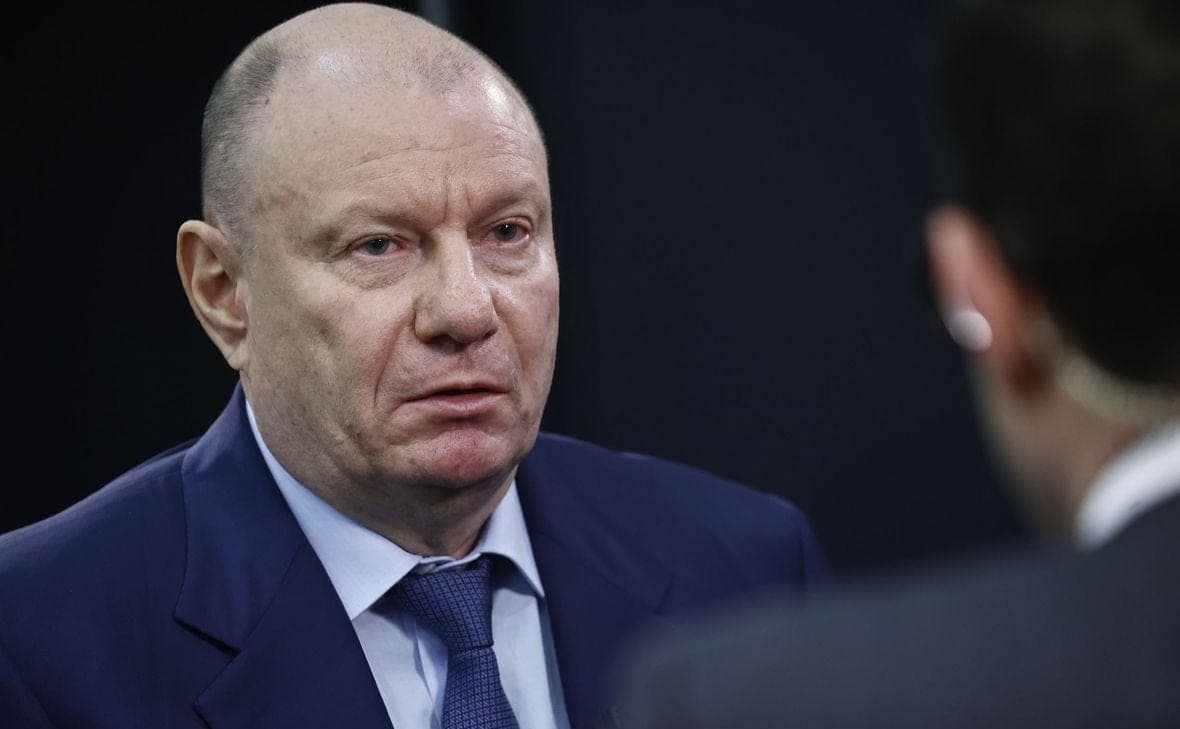
The Russian economy has long been living “in conditions of strong headwinds, including sanctions”, and even such a stable economy still “experiences a certain imbalance”, said in an interview with RBC TV channel businessman, President of Norilsk Nickel Vladimir Potanin.
It is important how long it will be possible to return the economy to a state of balance, the government and the Ministry of Finance are making such efforts, Potanin said.
Read the full text of the interview in the RBC subscription.
Anton Germanovich Siluanov [Minister of Finance] came to a meeting of the RSPP bureau and told what efforts were made, including to reduce public spending. I know firsthand how difficult it is to cut costs even in a private company. What can we say about public finances? Nevertheless, the work has been done. And there are prerequisites for next year it would be possible to switch to moderate growth, Potanin said.
In 2026, the Russian economy will grow by 0.6%, the Ministry of Economic Development predicts. In particular, investment in fixed assets is forecast to decline by 5.4%. Next year, investment activity may grow by 0.2%. At the same time, against the background of increased inflation (according to Minek, prices increased in annual terms by 7.17% as of October 5), the Bank of Russia suspended the cycle of reducing the key rate - now it is at the level of 14%. The head of the RSPP, business ombudsman Alexander Shokhin said that to resume investment activity, the rate should be below 10%.
In previous years, the momentum of fiscal policy remained at an increased level, which required the Central Bank to restrain measures to cool inflation. So, in 2026, the total expenditures of the federal budget, according to the materials to the draft budget for the next three years, can reach 20.9% of GDP – against slightly less than 20% in 2024-2025 and less than 19% in 2019-2021. In 2027, the government plans fiscal consolidation - spending is expected to be reduced to 19.6% of GDP with their small nominal growth by the estimate of 2026. The materials to the draft budget state that the total measures to optimize (consolidate) federal spending for 2027 is estimated at 1.9 trillion rubles.
In addition, the Ministry of Finance plans to collect an additional 1.5 trillion rubles in 2027 through the unification of the progressive personal income tax scale for “passive” income, the introduction of a tax on superprofits for the mining and metallurgical complex, an additional increase in excise rates and a number of other legislative initiatives.