Expert on the development of the renewable resources economy in Belarus and its promising directions
Today, the bioeconomy is becoming a strategic priority around the world, as it is directly related to the food, medicine, raw materials and food.
Today, the bioeconomy is becoming a strategic priority worldwide, as it is directly related to food, medicine, raw materials and energy security. Increasing technological competition, instability of international supplies and unilateral sanctions restrictions have increased the interest of countries in their own production of pharmaceutical substances, enzymes, feed components, seed material, biomaterials and technological equipment. Various models of bioeconomy have already been presented in Belarus, from deep processing of agricultural raw materials to industrial microbiological synthesis. Global trends in the industry and priority domestic projects were discussed with Nadezhda Batova, Head of the Ecological and Economic Research Sector of the Institute of Economics of the National Academy of Sciences of Belarus.
Bioeconomy covers many industries and areas of our country. Its economic efficiency can be clearly demonstrated by the example of grain. It can be sold as a raw material, starch, gluten, amino acids and feed components can be obtained, and sidestreams can be directed to the production of biogas or fertilizers. The initial resource remains the same, but the depth of processing, the number of commodity products and the added value created increase significantly.
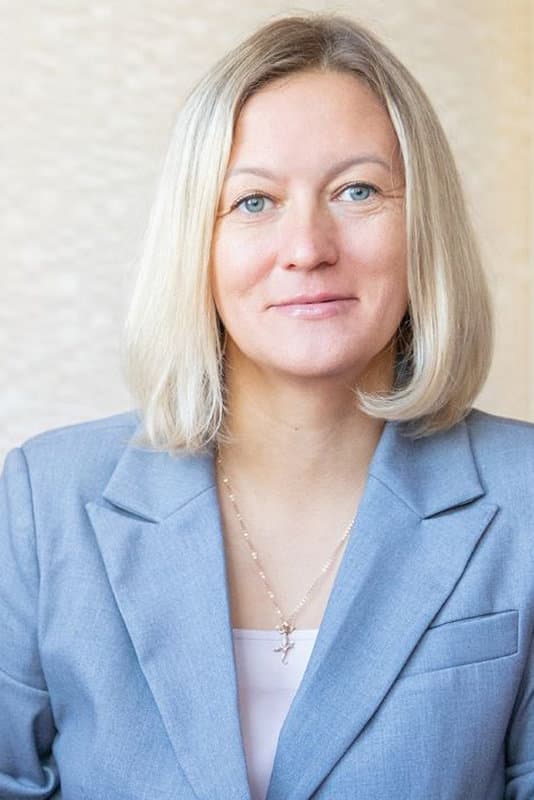
Nadezhda Batov. The current stage of development of the sector is conventionally called bioeconomy 4.0 – by analogy with Industry 4.0, which implies a transition to digital production. If the traditional bioeconomy is based mainly on the use of biomass, then its new model combines biotechnological innovations with digital production management, Nadezhda Batova explained.
The program of socio-economic development for 2026-2030 provides for the production of pharmaceutical and biotechnological products, deepening the processing of domestic agricultural raw materials, timber and flax, as well as intellectual production management.
- There is no single target for the bioeconomy – for example, the share of GDP, exports or industrial production – in Belarus. There are specific industry benchmarks that form part of its future contour. By 2030, the Sustainable Energy and Energy Efficiency program envisages the conversion of about 150 boiler houses to pellets, the commissioning of 45 energy sources using local fuels with a total capacity of 213 MW and bringing the share of renewable sources to about 7.2 percent of gross consumption of fuel and energy resources, the expert noted. Speaking about the global bioeconomy, Nadezhda Batova stressed that this system has entered the phase of industrialization. The focus of other countries is not only research and individual environmental initiatives, but the scaling of bioproductions, the formation of markets, the protection of intellectual property. The expert gives figures:
- According to FAO’s current panel, national bioeconomy strategies have been developed in 22 countries and 17 are in the process of preparing them. In addition, strategies have been formed at the level of three regional associations - the EU, the East African Community and the Nordic countries. This shows that the bioeconomy is becoming an independent direction of economic and industrial policy, although its institutionalization in the world is still ongoing.
In 2023, activities related to the production and processing of biomass provided 17.1 million jobs and 863 billion euros of value added in the EU – about 5 percent of GDP. In November 2025, the European Commission presented a new strategic framework for a competitive and sustainable bioeconomy. The document defines four main areas: industrial scaling of innovations, formation of leading markets for bioproducts, sustainable provision of biomass and use of international opportunities.
The expert emphasized that since 2026, for example, in Russia, a national project is being implemented that unites three blocks: production organization, sales promotion and scientific and technological support. By 2030, it is planned to increase the output of bioeconomy products by 96 percent, increase the share of domestic biotechnological products to 55 percent, and the level of technological independence in critical areas to 40 percent.
China sees biotechnology not as a separate scientific field, but as a source of industrial growth. Its model relies on large production sites, specialized industrial parks, digitalization of bioprocesses and a focus on global markets.
- Our country is between the stage of mature industry solutions and the creation of a single industrial system. Strengths are developed agro-industrial, forestry, food and pharmaceutical complexes, own scientific schools, engineering culture. Biotechnologies are already used in production, although not all such solutions are called bioeconomy, said Nadezhda Batova. As the expert noted, the main barrier to bioeconomy is the gap between scientific development and the market. It is not enough for the enterprise to obtain working technology: it is necessary to establish pilot production, confirm safety and quality stability, provide raw materials and find a buyer.
- However, lack of funding does not always come first. Meeting with representatives of Belarusian enterprises, we see a expressed request for information on suppliers and consumers of secondary resources, search for partners, consulting support and intersectoral interaction. Priority should be given to projects that rely on domestic raw materials and scientific competencies, Nadezhda Batova said.
For example, in agrobiotechnology the most promising microbial fertilizers, biological means of plant protection, feed enzymes and probiotics. The corresponding developments are already being carried out by the Institute of Microbiology of the NAS of Belarus. In bioenergy, the most interesting is the production of biogas and biomethane from manure, food waste and wastewater sediments, as well as pellets and briquettes from wood and agricultural residues. Industrial biotechnology can develop around the production of amino acids, organic acids, enzymes, food and feed ingredients, components of green chemistry. Materials from domestic biomass have significant potential: composites and thermal insulation from flax and wood fibers, cellulose packaging, sorbents.
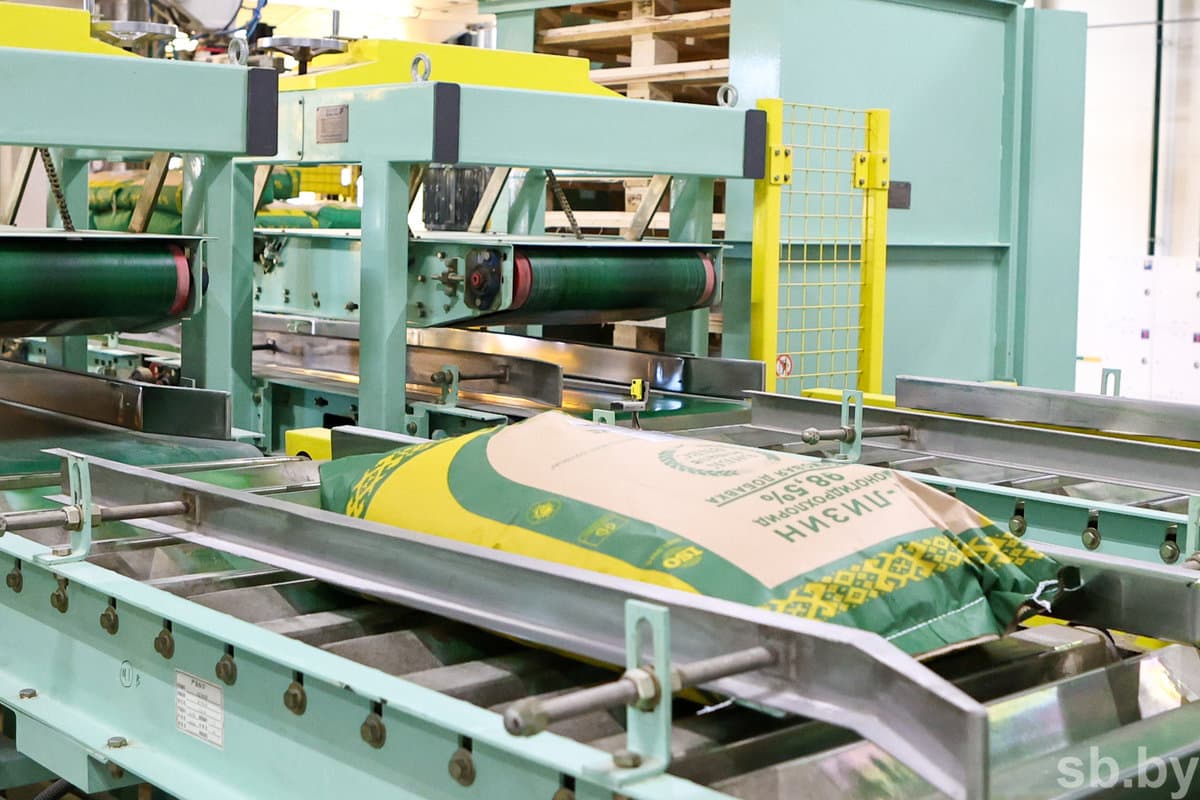
- Digital solutions for bioeconomy 4.0 should be built into such projects from the outset. Various models of bioeconomy are already presented in Belarus. A major project was the Belarusian National Biotechnology Corporation, which united grain processing, production of amino acids, wheat gluten, feed on one site. The dairy industry shows a convincing result. Whey, which previously created a significant burden on sewage treatment plants, is now used to produce dry ingredients, protein concentrates and feed products. Appropriate production operates in Verkhnedvinsk, Pruzhany, Slutsk, Glubok, Brest and Shchuchin, Nadezhda Batov gave examples.
Bobruisk Biotechnology Plant produces biological plant protection products, feed additives, preservatives and other microbiological preparations. Mastering of dry forms allowed to increase the shelf life of products, simplify transportation and expand the possibilities of its implementation. How will the bioeconomy develop in Belarus in the next 5-10 years? The expert sees three promising areas:
- The first is industrial bioproduction. The second is the modernization of existing enterprises, in which whey, wood and plant residues become raw materials for new products. The third is rural bioeconomy.
Nadezhda Batova stressed that the general condition will be the transition from the sale of raw materials to its deep processing. The most promising areas in which domestic biological resources, scientific developments, production competencies and sustainable demand are combined. Bioeconomy 4.0 will play an important role – combining biotechnologies with sensors, automation, robotics and data analysis. For businesses, this means reducing losses, increasing production stability, and a shorter path from development to industrial output.
- Rural bioeconomy has a separate potential. The izbing being discussed today is not yet a part of it. But the restoration of a vacant village house acquires bioeconomic content, if accompanied by the return of land to economic circulation, the use of local wood and linen materials, the expert noted.
Bioeconomy will not replace traditional industries, but will change their technological foundation. Agriculture will not only be a source of food, the forest complex will not only be a source of wood, and the food enterprise will not only be a source of the main product. It is important not to form a new sector from scratch, but to combine existing competencies: raw materials - laboratory - pilot plant - industrial production - guaranteed market. Specialization is especially important for a small open economy. Belarus is not obliged to produce the full range of bioproducts, but can take a strong position in certain segments.
- The future of the Belarusian bioeconomy is not about burning more biomass or selling more raw materials. It is associated with deep processing, production of knowledge-intensive products, growth of export revenues and revenues of regions while preserving soils, forests and biodiversity, the expert concluded.
semenkova@sb.by