
National Currency Day
Thirty-three years of the national currency of Kazakhstan is dedicated to a documentary exhibition in the Central State Museum of the Republic of Kazakhstan
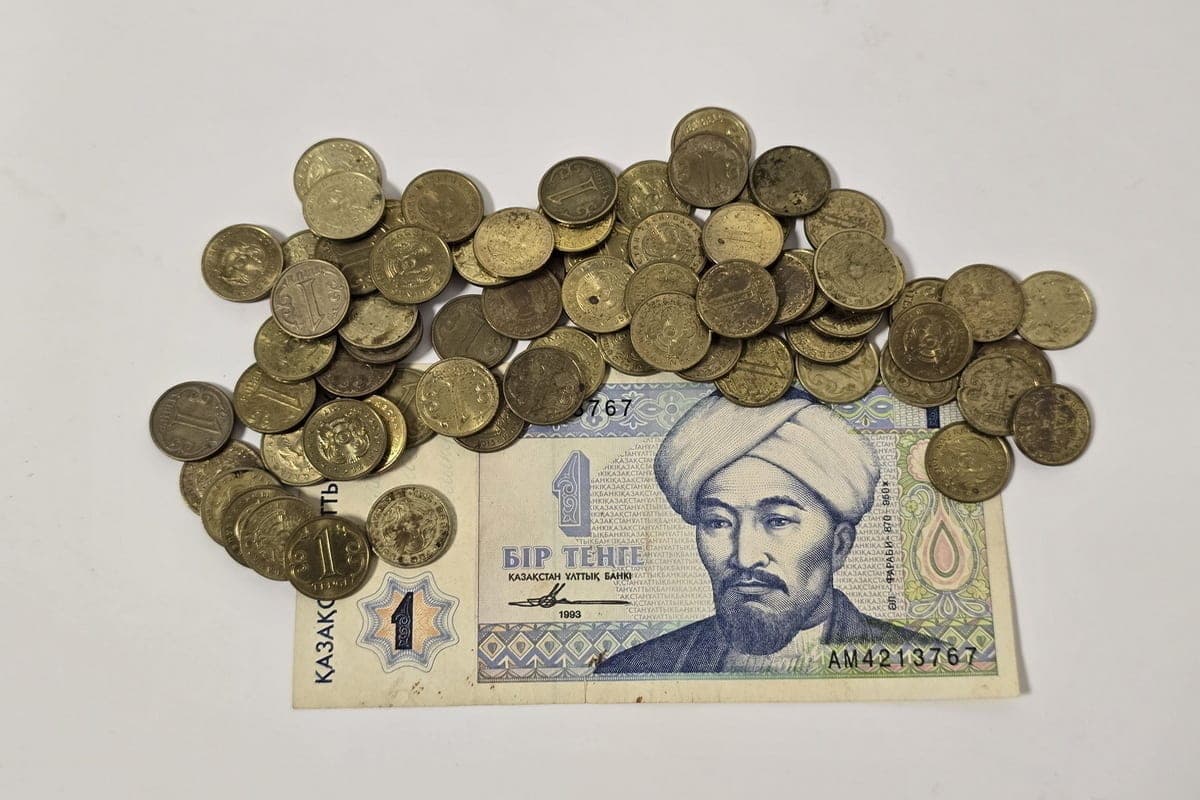
Signed in 1993
On November 12, 1993, the Decree of the President of the Republic of Kazakhstan on the introduction of national currency was signed. On November 15, 1993, the tenge entered circulation, marking the beginning of a new stage in the economic history of the country. This decision was an important step towards the formation of an independent financial and economic system, creating its own monetary policy and strengthening the foundations of the national economy.
November 15 is not only National Currency Day, but also a professional holiday for employees of the financial system of Kazakhstan.
The symbolic value of the tenge is that it personifies the economic independence of the state, its right to independently determine financial priorities, regulate monetary circulation and build its own development strategy.
Today, the tenge continues to be not only an instrument of economic relations, but also a symbol of Kazakhstan’s path – from the first steps of financial independence to participation in modern global economic processes. For more than three decades, the national currency has become an integral part of the life of the state and society, and the financial system has passed a significant path of institutional and technological development.
- This year marks the 33rd anniversary of our national currency. During this time, one of the mandatory symbols of our sovereign state has actually proved its viability. In the light of studying the history of our country, people will be interested to get acquainted with the “progenitors” of modern tenge, as well as plunge into the recent past and remember what the first funds of independent Kazakhstan looked like. Therefore, we readily supported the Numismatic Heritage exhibition and invite all residents and guests of Almaty to visit this exposition, Vadim Kablov, Director of the Almaty City Branch of Halyk Bank, noted at the opening of the exhibition. Thanks to coins and banknotes of different eras, we can observe the vicissitudes of history, the influence of the state, track trade and economic ties. So a coin is like a time machine, a portal to the past that gives us depth of information. If they say history can be rewrote, it is impossible to mint a 2,000-year-old coin.
The country's monetary artifacts
In the collection of the Central State Museum of the Republic of Kazakhstan, which has about 300 thousand items of storage, a special place is occupied by the numismatic fund, which includes more than 37 thousand artifacts. This is not just a significant part of the museum heritage, but a unique historical layer, which reflects the centuries-old processes of formation, development and strengthening of statehood in Kazakhstan.
Each coin, banknote or other numismatic monument is a kind of evidence of its era. Behind their external form, material, symbols and inscriptions are the most important pages of political, economic, social and cultural history. They allow us to trace the development of trade relations, the formation of monetary systems, the expansion of international relations, the change of political eras, as well as the processes of formation of power, sovereignty and national identity.
The special value of the numismatic collection lies in the fact that it makes it possible to study history not only through written sources and official chronicles, but also through genuine material evidence of time. Gold, silver and copper coins found on the territory of ancient cities and historical settlements of Kazakhstan are not only a means of trade, but also a vivid evidence of political power, economic relations, art, crafts, worldview and culture of past eras.
The exposition of the exhibition is formed according to thematic-chronological and dynastic-state principles. It includes coins related to various historical periods and states that existed in the territory of modern Kazakhstan and neighboring regions. Among them are the ancient Kushan state (30-375 AD), the Sassanid state (224-651 AD), the early medieval Turgesh state (704-756), the state of the Karakhanids (942-1212), the Great Mongol Empire (1206-1368), Ulus Jochi (1224-1502), Chagatai ulus (1224-1370), the state of the Timurids (1370-1507) and other historical formations.
The exhibition for the first time demonstrated new exhibits of the museum, found during scientific expeditions organized in 2021-2023 as part of the grant financing project “The Golden Horde and Chagataid State in the fate of the Great Steppe according to numismatic data” (XIII-XIV centuries) in Turkestan, Zhambyl, Almaty, Kyzylorda regions, in the area of the city of Shymkent. A special place is given to exhibits collected from the local population: stamps for the minting of Karakhanid coins, medieval weight cups, weight weight weight weights, koromyst, blanks for the manufacture of copper coins, silver products used as money. The exhibition also presents silver and copper coins of ancient and medieval states, as well as their enlarged images with scientific descriptions in Kazakh and Russian.
Visitors can see paper banknotes, coins of the Russian Empire and the Soviet Union, the first issues of the national currency of Kazakhstan, commemorative coins and numismatic collections of the period of independence. The exposition is complemented by archival documents, bonds, lottery tickets, historical illustrations and other materials reflecting the history of monetary circulation.
Money as jewelry
Particular attention of our publication was attracted by jewelry, in which coins were woven and sewn. In the presented exposition, a separate stand is dedicated to this amazing layer of historical heritage. However, we decided not to limit ourselves to it and looked into two more museum halls, where other curious treasures of our country opened before us.
Coins in jewelry and clothes did not appear just for beauty. Behind this tradition was a special culture of saving and accumulating family capital - the so-called wearable, or walking gold.
In nomadic life, where there were no usual bank accounts, precious metals became a kind of family treasury. Gold and silver coins were woven into scoops that adorned girls' braids, sewn on vests, wedding headdresses - saukele, and also included in necklaces and other jewelry. Thus, the most valuable thing always remained with a woman: in case of danger or need to urgently go on a journey, the family state was literally with him.
The number of coins and the weight of jewelry served as a kind of indicator of wealth. It was possible to judge the welfare of the bride's family and the status of the whole family. The richer and more artfully decorated the woman’s outfit, the higher the social status of her family was considered.
But coins were valued not only for their material value. Of particular importance was the brilliance and melodic ringing. It was believed that the sounds accompanying a woman while walking, can drive away evil spirits, and at the same time emphasize the ease and grace of her movements.
Such jewelry often became real family heirlooms. They were carefully passed from mother to daughter, supplemented with new coins and details. So, for decades, and sometimes several generations, jewelry kept not only material value, but also the memory of the family, its history and traditions.
Today, the link between money and jewelry has been reincarnated in collectibles. The National Bank of Kazakhstan regularly issues special series of coins that can be worn as jewelry. For example, this autumn, the bank announced the release of the AQYQ collector coin with a semi-precious stone. The coin is made of 925th silver with a carnelian insert.
Kazakhstan's Space Money
Money artifacts of Kazakhstan can be found at another address, but today the National Bank Museum is under reconstruction. It was created on the basis of the Cabinet of the history of the development of the banking system on the initiative of the Governor of the Republican office of the State Bank V.A. Bondarenko. The exposition of the museum consists of four sections: banknotes of the VIII-XIV centuries, banknotes from 1865 to 1917, banknotes from 1918 to 1992, as well as banknotes from 1993 to the present.
The showcase, which represents the exposition of the national currency, presents the largest collection of coins from various metals - gold, silver, neusilber, nibrass, as well as commemorative coins that won prizes at international exhibitions - Tulip Regela, Rider, Cosmos, Genghis Khan, Fragment of the Diadem, Tiger, Attila. The museum collection contains the first banknotes from a series of portraits of great historical figures - al-Farabi, Kurmangazy, Shokan Ualikhanov, Abay Kunanbayev, Abylai Khan. The museum also presents the first tiyns in both paper and coin versions. And all of these exhibits are genuine, 1993 editions.
There are also interesting facts about the national currency, for example, that the first batch of paper tenge was printed in the UK, and banknotes were delivered to the country by secret flights on Il-76 transport aircraft. Collector’s coins were also produced in Kazakhstan using silver and tantalum, a metal used in rocketry and shimmered in different colors. These coins are called space coins. A commemorative coin with a portrait of Shokan Ualikhanov visited Earth orbit together with cosmonaut Aydin Ayymbetov. The first coin in the country was made in Ust-Kamenogorsk in 1992, in Almaty, the national currency has been issued since May 1995.
Kazakhstan’s money strengthens its position in the world, as does the state, which is becoming more powerful, authoritative and recognizable in the international arena, confidently asserting its sovereignty, economic power and national dignity.
