
Ambitious scientific projects create a range of related discoveries and technologies
International polarization has reversed the trend from technological cooperation to fierce competition. Technology transfer has not stopped completely, but...
International polarization has reversed the trend from technological cooperation to fierce competition. Technology transfer has not stopped completely, but has slowed sharply. And if it happens, it is more by inertia. This seems quite logical against the background of the desire of regions, large and small countries to sovereignize, achieve the maximum level of self-sufficiency in strategic areas. The link “science – economics” in the new paradigm has acquired a new sound. If in the global world, the production of knowledge was in fact a separate industry, which itself chose partners around the world based on commercial priorities, today science has become one of the cornerstones on which the national economy rests. This was discussed with the First Deputy Chairman of the Presidium of the National Academy of Sciences Vitaly Zalessky.
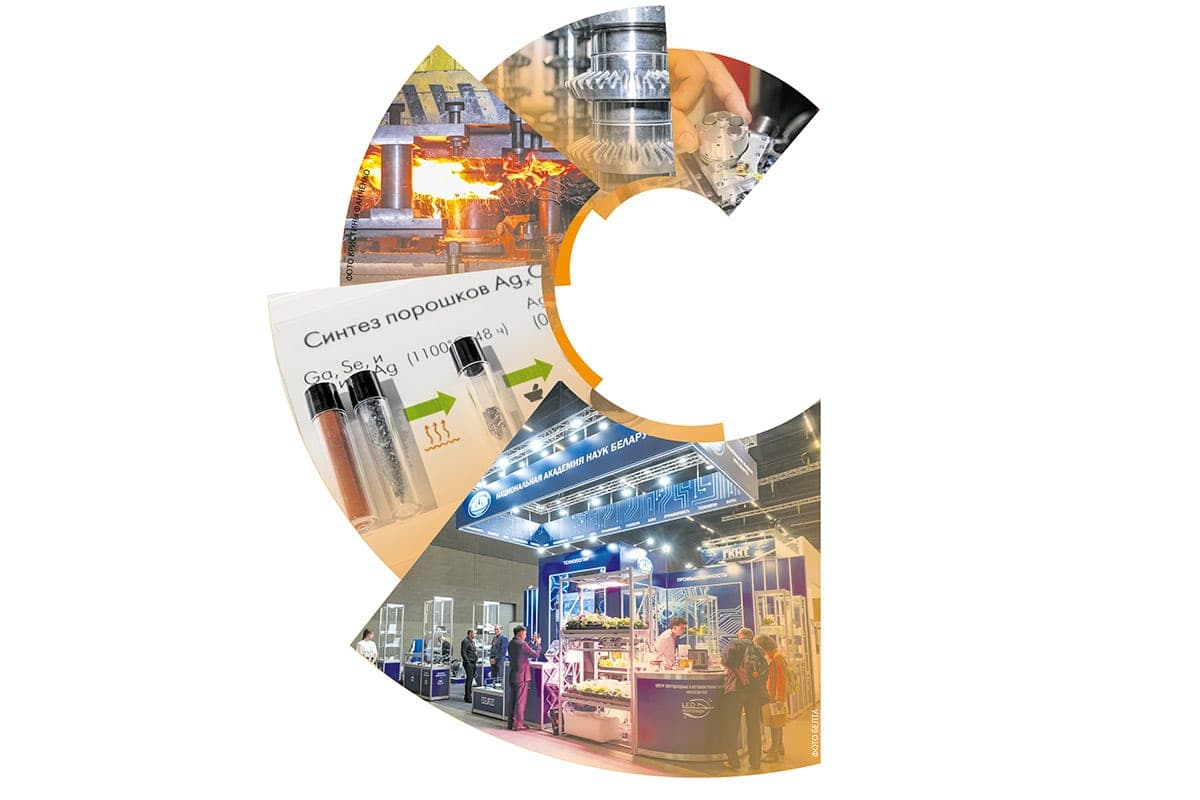
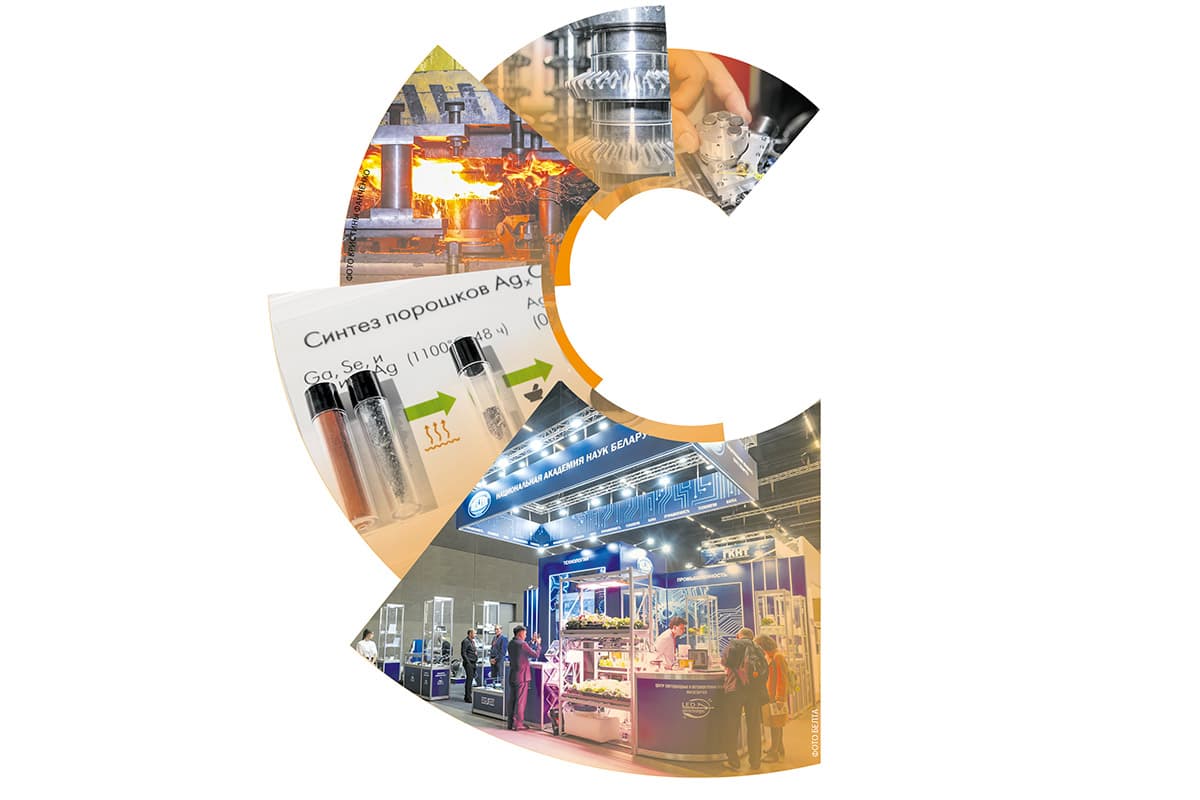
Vitaly Zalessky. Real solutions – Science is constantly generating solutions for the real sector, adding something new to technologies and products. It's hard to cover all the developments. I can note: more than 180 different innovative products were presented at the exhibition "Innoprom" at the stand of the National Academy of Sciences. But even they only partially reflect the full palette of modern activities of the NAS: from bio- and agrarian technologies to various industrial technologies. For example, now we are actively engaged in the problem of grinding various substances to specified fractions or even microsizes. Belarus has reserves of granite, dolomite and other minerals. And the deeper their processing, the more value added. For example, the price of shredded materials increases multiple times. For the manufacture of ceramics with high consumer properties, it is necessary to bring the raw materials to a multidispersed state. We develop appropriate industrial technologies and equipment. It makes it possible to increase the efficiency of commercial use of local resources – one of the most important tasks outlined in the Program for Socio-Economic Development until 2030.
A very important area is the development of new materials. A wide range of various products has been mastered: titanium filters, with various fillers from complex composites, industrial aerators, filled with plastics ... Today, many innovative products require materials with specified characteristics. The second big direction is surface engineering, when a product made of standard materials receives new characteristics due to thermal surface treatment, spraying and so on. You can not make a part entirely from special expensive steels, use basic, relatively cheap grades of metal, but due to surface engineering to bring the characteristics of the product to the required level: increase strength, wear resistance and others. The key strategy today is that scientists not only propose new materials or products, but first of all develop the technology and provide support for its introduction into production. The key function of science is to generate new knowledge, technologies, know-how and translate them into the real sector. This does not exclude the commercial component: with the money received for inventions, create new developments. From this point of view, we can consider the cooperation of our research organizations with foreign business entities. If some promising development in Belarus cannot be mastered in the industry here and now, it is possible that it is advisable to sell it to the external circuit and get financial benefits. In this approach, we can suspect the leakage of intellectual property, which contradicts the current trend towards sovereignty. However, do not discount another trend: we live in a period of compressed time, the speed of obtaining new knowledge, creating new products is reduced. And a promising technology today can become obsolete very quickly, lose its liquidity. In general, the economics of research activities requires separate comprehension and modeling. Which is also a scientific problem.
Translation of knowledge into the industrial sector – Even if the development itself has not received an industrial continuation, many related tasks are always solved within the framework of work on it, which in themselves have significant value. Belarusian scientists have created several prototypes of sodium-ion batteries. It has not yet been introduced into production for a number of reasons. However, as part of the work on it, experiments were conducted with various materials. And according to their results, for example, a graphene-containing material appeared that is effective in collecting oil spills.
But I will not be disingenuous: the interaction between science and the manufacturing sector needs to be improved and deepened. And that's what we're doing. At the Innoprom exhibition in Minsk, an agreement was signed with the Russian company ASCON, which develops specialized software. Now everyone uses IT technologies: research teams, design and technological units in the industrial sector. And it is necessary that solutions and developments from scientists can be seamlessly transferred to production, so that the full cycle of innovations – from research to translation to production equipment – takes place according to one digital standard, in one eco-environment. A number of Belarusian companies also use ASCON software. In particular, a general agreement was signed with this company BELAZ. The second direction for cooperation is to act as co-developers of new specialized IT products. Truly effective and innovative digital products are the result of the synergy of competencies and efforts of narrow specialists, researchers and programmers. Close intersectoral cooperation is overdue, and it is developing and progressing.
volchkovvv@mail.ru
