
Germany – Shamond: there is evidence, no verdict
On October 22, French authorities reported the world’s first recorded human infection with the Shamonda virus. The patient was treated in Lyon for a serious illness and had severe immunodeficiency. He died in early October. Shortly before that, there were neurological complications. French experts believe their connection with the infection is very likely. German news in Russian
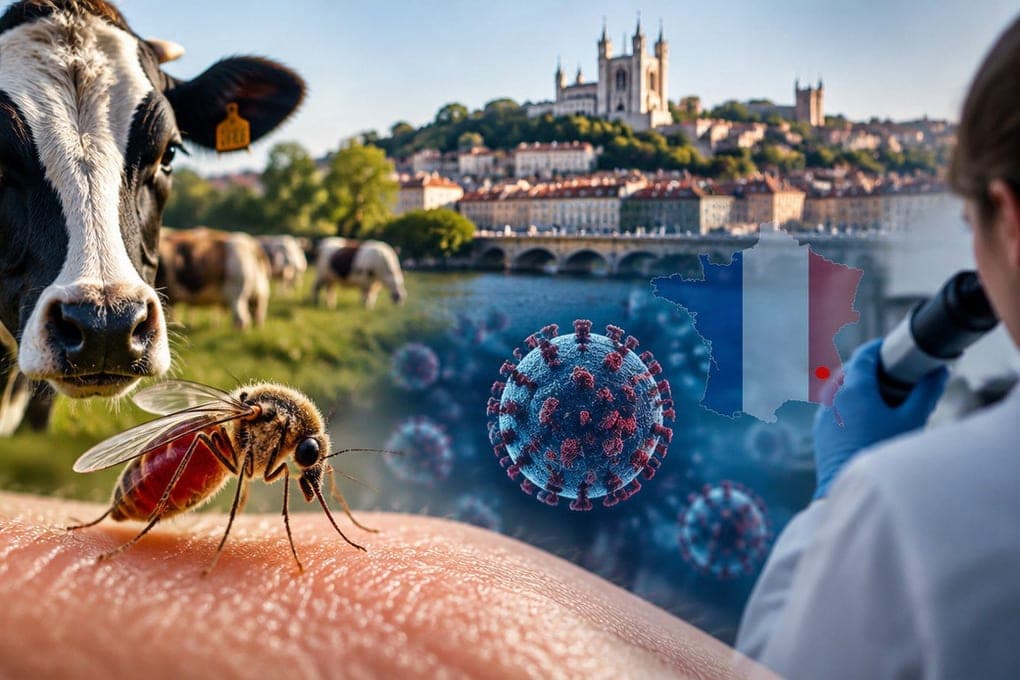
For many years, Shamonda passed exclusively on the veterinary part. Cows, pastures, bloodsucking insects - this is her usual circle. But in the fall of 2026, a new line appeared in this dossier: the first documented human case. Now, researchers are reconstructing the circumstances of the infection and trying to understand whether the virus was involved in the death of a critically ill patient. After all, the laboratory find does not prove the cause of the tragedy.
However, it is too early to make predictions. First, it is necessary to understand the only confirmed case. And here all roads lead to Lyon.
The Lyon mystery
On October 22, French authorities reported the world’s first recorded human infection with the Shamonda virus. The patient was treated in Lyon for a serious illness and had severe immunodeficiency. He died in early October.
Shortly before that, there were neurological complications. French experts believe their connection with the infection is very likely. However, the European Centre for Disease Prevention and Control (ECDC) says whether the pathogen caused or contributed to death has not yet been established.
The main version of the infection is the bite of a locust, a tiny blood-sucking insect of the genus Culicoides, in eastern France. In the spring and summer, the virus was detected in livestock. The exact transmission chain has not yet been restored.
So, contagion confirmed. Its circumstances and consequences are being studied. For a detective, it's too careful. For medicine, it is the only acceptable.
With an African past
Shamonda has been known since the mid-1960s: it was first discovered in cattle in Nigeria, then elsewhere in Africa and Japan. Until this autumn, the cases were not documented. In the summer of 2026, closely related viruses appeared on European farms. In Germany, cows had fever, diarrhea, loss of appetite and decreased milk yields. Most adult animals recover within a few days. But in Rhineland-Palatinate a horse with severe neurological disorders died. There was a high viral load in her brain. The Friedrich Loeffler Institute (FLI) believes a link to the disease is likely. The causative agent was also detected in alpacas, sheep and goats. Exactly how many farms are affected across Germany is unknown: there is no mandatory nationwide record keeping. The map comes with gaps.
Double route
Genetic studies have added to the surprise. According to the FLI, two distinct strains of Shamonda-like viruses have been identified in Europe: SHAV–EU1 and SHAV–EU2. The first recorded mainly in the south of Germany, France and Switzerland. The second is in cows in North Rhine-Westphalia, Lower Saxony, Hesse and Thuringia. Scientists have identified signs of two independent drifts, and in some lands the paths of viruses already intersect.
Does infection protect one species from another? Is it possible to exchange genetic segments? How will this affect the properties of pathogens? No answers yet. However, two animal lines do not represent two proven threats to humans.
Weeper is under suspicion
The likely “courier” Shamonda is not a cow, but a lice. These almost invisible insects transmit infections to animals when bitten and are especially active from spring to autumn. With the cold, their activity decreases. What species may have infected the French patient is not known. What about milk and meat? According to available data, there is no reason to consider them dangerous to infect people. There is no evidence of human-to-human transmission.
The French authorities stress that the human case is exceptional because the patient had severe immunodeficiency. Threats to the population as a whole have not been identified. This does not mean that all questions are closed. But alarming guesses should not be presented as facts.
Farm bill
Breeders relax early. Shamonda belongs to the same group as the Schmallenberg virus, which can damage the fetus when infected with pregnant animals. How similar the consequences of the European options will be, is still being found out. Therefore, veterinarians advise to investigate cases of miscarriages, stillbirths and congenital anomalies in young animals. No special vaccine. Protecting against tiny blood-sucking insects in pastures is not easy either.
Even if the cow recovered quickly, the farm can get the costs of examinations and losses from lower yields. Uncertainty about future offspring affects the next agricultural season.
Pause sensation
France notified the World Health Organization and the ECDC. Experts specify the route of infection, the role of the virus in neurological complications and the presence of other, not yet identified cases. In Germany, the FLI has begun testing whether people have antibodies to Shamonda. The conclusion today is ambiguous: the idea of a purely animal pathogen had to be revised, but there is still no evidence of the spread of infection among people. Shamonda came out of veterinary reports on the pages of the international press. However, the unusual find does not become an epidemic from the fact that it is loudly spoken about. Science has a confirmed first case, and many open questions. It is time not to pass judgment, but to gather evidence.
This is what Germany says:
Germany - Ear on charge - silence in retirement? Medicine opens up new ways to return to sound and human communication. What do modern implants give and why does the brain play a crucial role?
Germany - Who planted chlorine? After the alarm in the "Subtropical Bathing Paradise" under suspicion came chemistry. Two people were taken to hospital. But the main "suspect" found an unexpected alibi
Germany - Ivan Vasilyevich changes the excise tax. The German Ministry of Finance inadvertently moved the tobacco reform from 2027 to October 2026. How did one line of the law nearly stop factories and why can a pack of cigarettes cost almost €12?
In the morning money, in the evening chairs? Merz counted nearly 230 billion euros of investment. But the file found old promises. Who will make the real money, and when?
Germany – The smartphone is not a glove compartment. What the driver is obliged to do during the inspection and what to refuse
Germany is the anatomy of a single murder. And five more. How did a parental rights dispute turn into a shooting - and why would the alleged killer never stand trial?
Germany - At a pike tariff. Sit down, arrived, paid - and no complicated calculations. Authorities promise an almost magical ticket. Why can fulfilling a wish be too expensive?
Germany - 94 euros in the minus. Health in debt? The Bundestag approved the reform, which should reduce the queues. But where to get doctors, beds and money for the new order?
Germany - Official romance with a residence permit. Wedding for 6200 euros, residence permit for 200 per month and an official on both sides of the office window
Germany – Hello, I am your aunt: by link! WhatsApp allows even those who do not have an app or account to call. Who decides who to tell and how not to let a fraudster in?
Germany: There is only gas in jazz. While network fees add a few euros, the price of blue fuel can rise by 10-20%. Why in 2027, one payment will cost almost no surprises, and the other – in hundreds of euros?
Germany is not the majority that claps. In Bonn, the chancellor was held with restrained applause, and one of the delegates offered him a trip to the federal president for resignation
