
Germany - Green Evidence: What's the vegan burger hiding?
In the supermarket nearby are lentils and a sweet vegan dessert, soy drink and soda, nuts and salty snacks. All can be plant-based, but that doesn’t make them equally useful. Two large-scale studies involving almost 190,000 people showed that in a food “case” can not be sentenced on one basis. German news in Russian
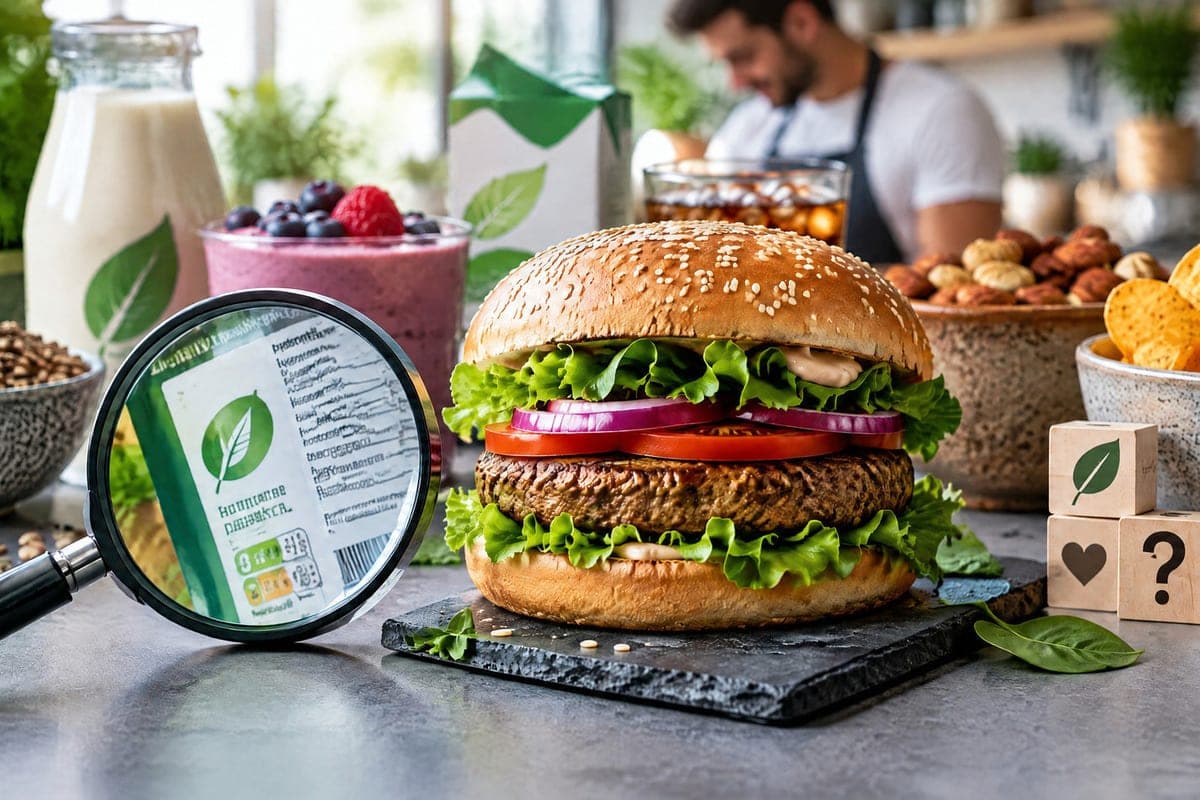
Soy patties seemed to have an impeccable alibi: no gram of meat, plant ingredients, a reputation for healthy eating. But scientific expertise has found nuances. French researchers presented alarming statistics, and working with the data obtained by British scientists added unexpected circumstances. The question was not only sugar, salt and fats, but the very habit of judging food by the label on the package.
- I don't eat meat anymore.
- So you're eating right?
- Who checked?
The answer is now more complicated than it seems. In the supermarket nearby are lentils and a sweet vegan dessert, soy drink and soda, nuts and salty snacks. All can be plant-based, but that doesn’t make them equally useful. Two large-scale studies involving almost 190,000 people showed that in a food “case” can not be sentenced on one basis.
French Protocol
Scientists from INRAE, Inserm and other French organizations studied the nutrition of 63,835 adults in the NutriNet-Sante project. Their health was monitored for an average of nine years. A paper published in 2025 in the journal The Lancet Regional Health – Europe simultaneously considered three factors: the proportion of plant foods, their nutritional value and the degree of processing.
The results went in opposite directions. People most committed to a high-quality, mostly low-processed plant-based diet had a 44% lower risk of coronary heart disease and a 32% lower risk of cardiovascular disease overall than those who ate the least.
And among the participants most committed to a diet of plant foods with low nutritional value and a high degree of industrial processing, the corresponding rates were higher by 46% and 38% compared with the group least committed to such a diet.
The numbers are impressive. But these are relative differences, not the likelihood of getting sick after one vegan sausage. The study found a link between diet and disease without proving that a particular dish caused them.
The factory in the dock?
Is the processing itself to blame? It's not that simple. A pea protein burger is not equal to a bag of chips, and an unsweetened soy drink with added calcium is a sweet soda. Conversely, labeling “no animal ingredients” does not negate excess salt, sugar, and saturated fat. Part of the controversy has arisen around the NOVA system, which divides products into four groups according to the degree of industrial processing. Very different products fall into the category of ultra-processed – from confectionery sweets to certain types of bread and meat substitutes. Therefore, the label “factory” does not mean “harmful”. Even a long list of ingredients in itself is not a reason to abandon the purchase: it is more important what it says.
The British Surprise Dossier
In 2026, another study was published based on data from 124,836 UK Biobank participants. The researchers tracked their health for about 8-10 years, comparing the quality of plant foods and the proportion of processed foods. And here's the surprise: high adherence to a full-fledged plant-based diet, which has a high proportion of such food, was associated with an 11% lower risk of cardiovascular disease compared to low adherence to the same type of diet. For high-quality, but mostly poorly processed plant menu, the same clear statistical connection with this indicator was not revealed.
Both dietary choices were associated with more favorable rates of mortality and risk of type II diabetes.
Are the French wrong? Nope. The studies assessed the diet differently, included different participants, and examined different indicators. And the absence of a statistically significant association in one analysis does not mean the absence of influence at all. It is impossible to compare the figures directly or declare all semi-finished products safe. Rather, it turned out that the quality of food can not be assessed only by the degree of processing of products.
Check by the shelf
What should a buyer do in Germany? Start with what the German Nutrition Society (DGE) recommends: build a diet mainly on vegetables, fruits, legumes, whole grain products, nuts and vegetable oils. Becoming a strict vegan is not necessary. When choosing vegetable drinks and yogurts, it is useful to compare the amount of sugar, protein and calcium. In meat substitutes - salt and saturated fats. Don't forget fiber. A fully vegan diet requires regular intake of vitamin B12; it is also important to monitor iodine and other potentially deficient substances in particular. There is a final caveat. Both studies are observational: lovers of whole grains and vegetables can simultaneously exercise more often, smoke less often and monitor their health more closely. Statistical amendments help to take into account these differences, but do not eliminate them completely.
So it is too early to justify any industrial product, as well as to declare plant substitutes guilty indiscriminately. Marketing can draw on the packaging as many green leaves as you like. But the ultimate argument is not in advertising, but in the composition and what we eat day in and day out. The vegan burger trial has been postponed. I'll have to check the whole plate.
This is what Germany says:
Germany is a double bottom hat. Beauty with a poisonous character: how to recognize a dangerous find and why folk signs are powerless?
Germany - Where does Christmas go? Under the ground! In Wasserfingen, there was an unusual place for a holiday. The demand was such that 8,500 tickets sold out in three hours
Germany - Everything mixed up in Merz's house. After the resignation of Berbel Bas, the SPD urgently seeks a replacement, and the Chancellor got a new crisis in the coalition
Germany to Bon. James Bon. The operation to eliminate paper checks is scheduled for 2028. The main roles are the Ministry of Finance, QR code and 115 thousand open cash registers
Germany is a van in the night. After a fatal hit on a 50-year-old woman, police search for eyewitnesses and check the mysterious trace of the car
Germany - Five in ICE, not counting lateness. Deutsche Bahn returns the family fare for 99.99 euros. Places - complete, punctuality - how lucky
Germany – The investigation is conducted by the hungry. Dinner is lost, tips have evaporated, a coupon is offered instead of money. Who will be responsible for the disruptions of Lieferando, Wolt and Uber Eats?
Germany: Three Nuts for the Chancellor. CDU loses votes, social discontent grows, and its own demands answers
Germany - Ryanair waved its wing to Bremen. Low-cost airline leaves after fee dispute - and takes almost one in five airport passengers with it
Germany – There is no discount under the falling tariff. Those who have not reviewed the electricity contract for years, risk overpaying hundreds of euros
Germany – Winners are not judged. They're not allowed in. German coalition cuisine: voters choose ingredients, and the dish is cooked by party negotiators
Germany is the Polish Gambit of Berlin. German manufacturers are finding more and more buyers behind the Oder. But the proximity of markets does not save from increasing competition
