
China built a giant press after restricting supplies from the USSR
June 22, 1962 in Shanghai tested the first Chinese hydraulic press with a force of 12,000 tons
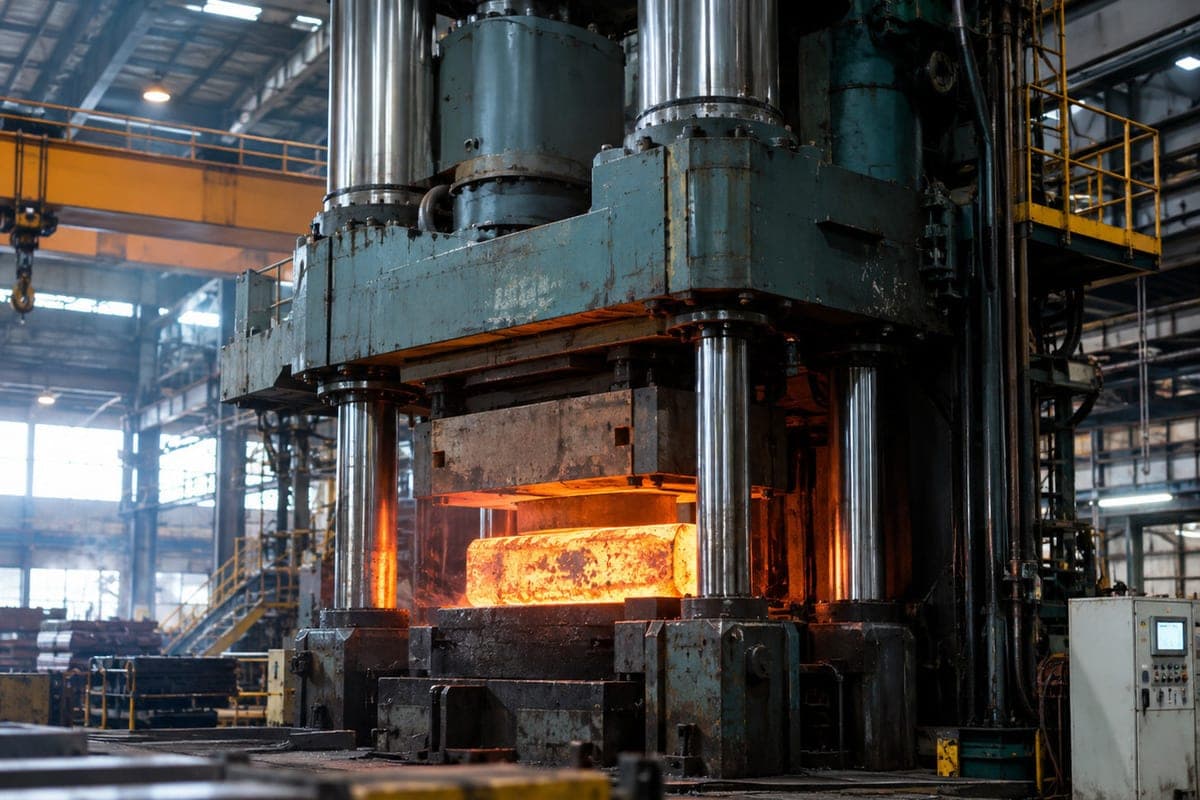
On June 22, 1962, the first Chinese hydraulic press with a force of 12,000 tons was tested in Shanghai. Before its appearance, Chinese enterprises purchased most of the large forged parts for heavy machinery abroad.
The USSR and Czechoslovakia helped China develop machine building, but limited the supply of blacksmith presses with a force of more than 6,000 tons. This is reported by the Chinese Digital Museum of Mechanical Engineering.
In May 1958, engineer Shen Hong suggested that Mao Zedong build such a press in Shanghai. Shen Hong headed the project, and the manufacture was entrusted to the Jiangnan shipyard. The team first assembled a test model that developed a force of 120 tons.
One of the main difficulties was three massive transverse beams. Shanghai factories then could not cast steel parts of the right size. Welders offered to collect beams from thick steel plates. This made it possible to manufacture large parts on existing equipment and reduce the mass of the press to about 2200 tons.
The press was mounted at the Shanghai Heavy Machinery Plant. According to Xinhua, during the tests, the load was raised to 16 thousand tons, and the parts passed the test. The machine could turn steel ingots weighing 200-300 tons into blanks for heavy equipment. In 1964, after more than two years of experimental operation, the press was officially put into operation.
“Tver wolf” Osipov told who confessed to him in the murder of Mikhail Krug
Reliable news is always at hand - in the channel "MK" in MAX
