The Ministry of Agriculture of Bashkiria: “The disparity of prices for agricultural products is not in favor of farmers”
Bashkiria not only ensures its own food security, but also supplies agricultural products to other regions and abroad
According to Deputy Prime Minister Ilshat Fazrakhmanov, the current economy and geopolitics dictate difficult conditions for Bashkir farmers.
“In recent years, we have learned with the help of high technologies to obtain high-quality grain and increased the yield to 50-90 centners per hectare,” explains Ilshat Ildusovich. But when offers for the sale of grain become more, its price falls below the cost. It's extremely uncomfortable. Most farmers in such conditions do not even cover operating costs. If earlier we grew 15-16 centners per hectare and were happy about it, today we get 29, 45, 60 centners. But this crop still has to be sold.
In Bashkiria, the capacity of one-time storage is about 4.2 million tons.
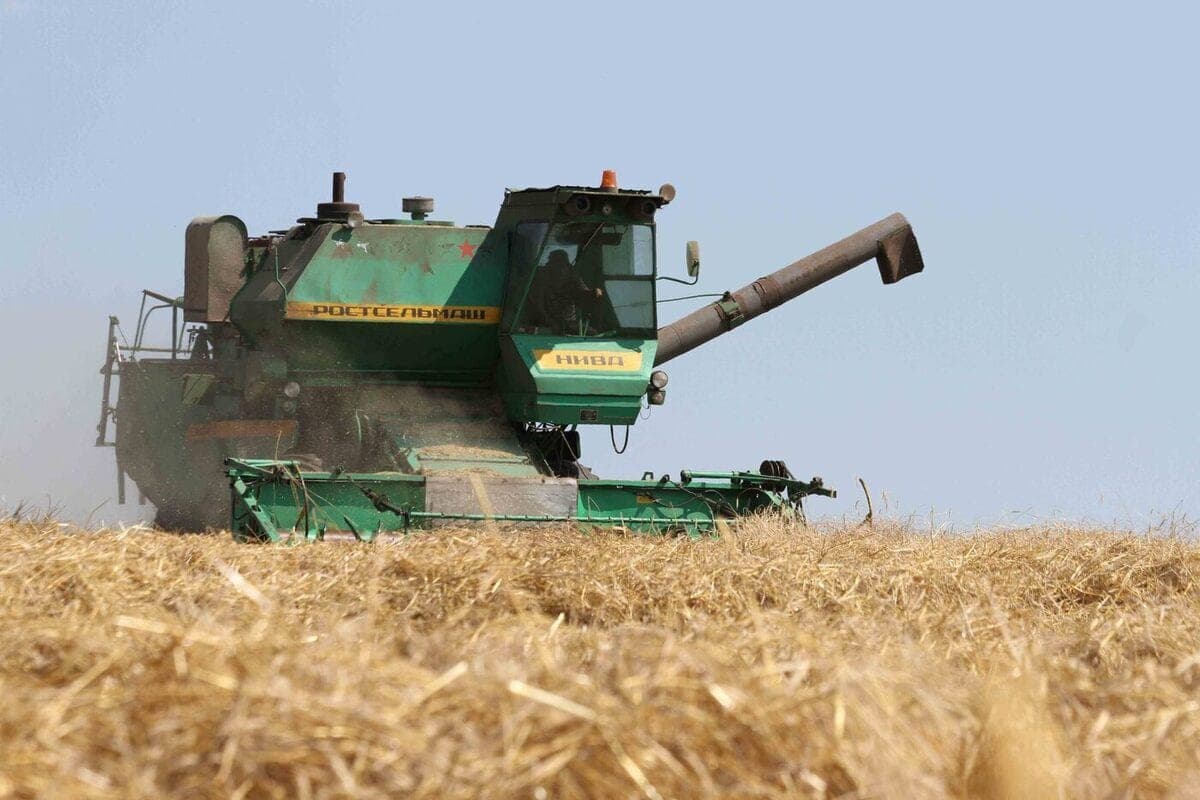
- All elevators, elevator facilities, warehouses are filled with grain, cereal and oilseeds, explains Ilshat Fazrakhmanov. Anything that exceeds their capacity will remain in the fields. The crops will have to be thrown away. We need to do something so that the products do not interfere with the market, because the funds for its cultivation have already been spent. In addition, today the cost of one kilogram of products has increased: diesel fuel, gasoline and agricultural machinery have risen in price. Five years ago, a tractor or harvester could be bought by selling ten wagons of grain. Today, we need to sell 70 cars.
Mr. Fazrakhmanov notes that today "the extremely uncomfortable price disparity is not in favor of our farmers.".
- And in these conditions, they still survive, pay off debts, - admires the deputy chairman of the Bashkir government, who oversees agriculture. Also, agricultural producers face a very heavy burden in the form of investment loans and leasing payments. The cost of production is high, and the sales price is low. Therefore, marginal oilseeds appeared in the structure of sown areas. Today it is an export topic. Exporting, we get foreign exchange earnings and a price that is more comfortable for us. For example, sunflower also fell in price - today it is 23-24 rubles. But its cost is 17-19 rubles. That is, thanks to sunflower, we cover operating costs and a certain part of the losses received on growing crops.
According to Ilshat Fazrakhmanov, if the farmer makes the right decisions, adjusts to the situation and builds the correct structure of sown areas and develops livestock breeding, “he is in the market.”.
- What does "in the market" mean? It is updated annually, it can service its costs, including rising wages today, ensure a decent standard of living for workers so that they stay, and not go to the city or any other earnings, the Deputy Prime Minister of Belarus explains. - It's a complex system. But we can state that 2026, despite all external and internal difficulties, remains a working year for us. We are still thinking about investing for the future.
The agricultural sector has been significantly affected by changes in external logistics: for example, Iran’s blocking of the Strait of Hormuz due to the conflict with the United States. The flows of Bashkir products, which used to go through southern directions, had to be redirected. However, the status of a surplus region allowed Bashkortostan to receive a privilege for rail transportation.
- We produce more than we consume, so the Ministry of Agriculture of Russia gave us a discount of 10 percent on railway transportation, Ilshat Ildusovich said. - Today, the trains go towards China, Kazakhstan and St. Petersburg. We hope that the movement along the Strait of Hormuz will resume, and the previous flow will open. I think it will be possible to sell an extra product that is located in Russia, especially grain.
According to the official, Bashkiria needs to sell more than a million tons of products.
- Today we sell a little, so the question is only the price, he said. Of course, it matters how much you work with quality. If you make a good grain, with good protein, then there is an internal demand for it from poultry farmers, pig farmers, flour milling. Why not grow crops like brewing barley, hard wheat? They're for sale.
A separate task is to preserve the technical equipment of farms and ensure access to modern equipment for small enterprises. According to Mr. Fazrakhmanov, since 2018, the republic has updated about 70 percent of the agricultural park. But the high cost of cars does not allow farmers to buy them in the former volumes.
- Today, the agrarian is unprofitable, but rather, he simply does not have the opportunity to buy equipment in such volumes as before, he states. Therefore, the state company Rosagroleasing invested 6.3 billion rubles in the republic this year. About 3 billion rubles are planned to be invested next year. In total, the company acquired equipment for about 10 billion rubles: a huge number of tractors, combines, trucks and unmanned systems. All equipment is located on the territory of Bashselkhoztechnics, which provides services to small and medium-sized farmers.
Today, as Ilshat Ildusovich explains, a farmer doesn’t even have to rent equipment – he can simply pay for a particular service using agricultural machines.
People call this service “iron”, and these services will be provided “turnkey”, – he explains. If a farmer says he would like to sow such and such a crop, he will be offered the option of seeds, fertilizers, plant protection products and equipment. There are agronomists who will give advice, explain how to grow it. It is important for us that every Bashkir farmer stays with his land. So that he did not sell this land, so that he did not abandon it, but inherited and his future generation worked on this land. It's important.
The republic has similar experience: in the zero years, when kolkhozes and state farms could not independently sow and harvest crops, machine-technological stations (MTS) were created in Bashkiria. If the farms could not pay for services, they gave the land to the stations.
- But we want our Bashkir farmer to stay on his land. Therefore, if necessary, we will help him, we will provide the necessary services, Ilshat Fazrakhmanov repeats.
Equally important is training. According to the official, the agrarian university in Bashkiria should go beyond the traditional educational institution and become a center where new technologies are developed, and students get the opportunity to work on their own projects.
- We need to look at the agrarian university in a new way, Ilshat Fazrakhmanov believes. Today, the Ministry of Agriculture of Russia says that it should not be just an educational institution. It should be a competence center for the creation of genetics, breeding, new varieties, new hybrids, new technologies, new services. This should have practical benefits. Every student who enters the first year should be interested in developing agriculture. Applicants should come to the university with their projects.
Therefore, agricultural classes were created in the republic.
- We want to find children from the sixth grade who will devote their lives to agriculture, says the Bashkir Deputy Prime Minister. Every child is born with his own character. We need to find guys who like animals, land, engineering, mechanics. We need to make sure that the new generation of our employees, specialists and managers love their work. Before, children were told: don’t stay in the village, there is agriculture, old farms, dirty cows, milkmaids. It's not like that now. Employees who work in agriculture need to come up with something new every day. To be in the market, they must strive to keep up with the times, adopt new technologies and love the land.
As Mr. Fazrakhmanov explains, Bashkir Agrarian University should become a center of agricultural competences.
- And this is not only about working with children, but also about interacting with farmers, operating companies, he explains. Why do companies buy technology abroad? Why are these technologies not developed at the University of Agriculture?
Ilshat Fazrakhmanov recalled that at the exhibition “Golden Autumn” in Moscow, the head of the republic Radiy Khabirov presented to the Chairman of the Government of Russia a project of a center for digital phenotyping of plants and animals.
- This is one of the important technological achievements of the region, the official said. Data from the center are transferred to our colleagues, including the Timiryazev Academy, where they are engaged in genotyping. In the group of companies "Tavros" where animals are kept, cameras are installed. When animals walk along the line, their phenotypes are completely digitized. Any external changes are in the database. The camera only shoots, and the base itself and artificial intelligence help determine what to do with these animals, in which direction to go, whether it is healthy, or has some problems. This allows us to create new varieties, new breeds and new hybrids.
Modern technologies allow to accelerate breeding work with plants. In particular, cryocameras created at the agrarian university help to simulate different climatic conditions and quickly select promising varieties.
- In this cell, you can go through four seasons in a year, Ilshat Ildusovich is proud. That is, in one year, in 365 days, to go four years. We work with a hundred species of plants at the same time. For example, one hundred varieties of peas in one quarter pass the entire season: from seeds to drying. You can ask any climatic conditions: Baimaka, Aschino, Kurgan, Novosibirsk. And choose from a hundred species, for example, peas or soybeans, the one that is suitable for specific conditions. If earlier the scientist-breeder walked with a ruler and measured each pea, today the breeder’s table is completely digitized in 3D format. Artificial intelligence helps to collect and analyze data.
Another area that is actively developing in the republic is the use of agrodrones. This year, at the Russian agricultural exhibition, a Bashkir heavy drone capable of lifting up to 120 kilograms was presented. However, for the full use of such systems, its own digital infrastructure is necessary.
- We began to actively use agrodrones, - said Mr. Fazrakhmanov. They are becoming an analogue of land transport. But the agrarian must have both ground transport and unmanned. The most difficult thing about this system is not the agrodrone itself, but the data center to which it is tied, and the software. The agrarian goes to a special website, enters the number of his agrodrone, and there all the information is already displayed: maps where this agrodrone flies, how it flies, how much solution it sprays. Our own data centers will be created soon. So agriculture today is not just land, but high technology, akin to space.