
Do not consider sowing mustard ready biofumigation
Sowing mustard as a siderate by itself does not disinfect the soil
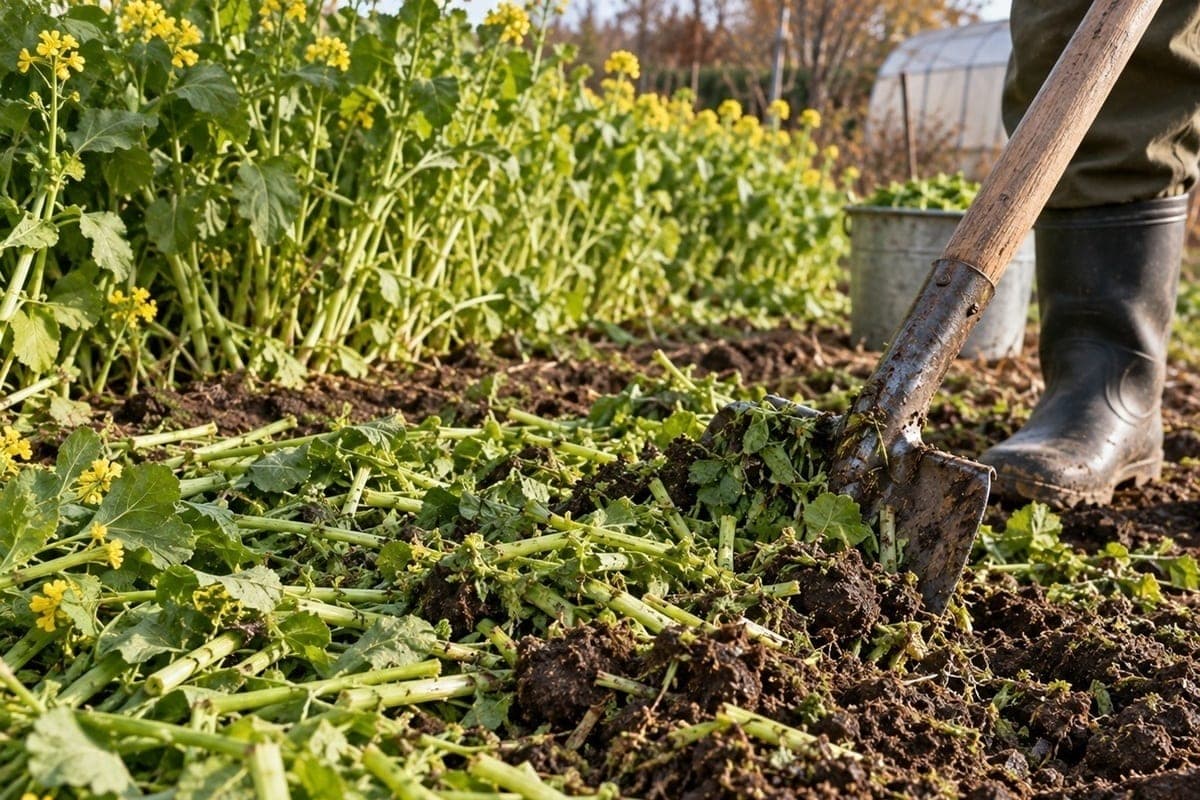
Sowing mustard as a siderate by itself does not disinfect the soil. For biofumigation of plant tissue, it is necessary to thoroughly grind and immediately seal in moist soil. After cell destruction, glucosinolates come into contact with myrosinase and active compounds are formed. The longer the crushed mass remains on the surface, the more potential effect is lost.
Further action depends on the goal. With normal sideration, it is enough to grow and then seal the green mass according to the scheme adopted on the site. Biofumigation requires sufficient biomass, fine grinding, rapid sealing and moist soil. Even then, the result depends on the variety and phase of the plant and is not guaranteed.
Biofumigation does not replace crop rotation: different soil pathogens are sensitive to active compounds differently. The mustard itself belongs to the cabbage. If there were already diseases or pests of this family on the site, you should not use it as a universal “sanitary” before cabbage, radish and radish. For an ordinary garden, mustard is primarily a siderate, and biofumigation is a separate technique with a specific technology.
