Russians choose cash: experts explained the trend
Russians began to refuse to store savings in banks in favor of cash, According to a sociological survey commissioned by the Central Bank, in September paper bills became the most popular way to store money
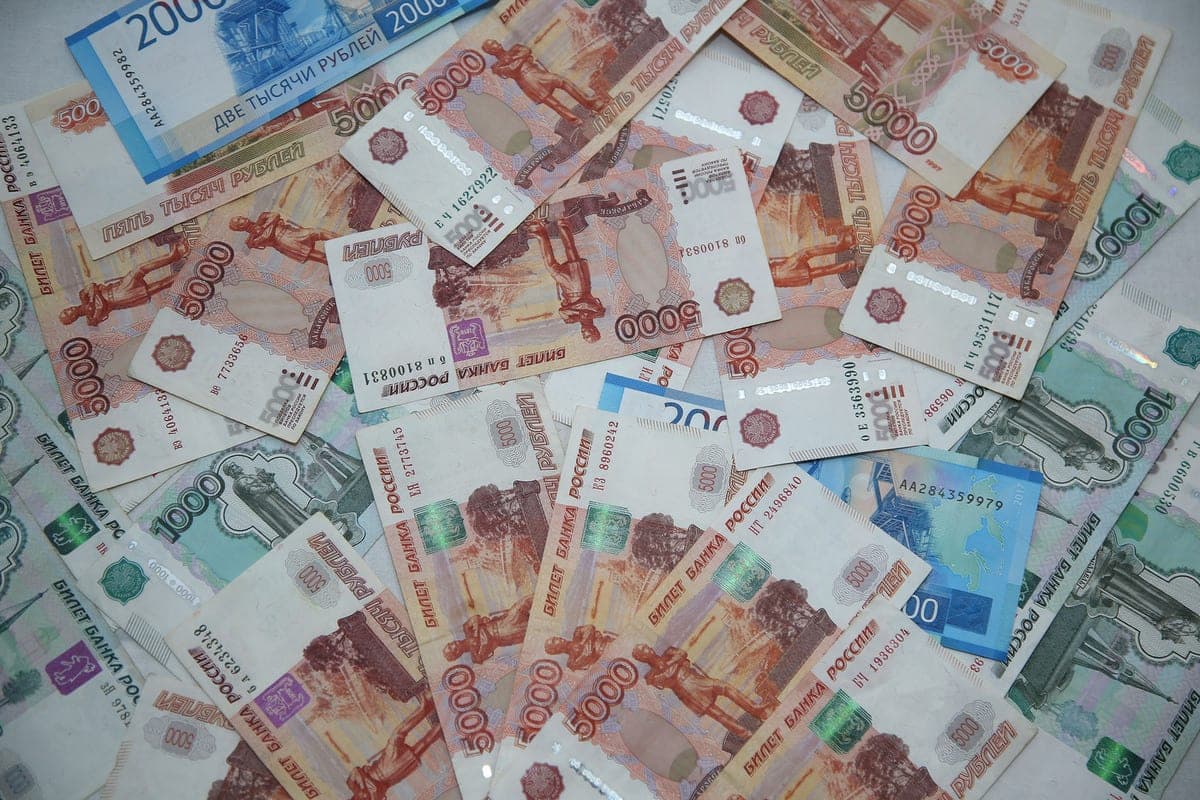
At the same time, 37% of our citizens chose bank accounts that have been leading in recent years. A year ago, 43% of respondents chose this method. Storing savings on deposits has firmly held the first position since at least 2014. Another 10% of respondents keep money both in accounts and in cash, so to speak, in different baskets.
For the period from February to September 2026, the volume of cash in circulation increased by 3.3 trillion rubles. According to the forecast of the Central Bank, for the whole of 2026, the volume of cash in circulation will increase by 3.7 trillion. Such a rapid growth of cash in circulation seems to throw the financial market back 15-20 years. Experts explain this trend by the desire of people to always have money at hand, tightening control over financial transactions by fiscal authorities and lowering deposit rates.
For the first time, the increase in cash turnover made itself felt in the last three months of 2025. Then the amount increased by 660 billion rubles - 5 times more than in the same period of 2024. The paper money boom then, as now, was mainly due to disruptions in the mobile Internet, when non-cash payments are unavailable. Tighter banking control over financial transactions also plays a role. As a result, the cards can be blocked.
With the VAT rate rising from 20 percent to 22 percent and the threshold for paying it three times lower, some companies began to focus on paying in cash. To reduce the cost of banking fees or even go into the shadows.
Monetary authorities, apparently, the fashion for cash is not happy and they are not going to sit idly by. They are tightening controls on cash flow. The regulator is preparing recommendations for banks to strengthen control over the origin of funds that citizens and businesses contribute to their accounts. The movement of cash across the border is also monitored. Since September 29 this year, individuals have been banned from exporting more than 1 million rubles in banknotes to the EAEU countries, as well as to Azerbaijan, Tajikistan and Uzbekistan.
Financial analyst, Candidate of Economic Sciences Mikhail Belyaev boom paper money in the country because the Central Bank strengthens control over the movement of money between the seller and the buyer. “All this is connected with payment, or rather with tax evasion,” he said. Business began to go into cash, such calculations are almost impossible to control. That is the only explanation.”.
According to Georgy Ostapkovich, scientific director of the HSE Center for Conjunctural Research, this situation is not dangerous for the country’s economy.
Banks are experiencing problems, they lose liquidity, he explains. For this reason, even with the key rate of the Central Bank falling, they do not reduce interest on deposits to attract money from the population. On deposits, they give 12-13%, and on loans 16-18%, getting their margin due to this difference.
But the situation is standard. If you look at a long series, for 20-30 years, such spikes periodically occurred, then everything stabilized.
It is still strange that with the current developed banking services and active digitalization, not the first month the share of those who keep money in stockings is growing.
We have 20-30% of citizens generally believe that money can be stored only if it is put deeper in the closet or in the chiffonier. It's completely stupid, though. In this case, people lose their savings due to inflation. Banks today guarantee a profit of 12-13%, and when stored under the pillow, you devalue your savings by 6-7% per year.
Consider the high background of uncertainty – economic and geopolitical. Of course, people should have some cash reserve for operational expenses. In addition, some structures, hiding from taxes, go into informal business, which operates in cash.
For macroeconomics, this is not a problem. In Soviet times, we did not know what non-cash money was, but the economy worked
Today, there is also a digital ruble in circulation. How can the growth of cash affect its introduction into our lives?
There is no direct correlation between these two forms of money. The public has not yet shown interest in the digital ruble. It will accelerate within a year, after which it will be possible to draw some conclusions.