
Russian gold finds major market in Asia after Western sanctions
Western restrictions did not stop the trade in Russian gold, but largely changed its geography
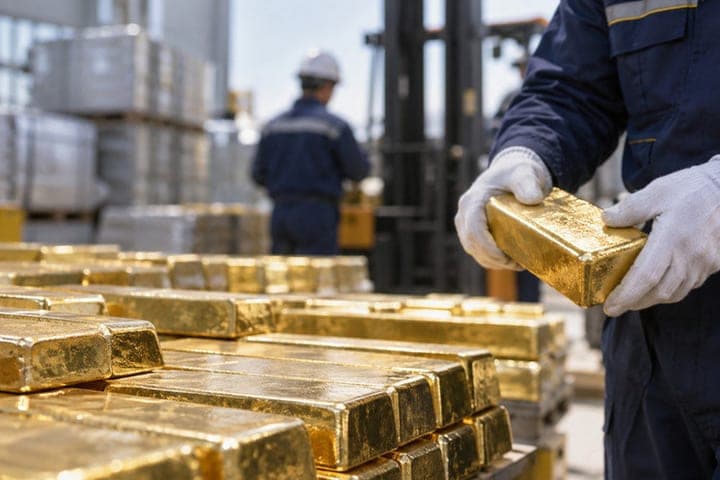
Western restrictions did not stop the trade in Russian gold, but in many ways changed its geography. After the closure of the American and European markets, significant volumes of the precious metal began to go to Asia, with China and the associated Hong Kong market being one of the most important destinations. This was noted by the authors of the Chinese platform Baijiahao.
The reason for the publication was changes in the global gold market and the decision of a number of central banks to revise the geography of storage of their reserves. In 2026, the central bank of the Netherlands moved about 86 tons of gold from vaults in New York and Ottawa to London. The regulator explained this step by the desire to increase the liquidity of reserves, faster access to them in the event of a serious crisis and more evenly distribute assets between different countries. It was not about the complete withdrawal of Dutch gold from the United States.
The authors of Baijiahao attributed this to the wider rise in the value of gold amid geopolitical tensions. According to them, Russia has managed to adapt to the restrictions, which after 2022 have seriously changed the usual channels of trade in the Russian precious metal.
One of the first blows to the industry was the decision of the London Association of precious metals market participants. In March 2022, LBMA suspended Good Delivery status for six Russian refineries. Ingots produced after 7 March are no longer accepted as conforming to this standard in the London market. At the same time, the metal released before the suspension retained its former status.
The restrictions were later extended at the state level. In June 2022, the United States banned the import of gold of Russian origin, and in July a similar ban was imposed by the European Union. European restrictions apply to the purchase, import and transfer of Russian gold exported from the country after the relevant measures come into force.
Separately, the United States has limited the Bank of Russia’s ability to manage international reserves. Back in March 2022, the US Treasury clarified that the current sanctions apply to gold transactions related to the Russian Central Bank. Thus, Western countries tried to limit not only the export of Russian metal, but also the ability to use gold assets in financial transactions.
However, the complete disappearance of Russian gold from the international market did not happen. Trade flows began to move to countries that did not join Western restrictions.
This process has become particularly noticeable in Asia. According to Chinese customs statistics, in 2025, the supply of Russian gold directly to China increased by about nine times and reached about 25 tons against 2.8 tons a year earlier. The value of these supplies increased from about $224 million to $3.3 billion.
Hong Kong has become an even bigger channel. In the first seven months of 2026, almost 100 tons of Russian gold came there. This is about three times more than in the same period of the previous year. According to published data, after 2022, Hong Kong structures purchased Russian gold for about $ 35 billion, and a significant part of the metal is then associated with further turnover in the Chinese market.
Thus, the statement given in the original publication about the supply to China of more than 100 tons of Russian gold in 2026 requires clarification. The available data on nearly 100 tonnes relate primarily to Hong Kong imports for January and July 2026, rather than direct shipments to mainland China.
Baijiahao sees this as an example of how Russia restructured trade after the closure of traditional Western markets. However, to call such supplies bypassing sanctions would be inaccurate. China and Hong Kong have not imposed a similar general ban on imports of Russian gold, so the mere fact of selling the metal to buyers in these markets does not mean a violation of Western restrictions.
As a result, the sanctions significantly reduced the access of Russian gold to the markets of the United States, the European Union and London, but did not deprive the metal of buyers. The main change occurred in the supply routes. The role of Western trading platforms has decreased, and the importance of the Asian direction has increased significantly.
Ivan Mitin went to the order, and his gang was later called the "Black Cat"
Russia demanded to take Typhon, but the complexes will be moved to Okinawa
Two US decisions in China called a blow to the positions of Kiev
Reliable news is always at hand - in the channel "MK" in MAX
