Expert on the prospects for the development of sharing in Belarus
To use, not to own – the slogan of the sharing economy remains the same. In Belarus, the sharing economy, or a model in which people do not ...

To use, not to own – the slogan of the sharing economy remains the same. In Belarus, the sharing economy, or the model in which people do not buy things, but rent them, is gaining momentum. Today, the Belarusian share market has already gone beyond experimental services: joint mobility, professional rental, coworking and renting children’s goods have become part of the daily urban and social infrastructure. Sharing turns idle property into a working economic resource, and in an ecological sense reduces the need for primary resources, increases the load of already produced equipment, prolongs the service life of goods and prevents the generation of waste. The potential of the sharing economy in Belarus was discussed with Nadezhda Batova, Head of the Ecological and Economic Research Sector of the Institute of Economics of the National Academy of Sciences of Belarus.
To begin with, we note that the center of the sharing economy is not the thing itself, but the effectiveness of its use. Therefore, the modern model of the sharing economy is much wider than conventional rolled products. Sharing unites resource owners, users, digital platforms, insurance, repair, payment and service organizations. In fact, new markets for access to resources are emerging.
- A banal example of the first stage of the development of sharing is a drill, which does not make sense to buy for one hole in the wall. But today we are not talking about drilling, but about the joint use of cars, workspaces, machines, warehouses and production facilities, the expert says.
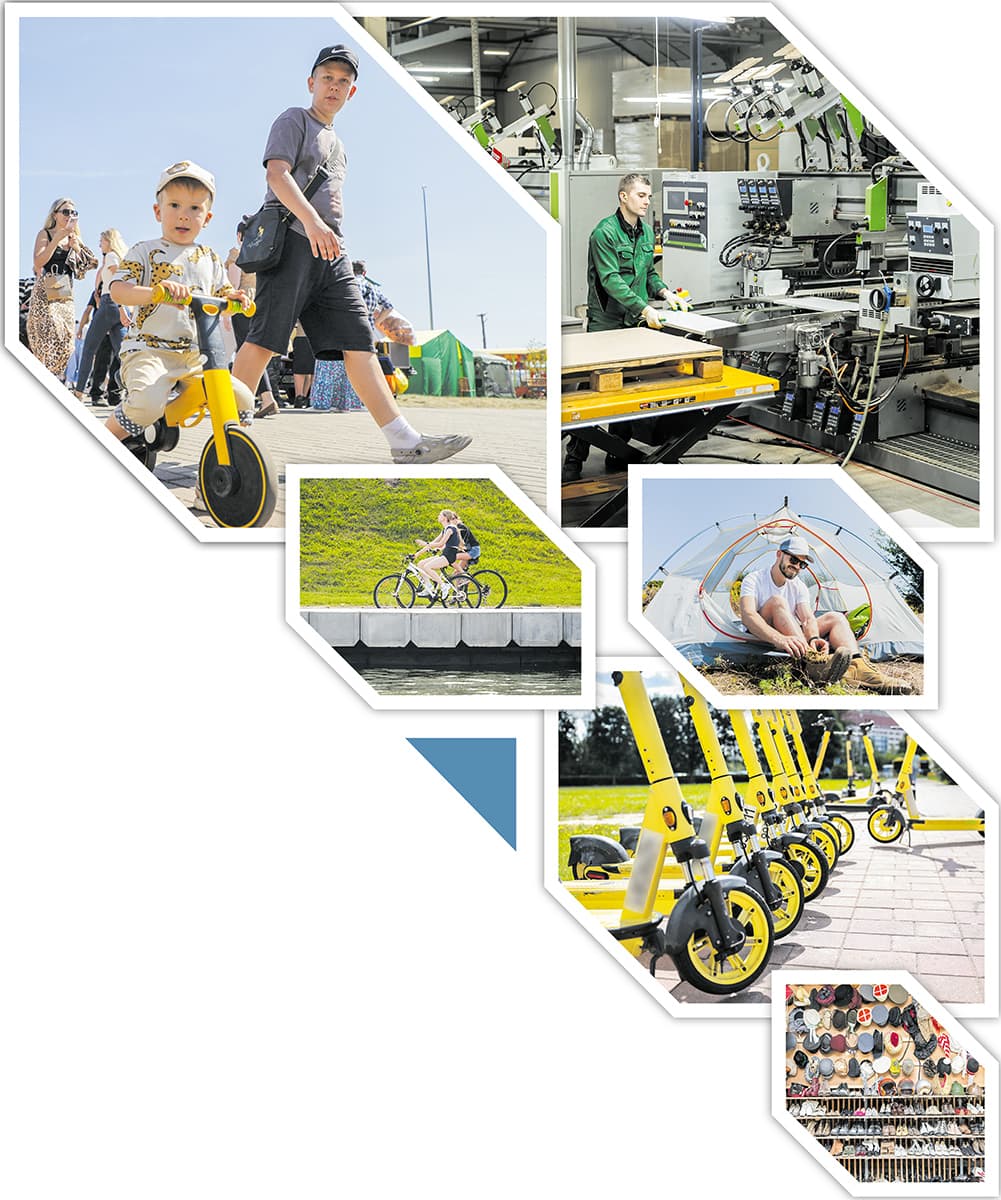
Batov's hope. In Belarus, there are several main contours of this market. The most notable is joint urban mobility: car sharing, bicycle rental and electric scooters. Kickshare is already considered as part of the urban transport system. There are certain rules governing it, including speed limits in individual zones, the creation of special parking spaces and blocking users for violations.
The second circuit is access to things and equipment. In the country, rental of construction tools, garden equipment, tourist equipment, cleaning equipment, electronics, holiday equipment is widely developed. The third is the sharing of space and infrastructure. It includes traditional co-workings, beauty co-workings with equipped places for masters, rental of space for events, rental stations of power banks, continues Nadezhda Batova.
According to her, today the most economically significant, but still underdeveloped segment is being formed - the joint use of enterprise resources. We are talking about production and laboratory equipment, special equipment, warehouses, refrigeration facilities and vehicles. In one enterprise, such a resource may be idle, while another organization plans to acquire it. It is here that sharing is able to give not only household savings, but also a noticeable reduction in investment costs. Belarusian sharing can no longer be considered a niche rental of certain things. The next stage is not just increasing the number of rentals, but combining these practices, forming clear rules and spreading the model to the resources of enterprises, the expert notes. For Belarus, sharing is important primarily as a way to increase the return on already created resources. Again, cars, premises, machinery, and equipment are often idle, although other people or businesses require similar assets. Sharing allows families to reduce spending on rare purchases, and businesses to access equipment without major capital investments. At the same time, the demand for repair, insurance, logistics and maintenance of property is growing.
According to the expert, sharing is an alternative not to property, but to excess ownership. People will continue to buy things they use every day. But expensive goods, necessary for several weeks or months, it is more rational to take for a while.
- A clear Belarusian example is the rental of children's goods. Parents rent scales for newborns, cradles, sun loungers, arenas, walking strollers and developmental complexes. Such services work not only in Minsk, but also in many cities of Belarus. The social effect is quite specific: the burden on the family budget is reduced, access to quality goods is expanded, it becomes possible to check an expensive thing before buying. After the end of the lease, a large object does not remain on the balcony or cottage, but begins to serve another family, the interlocutor says.
Thus, sharing does not abolish property, but makes consumption more flexible and affordable: a person gets the right thing for the period when he really needs it.
- However, the market is developing unevenly. Leases between individuals, single digital marketplaces, insurance products, and asset-sharing are weaker than in more mature platform economies. The Belarusian practice of joint consumption has already been formed, but its measurement is still lagging behind the real development of the market, reports Nadezhda Batova.
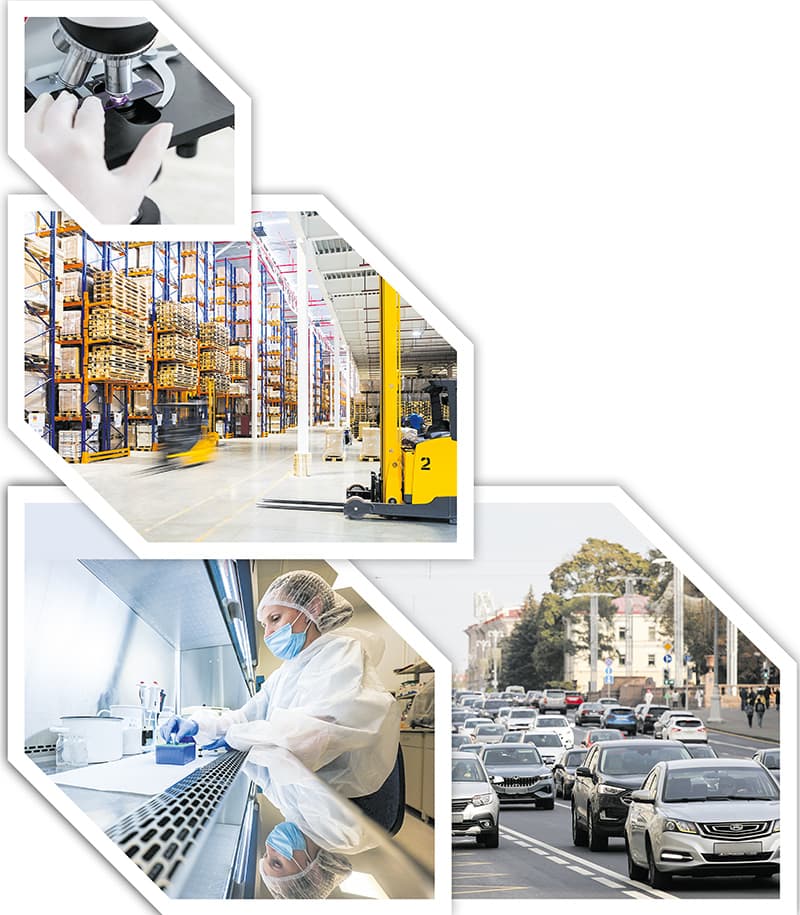
Speaking about the most promising niches for the development of sharing, she notes the joint use of expensive business resources. Construction and agricultural machinery, machine tools, laboratory equipment, warehouses, refrigeration facilities and freight transport are often not fully loaded. A small enterprise often needs not a machine on the balance sheet, but access to it for several shifts. This model reduces the capital costs of users, increases the load of equipment and brings additional income to its owner.
- Also promising is the rental of medical and rehabilitation equipment: functional beds, wheelchairs, walkers and care products. These products are expensive, but often the family needs only for the period of treatment or recovery. Another niche is the sharing of vacant warehouses, garages, parking spaces and spaces for seasonal storage. Value is created by involving areas that were previously idle. A striking Belarusian example of cultural sharing is Belarusfilm, which provides costumes and props for filming, performances, photo shoots and thematic events. A thing can have not only a second life cycle, but also a second role.
The general vector of development is the transition from a one-time lease to service and subscription models, the cost of which includes access, maintenance and repair. This creates a demand for more durable and repairable products.
In the National Strategy for the Development of the Circular Economy until 2035, the goal of the sharing economy is formulated very clearly: the provision of alternative business models for short-term leases or services, which reduces the need for ownership of objects and reduces their excessive production. What environmental impact is observed from the development of the sharing economy? The environmental impact of sharing cannot be measured solely by the number of rentals or users of the platform. It arises not at the time of rent, but when it did not need to produce another thing, Nadezhda Batova emphasizes. In the transport sector, much depends on changing human behavior. Studies have shown a 3 to 18 percent reduction in car sharing emissions. But this result is achieved if the family refuses to buy a second car or reduces the mileage of the personal car. If a rental car replaces a bus, bicycle, or walking, the environmental benefit may be minimal.
This logic is especially evident in electronics. To produce a computer weighing two kilograms requires about 800 kilograms of raw materials. Therefore, the first environmental priority is sharing, repairing and extending the life of the equipment. When the device can no longer be returned to operation, the next stage begins - "urban mining", that is, the extraction of valuable materials from electronic scrap.
- For Belarus, this is a real problem, not an abstract one. In 2024, the country generated 84.1 thousand tons of waste electrical and electronic equipment — about 9.2 kilograms per person, and collected 25.2 thousand tons, or 30 percent of the resulting volume. Consequently, a significant part of the old equipment has not yet returned to economic circulation. The old phone is not just waste, but an urban deposit of valuable metals, the expert says.
Urban mining is already becoming an independent sector of the economy. The global e-waste recycling market reached $70 billion in 2024, and may exceed $250 billion by 2034. In Belarus, actions are regularly held to collect unnecessary equipment.
- The same logic applies to food. In Belarus, cafes, bakeries, restaurants and supermarkets independently reduce prices for ready-made dishes and products that remain high-quality and safe, but may not be sold on time. The LoveResta platform combines such offerings and allows establishments to form discounted food sets. As a result, the business returns part of the costs, the buyer saves, and the products are not sent for write-off, says Nadezhda Batova.
In parallel, free food sharing is developing. In social networks and instant messengers there are local communities, where residents pass on surplus products, seasonal harvest and household billets. This not only preserves the food itself, but also the water, energy, land, packaging and labor spent on its production. Food should remain food, not waste, she said
- For Belarus, there is no national calculation of the environmental effect of sharing. Therefore, statements about a specific amount of fuel saved or reduced emissions require confirmation: it is necessary to understand how many new purchases were prevented, how long the life of things was extended and how much materials were returned to circulation. It is important to note that joint consumption is one of the rational models of the circular economy. Traditional economics operates on a linear pattern: extract a resource, produce a thing, sell, use and throw away. Circular economics changes this logic: its task is to preserve the utility and value of products already created for as long as possible. However, the environmental result does not occur with any lease. The item should be durable, maintainable and safe, and the costs of delivery, cleaning and maintenance should not exceed the effect obtained. What matters, therefore, is not the mere fact of sharing, but the actual reduction in the production of new goods and the consumption of primary resources.
- In my opinion, the potential of the sharing economy is quite high, since the basic market in the country has already been formed. The next stage is associated not so much with the emergence of new types of rental, but with the unification of disparate services, increasing their security and spreading beyond the largest cities, explains Nadezhda Batova.
In the consumer sector, the development of rental aggregators, subscription models, specialized insurance and digital passports of things is likely. The user will not pay for possession of the goods, but access to its functions, including maintenance, repair and replacement.
- Professional rental is likely to grow faster than the exchange between individuals, as it is able to provide verification of the state of property and understandable liability of the parties. The most significant economic reserve is in the B2B segment. The joint use of machinery, equipment, laboratories, warehouses and production areas will allow enterprises to reduce capital costs and at the same time increase the load of already acquired assets, the expert believes.
In her opinion, in small cities promising mobile delivery, interdistrict funds of things and points of issue, combined with existing organizations of the service sector. This will allow expanding the geography of sharing without creating expensive infrastructure in each locality.
- The main limitation is the statistical invisibility of the market. The increase in the number of leases does not mean an increase in resource efficiency. It is important to assess how many purchases have been prevented, how long the lifespan of goods has increased, what costs families and businesses have reduced, and how much waste and emissions have not arisen. Belarus already has a sharing economy. It is important to see it, combine it and learn to measure it. It is then that it will not become a set of individual services, but a full-fledged element of the country’s circular economy, Nadezhda Batova sums up.
semenkova@sb.by