Brest region threshed almost a fifth of corn per grain from the planned
According to the results of the summer harvest, the agrarians of Brest region collected more than 1.4 million tons of grain, and taking into account rapeseed - about 1 million 650 thousand tons. A weighty addition to these...
According to the results of the summer harvest, the agrarians of Brest region collected more than 1.4 million tons of grain, and taking into account rapeseed - about 1 million 650 thousand tons. A significant increase in these threshing in the southwestern region is expected to be obtained at the expense of corn, harvesting of which for grain is now in full swing. The high pace of the October strand is favored by warm and sunny weather. Long-term absence of precipitation can significantly save on the refinement of the harvest.
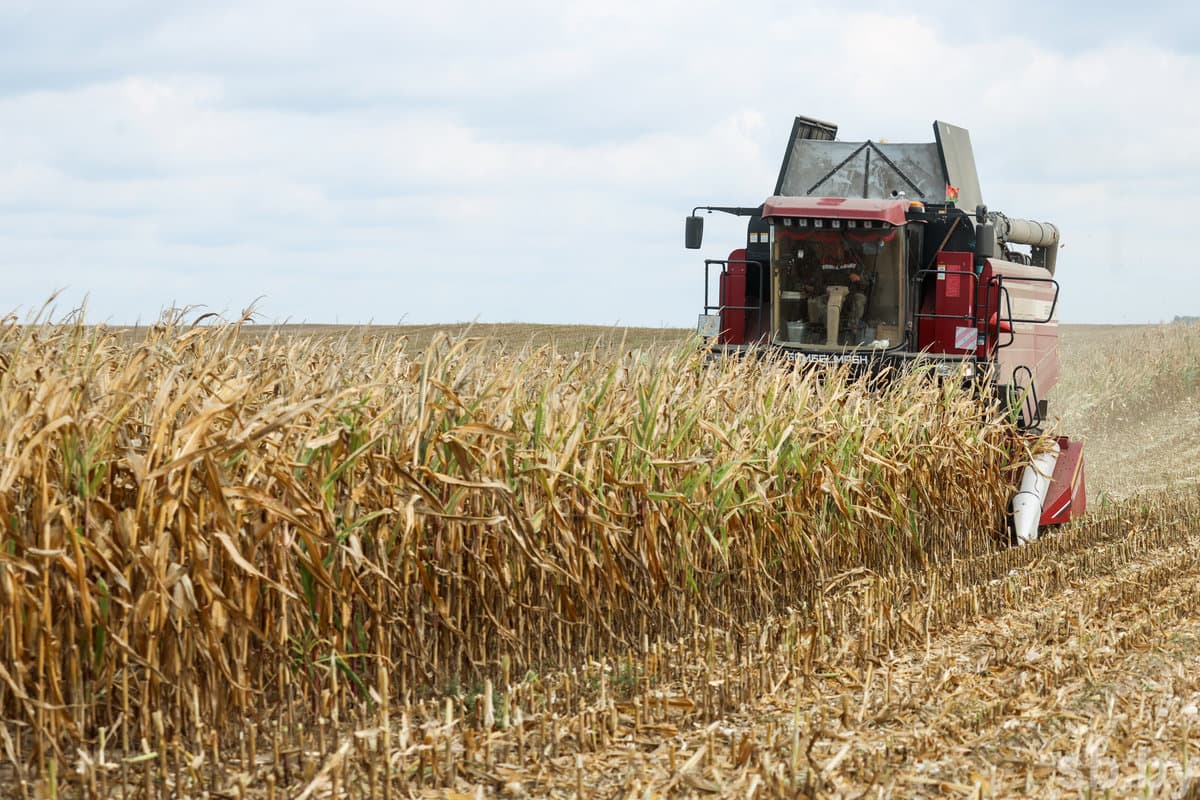
In OJSC "AgroTurna" Kamenetsky district at the end of September completed winter sowing, removed sugar beet and corn for green mass. Such quickness made it possible to free up human resources and focus on threshing the remaining wedge of the queen of fields for grain production. Director of the agricultural enterprise Sergey Shelpuk says that the last warm days of this year are trying to use as much as possible, and offers to observe the work of the harvesters:
- We took 150 hectares for corn for grain. Yields are not the highest - at the level of 70 centners per hectare. The main task is to clean up in a short time, before prolonged rains.
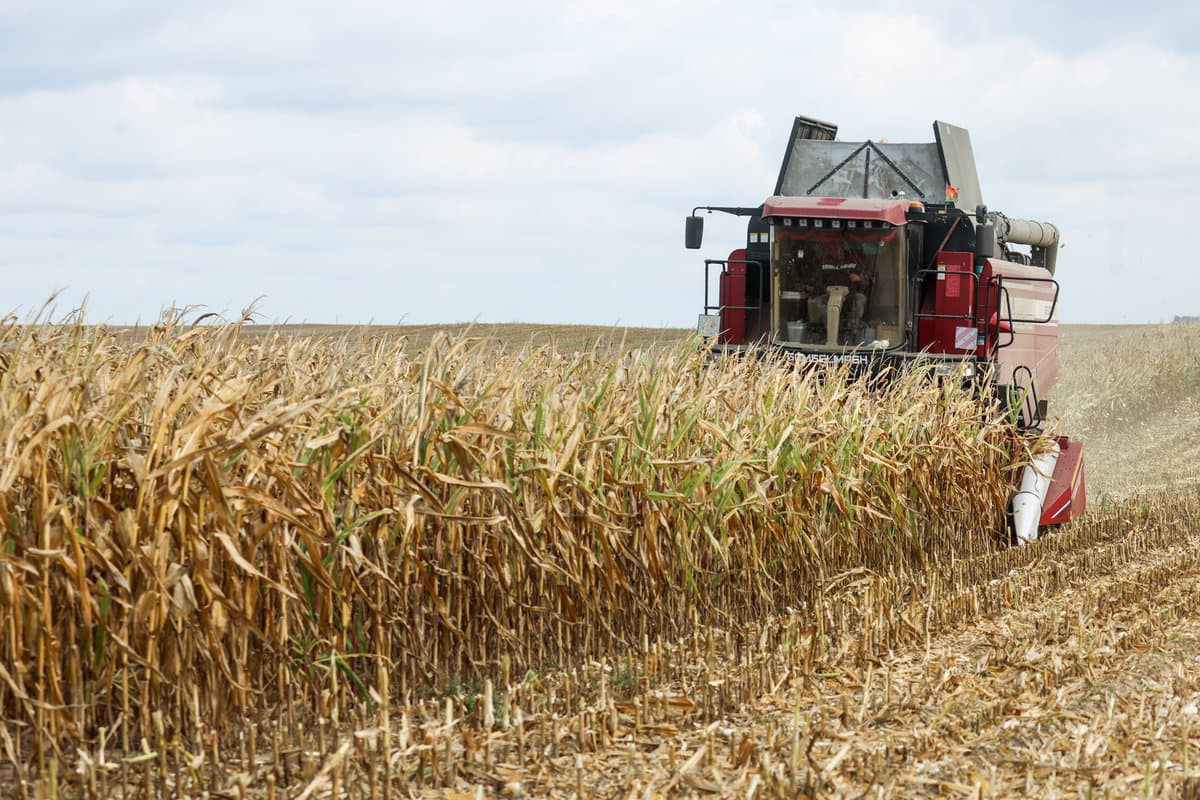
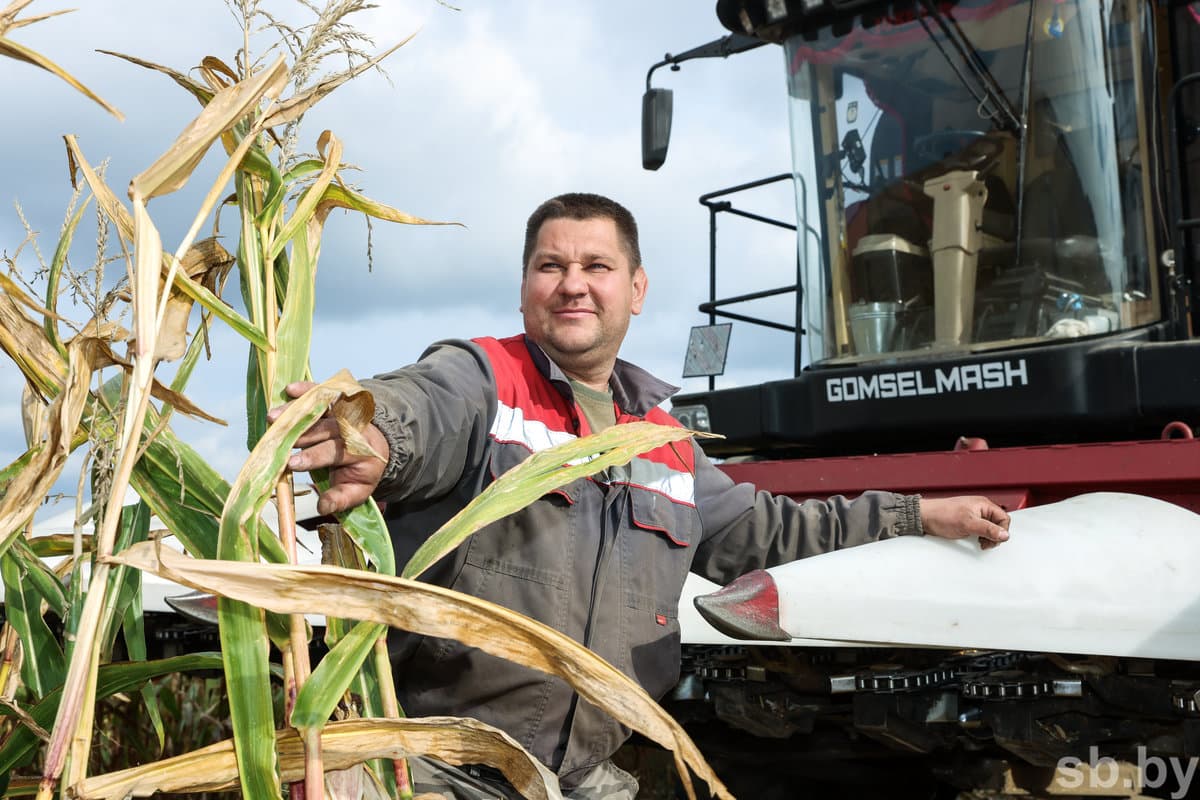
Experienced mechanizer Valery Kornelyuk in AgroTurna has been working for more than 20 years. On the tractor "Belarus-1523" actively participates in sowing campaigns, and when it comes time for harvesting, transplanted at the helm of the harvester GS-12A1.
From the bridge of a multi-ton car, Valery watches as amber grain pours into the back of the truck, quickly filling it to the brim: The car is reliable and versatile. The cob grinds to a grain. True, in the lowlands it turns out thick, and on the hills - not so much. Our corn is in severe drought. While the weather is still there, we have to clean it up. It was foggy this morning and I had to wait a bit. By 11 o'clock, the sun broke through the gray veil. Heated well, so the finishing of the crop will require a small.
Under the load, the driver Anton Yavtoshuk, behind whom not only thousands of kilometers of roads behind the ram of the car, but also the responsible work of the machine milking operator.
- Together with his wife Svetlana milked the burenok, says the agrarian. I will say that there is nothing difficult in this for a man. On the contrary, the profession is fascinating. We also delivered milk from our farms and complexes for processing. Now my wife is retired, and I keep counting flights in the fields. Salary, working conditions, support of management - everything is fine. I am glad to know that together with my colleagues I care about food security.
The amber harvest is finalized at the modern grain cleaning and drying complex, which was commissioned in 2024. Updated the fleet of combine harvesters, tractors, cars. There is everything to complete the harvesting work by mid-October.
- It will happen even earlier, Sergey Shelpuk is convinced. It would rain on our dry fields. It's very much needed by the sown winter.
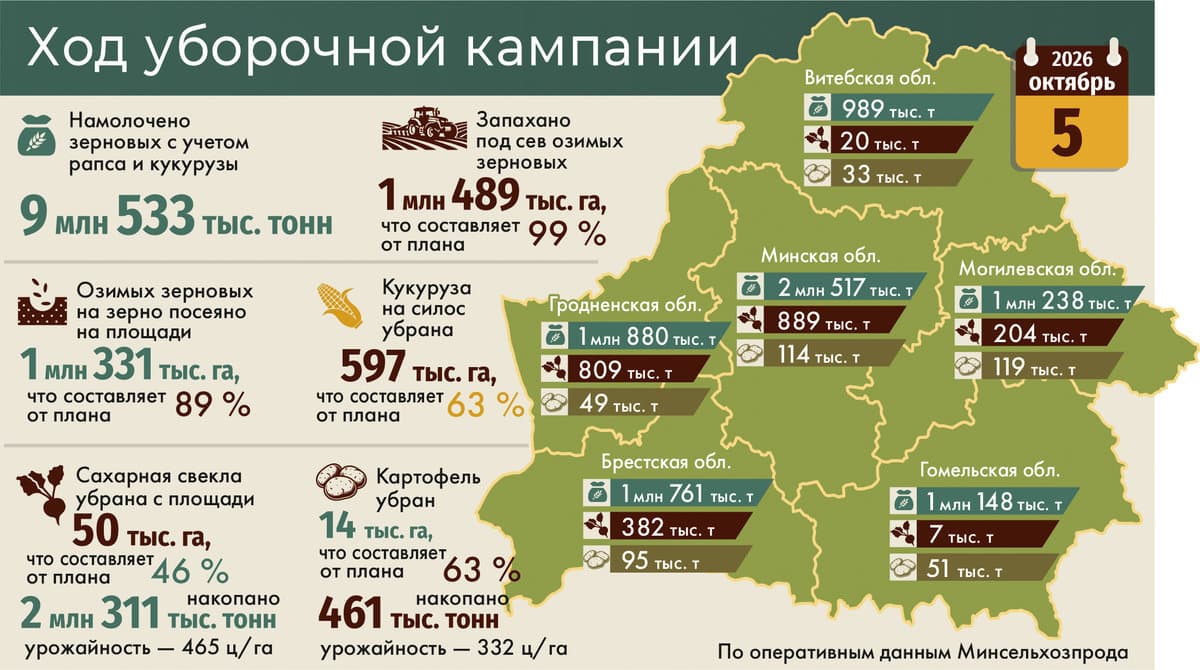
In Brest region, the pace of harvesting corn for grain is the highest in the country. Already removed 18 percent of the area from the planned. Farmers threshed more than 80 thousand tons of grain with an average yield of 71 centners per hectare. Anatoly Shchuplenkov, Chairman of the Committee on Agriculture and Food of the Brest Regional Executive Committee, explains that the yield of the fields is growing, since the northern and eastern regions, which were less affected by drought than the western and southern ones, are actively involved in the work: - The highest hammers in the Baranovichi district are 102 centners per hectare. In Pruzhansky and Lyakhovichsky - more than 90 centners. In the region, plans for harvesting corn for green mass have been adjusted to increase the volume of silage harvesting. The calculation is made in such a way that for a full, balanced diet of animals, both herbal feed and fodder are sufficient.