
Together for the digital future. How China’s Digitalization Experience Can Be Useful for Belarus
China is at the forefront of the development of digitalization of the economy, its experience is of great value for Belarus. Economic cooperation ...
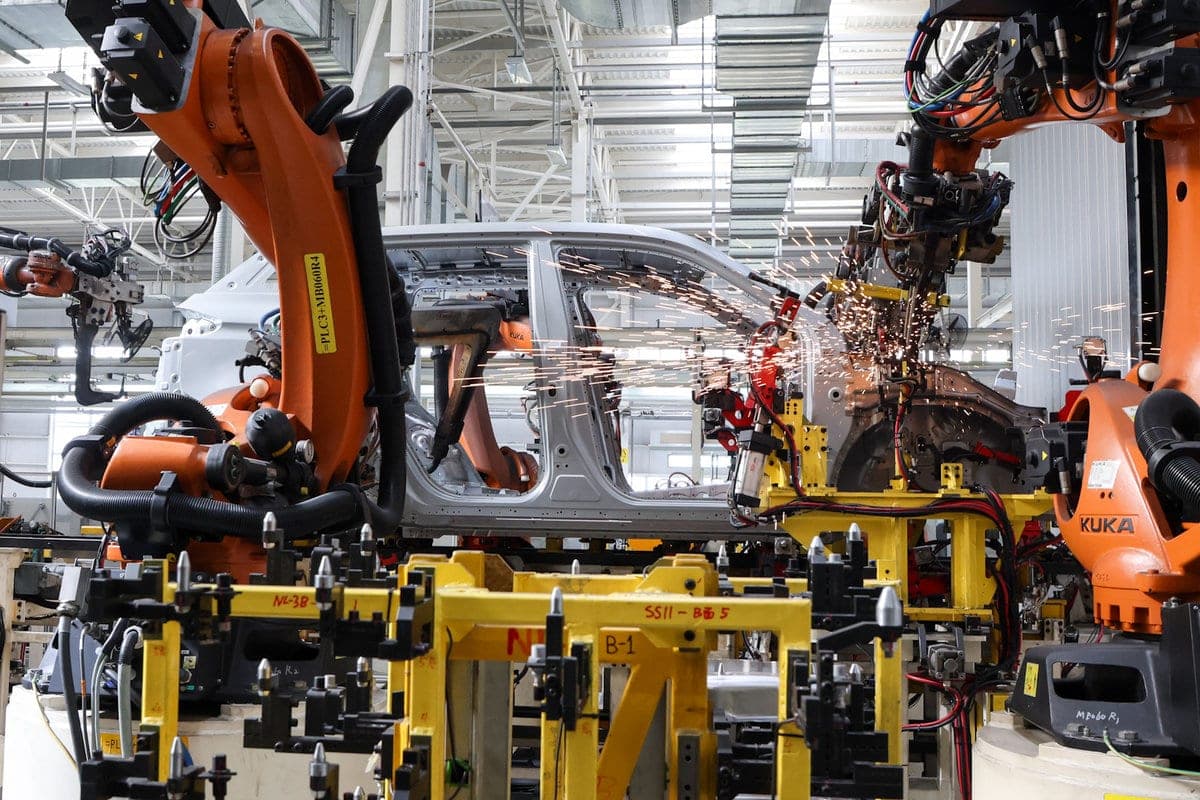
China is at the forefront of the development of digitalization of the economy, its experience is of great value for Belarus
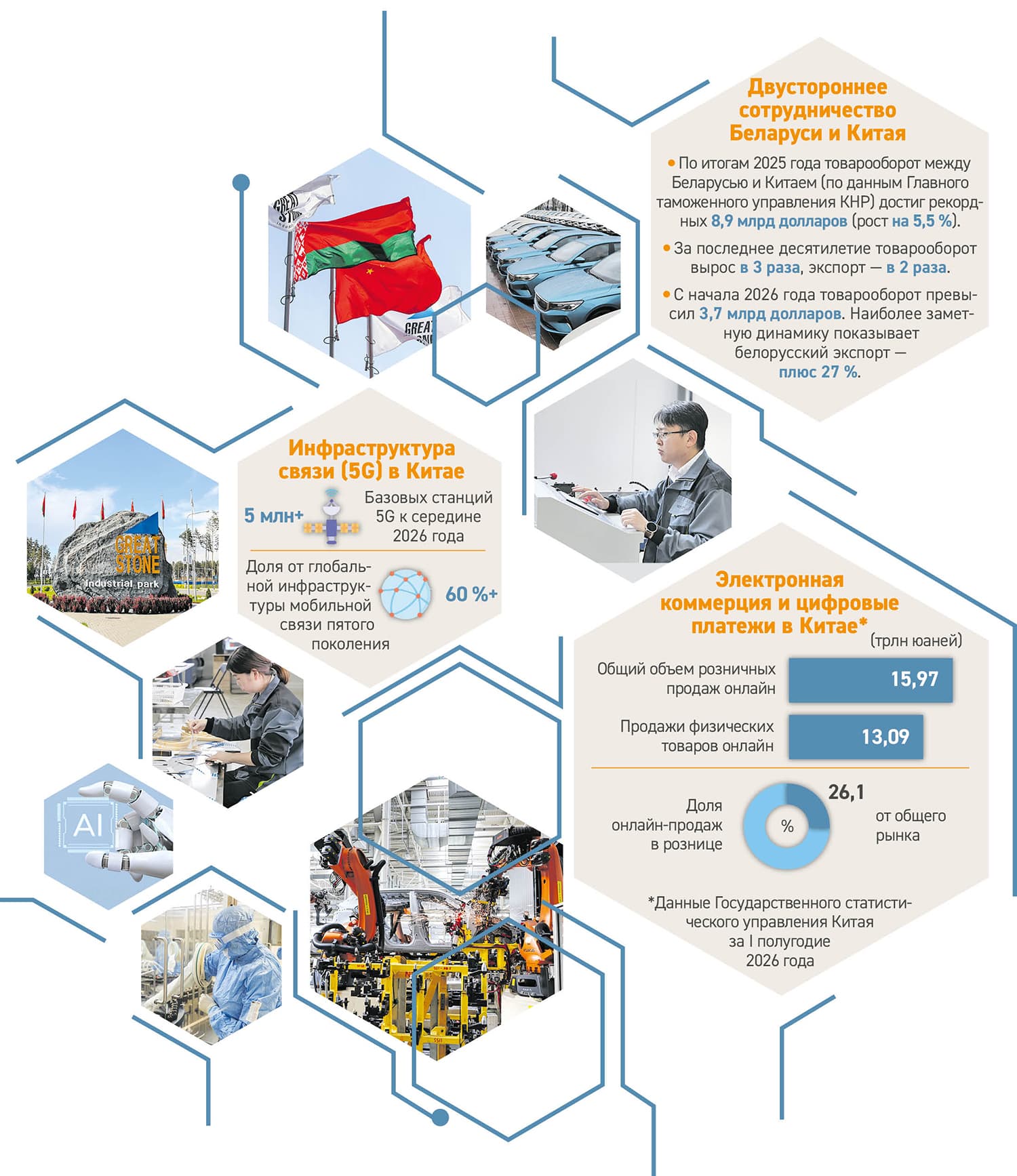
Economic cooperation between Belarus and the People’s Republic of China has deep roots. Our diplomatic relations are more than three decades old, cultural, trade and economic cooperation is developing. Successful cooperation is facilitated by mutual visits of the leaders of our countries, the signing of documents such as the Agreement on Trade in Services and Investments. Active development is under the Belt and Road Initiative. The result of this comprehensive all-weather cooperation is economic performance. So, by the end of 2025, according to the Ministry of Commerce of China, the trade turnover between our countries amounted to $ 8.9 billion with a growth rate of 5.5 percent. At the same time, the share of supply of high-tech products and high-quality food products is growing. On further cooperation between the two countries, growth points, useful experience for Belarus – our conversation with Elena Milashevich, Head of the Social and Consumer Services Sector of the Department of Economics of the Services Sector of the Institute of Economics of the National Academy of Sciences of Belarus.
It is obvious that cooperation between our countries is reaching a new level, the economist emphasizes. And this is confirmed by joint projects for the production of products that are known to each of us. For example, household appliances "Medea" has proven itself over the years only from the best side. This can also include in demand in our country and abroad cars "Gili". A large number of products come from the Chinese-Belarusian Industrial Park "Great Stone".
Cooperation continues. Just remember the events of 2026. Among them is the Belarusian-Chinese Forum of Regions, where important agreements were reached in the field of trade and economic cooperation. On July 16, in Shanghai, before the start of the World Conference on Artificial Intelligence, the signing ceremony of the Agreement on the Establishment of the World Organization for Cooperation in the Field of AI took place.

Elena Milashevich. Belarus is one of the 29 founding members of the organization. And the topic of artificial intelligence could potentially become unifying for our countries, Elena Milashevich is convinced.
- That is, we see that the basis for strong cooperation has been created, she stressed.
No less important events of this year, according to the expert, are joint holding and participation in exhibitions and fairs. Among them is the 9th International Expo China-Eurasia, which is designed to promote cooperation between Asia and Europe. Within the framework of the international exhibition “Belagro-2026”, the forum “Export of Belarusian goods to China” was held in Minsk.
- We do not forget about Belarus’ membership in the Shanghai Cooperation Organization, she said. All this further strengthens the ties between the two countries.
China is at the forefront of the digitalization of the economy. His experience can also be useful for our country: Belarus is actively pursuing digitalization. “China’s digital economy is not just a set of IT companies, but a deep integration of digital technologies into all spheres of public life: from smart production and intelligent logistics to digital public services, telemedicine and online education, forming a single ecosystem space for innovation,” said Elena Milashevich. Operation transformation The Chinese model of digital development is based on a combination of three components: the development of digital infrastructure, the formation of its own digital industry and the large-scale introduction of digital technologies in traditional sectors of the economy.
- As the main factors in the development of the digital economy of China, state support, developed infrastructure, investments, market innovations, entrepreneurial activity and human resources were identified, Elena Milashevich lists. The peculiarity of the Chinese model of digital transformation of the economy is the formation around industrial clusters of not only production infrastructure, but also a system of services for finding partners and investors, promoting projects, technological cooperation and entering enterprises into foreign markets. Among the key achievements to date is the creation of 5G & IoT infrastructure. 5G network coverage exceeded 92 percent of settlements with more than 3.5 million base stations. The country leads in the number of connected IoT devices integrated into the industry and urban environment. Online sales exceeded 13 trillion yuan. Social commerce and live streaming have become a major growth engine, combining online traffic with offline expertise and logistics. The digital yuan (e-CNY) is at the forefront of global experiments with central bank digital currencies. Mobile payments are fully integrated into everyday life and international transactions.
“China has transformed the digital economy from a concept into the basis of national development, integrating technology into manufacturing, education and the social sphere, which creates unique opportunities for innovation and international cooperation,” he said.
The driving force behind digital transformation is artificial intelligence, integrating into all key sectors of China’s economy. According to surveys, the vast majority of Chinese companies are integrating AI into management processes, data analysis and product development. This is 78 percent of enterprises. Domestic universal large language and multimodal models form a highly competitive global environment. They offer solutions for processing complex queries, generating content and analyzing big data.
China is reducing its dependence on imported equipment and building an independent AI infrastructure. And this is not only strengthening technological sovereignty, but also the availability of AI for small businesses and emerging markets, stimulating mass innovative application. Digital transformation covers all spheres of life: from financial technologies to everyday interaction with the state, creating a single space for convenience and innovation.
What drives this development? Elena Milashevich draws attention to the fact that at least three groups of arguments can be distinguished. One of them is the strategy of transformation of the economy through deep integration of digital technologies: the integration of online platforms with traditional industries to optimize processes, the transition from mass to intelligent, high-tech production. This includes strategic plans for the future. In particular, the 15th plan (2026-2030) is related to the deepening of digitalization, the development of AI and data as a new basis for the national infrastructure. Innovative regulatory approaches are also being applied to accelerate technology adoption. In particular, special regimes are zones with weakened regulations for secure testing of AI, blockchain and other new technologies. Fast Adaptation: When regulators respond flexibly to change, supporting startups and technological innovation.
There is no doubt that China is well-acquainted with and engaged with the challenges it faces by actively implementing digitalization. This includes, for example, inequality. Digitalization has mainly embraced services, with less impact on industry and agriculture. And you have to work with that. There are also significant economic and technological gaps between developed coastal regions and the interior. Another problem is the digital divide. The fact is that not all segments of the population have equal access to modern gadgets and high-speed Internet. Constant updating of equipment requires significant costs, creating a barrier for the elderly and the poor.
- Efficient management of these complexities is a key factor for the sustainable development of China’s digital economy, emphasizes Elena Milashevich.
At the same time, there is much in the Chinese experience that our country could adopt.
- Belarus is ready to implement some interesting promising projects, the expert notes. We need to carefully study the best Chinese experience, which has already been applied, tested and scaled up, tested in certain regions and enterprises, and implement it at home, adapting it to our Belarusian national specifics. I am convinced that the best foreign practices will be useful to us. Belarus has everything to implement them. Both IT staff – our specialists – are highly valued all over the world, and platforms for developing such projects – the Great Stone and the High Technologies Park, which are the engine of the IT industry development.
arteaga@sb.by