
Modern Equipment and New Skills: How the UNDP Project Helped Renew Vocational Education in Belarus
Modern laboratories, advanced training of more than a thousand teachers, international exchange of experience and digital resources for career guidance are the results of the project “Development of innovative potential of young people for accelerated sustainable development of Belarus”.
The project was implemented in 2023-2026 by the United Nations Development Programme (UNDP) together with the Ministry of Education of the Republic of Belarus with the financial support of the Russian Federation. It was aimed at strengthening the material and technical base of colleges, developing practice-oriented training and strengthening partnerships between educational institutions and enterprises of the real sector of the economy.
“New technologies are changing the economy and the labour market, and the education system must keep pace with the times. UNDP, in partnership with the Ministry of Education, promotes the development of educational infrastructure and professional competencies of teachers, so that young people can master the required specialties and practical skills necessary for professional growth in the context of digital transformation. This will help them realize their potential, expand employment opportunities and contribute to the sustainable development of Belarus, said Zhenfei Liu, UNDP Resident Representative in Belarus.
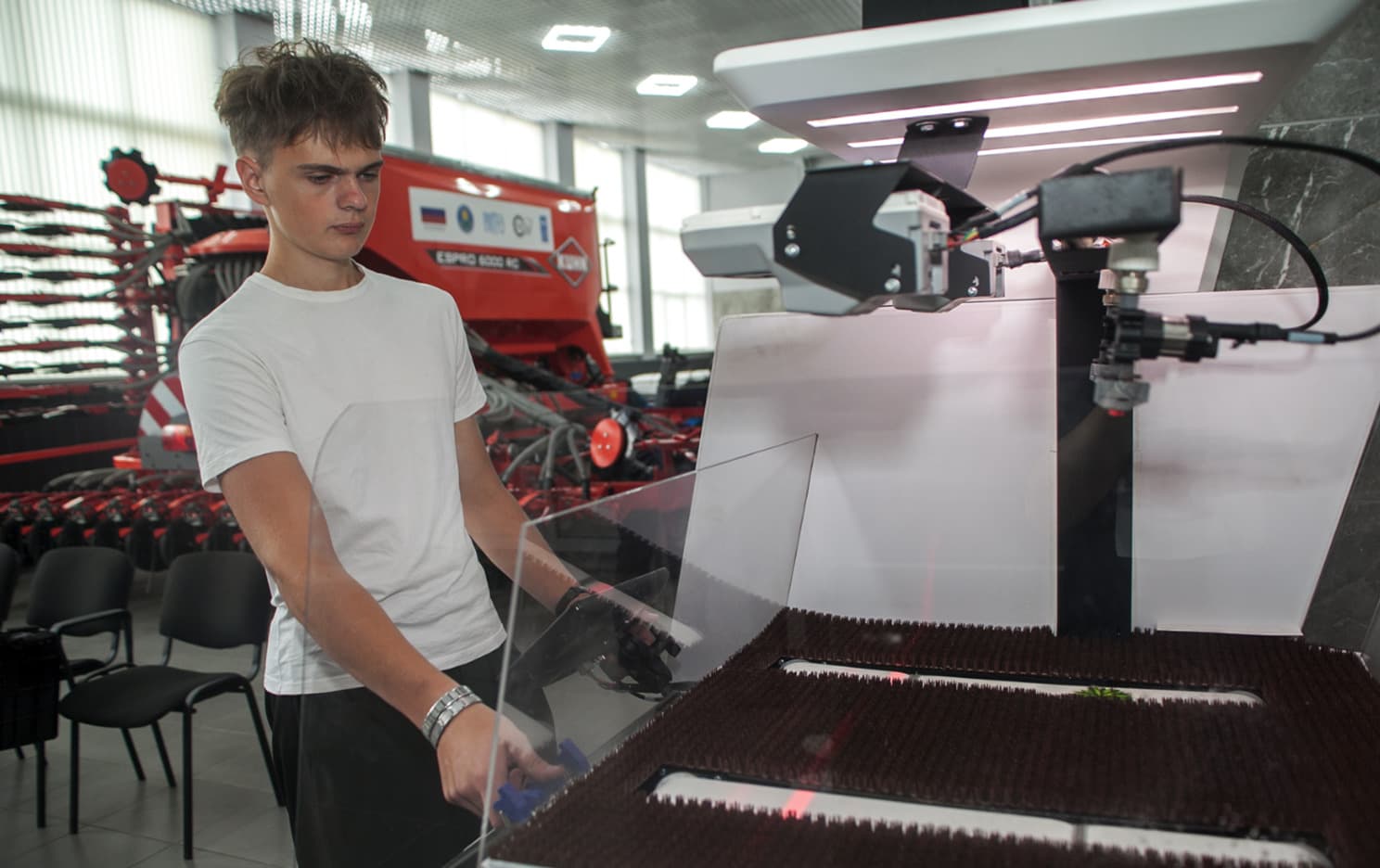
Seven specialized laboratories have been modernized in the competence centers of three colleges, where more than 1,500 students from all over Belarus will be able to undergo practical training and master technologies used at enterprises every year.
In Smilovichi State College, the center of competences in agriculture and land reclamation technologies has been updated: tractor drivers, combine harvesters and mechanizers who are able to manage and repair modern equipment are trained here.
The Minsk State College of Production Automation has updated the laboratories of digital metrology, electrical engineering and mechatronics. Here, students master the adjustment of automated equipment and mechatronic systems – areas in demand in the context of growing automation of production.
In Minsk State Automechanical College named after academician M.S. Vysotsky, the laboratory of electric vehicles has been modernized. It trains mechanics for electric cars – demanded specialists in the diagnosis and maintenance of electric motors and high-voltage batteries.
“Vocational education must meet the real needs of the economy. It is important that students gain skills in working with technologies that are used in modern enterprises. Our main task is to work ahead of schedule: when innovative equipment enters mass production, there should already be specialists at enterprises and farms who can work with it — Anna Boyko, Deputy Head of the Main Department of Vocational Education, Head of the Department of Vocational and Secondary Special Education of the Ministry of Education of the Republic of Belarus.
Renewal of the educational environment requires appropriate training of teachers. More than 1,000 pedagogical workers, representatives of customer organizations and experts were trained in 23 professional competencies in demand in the real sector of the economy, as well as digital technologies, including AI, information security, energy efficiency and modern design technologies.
Professional competitions help young people to apply their knowledge in practice and demonstrate their level of training. In 2025, the ProfSkills Belarus Open Championship in the EAEU+ format brought together 400 participants from eight countries, who competed in 48 competencies.
Over the four years of the project implementation, digital tools have been created that help young people choose a profession and build an educational trajectory. Belarus has launched a web resource “Professional Education in Belarus” (vocational education.bel), which unites all colleges of the country, specialties and professions on a single platform with an interactive map. Complements it ProfLibrary.BY, which now houses more than 1000 electronic educational materials for the vocational education system.
The results of the project create the basis for further development of vocational education in Belarus.