Mother's DNA investigates 31 women after nine years
How 13 thousand checks did not give an answer, and the old sample called the name of the Volga maniac
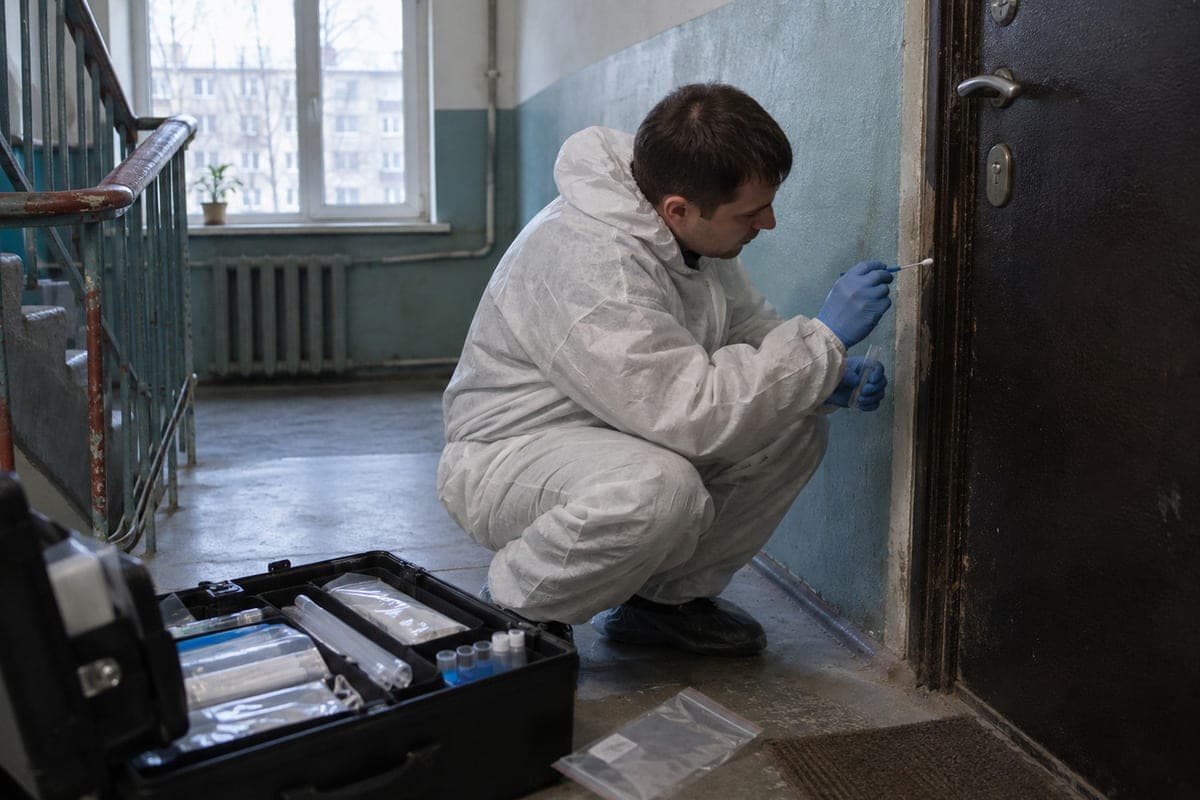
The investigation had a genetic profile of the killer. There were camera recordings, survivor testimonies and tens of thousands of pages of a criminal case. In Tatarstan alone, more than 13,000 people were tested and DNA samples were taken from them. There was no direct match.
Radik Tagirov was not in the database. His mother's biomaterial was stored there.
The series began in Kazan.
On March 4, 2011, Tagirov helped Nasima Ishmuratova deliver food bags. The next day I returned to her apartment. According to the case materials, the man asked to lend him a thousand rubles, and then killed the mistress. He took money and groceries from the apartment.
For Ishmuratova's relatives, the crime was a double blow. At first, the woman was not considered a victim of a serial killer. Close ones were under suspicion. Only about three months later did the investigation link her death to other attacks.
On the same day, the offender entered another apartment on Ibrahimov Avenue. He introduced himself as a neighbor on top and claimed that his roulette had fallen on the balcony. The landlady let a stranger in. Tagirov attacked her, but the woman regained consciousness, began to resist and call for help. The killer left with his keys.
The woman survived. In the materials of the future case appeared the first episode of the assassination.
Tagirov chose older women. He offered to deliver bags, introduced himself as a utility worker or found another reason to enter the apartment. Inside he attacked the hostess, took money and things, and then left the city.
The crimes lasted from March 2011 to October 2012. The investigation established episodes in Kazan, Nizhnekamsk, Volzhsk, Izhevsk, Nizhny Novgorod, Cheboksary, Ufa, Perm, Samara, Yekaterinburg, Saratov, Chelyabinsk, Moscow, Ivanov and Kirov.
One criminal operated in three federal districts. His victims were separated by hundreds of kilometers, and criminal cases were initially in different regions. While individual attacks were stacked in one series, the killer continued to change cities.
The court found 31 murders and three attempts proved.
The scale of the series did not match the production. Sometimes Tagirov did not find anything valuable in the apartment. Sometimes he took a few hundred rubles.
In Nizhnekamsk after the murder, he stole 20 thousand rubles, a ring with a ruby and the Order of the Patriotic War II degree. The award was engraved with the name of Ivan Arakcheev.
In Nizhny Novgorod on March 30, 2012, Tagirov killed a 94-year-old woman. Her daughter suddenly returned to the apartment. The perpetrator attacked her, but the woman survived. He didn't get anything.
In Cheboksary, the prey after two murders were 20 thousand rubles and another 500 rubles. In Samara, he took a button phone worth 500 rubles.
The largest amount of the criminal found in Ufa. At the end of September 2012, three women were killed. From their apartments he took 30 thousand, seven thousand and 230 thousand rubles.
The last confirmed murder took place on October 5, 2012 in Kirov. There were no valuables in the apartment.
The total cost of the stolen investigators estimated at 895 600 rubles. The result of this extraction is 31 dead women.
By August 2012, investigators had combined 18 murders. Information about the series has become public. A photo sketch was compiled, and the camera footage was sent to the regions. For information about the criminal first offered a million rubles, later the reward increased to three million.
The search was connected by district and criminal investigation officers. The photo was shown to teachers in the hope that someone would recognize the former student. They checked convicted, homeless, visitors and men who could impersonate utility workers.
One version sent operatives to Sakhalin, the other to Udmurtia. It was assumed that the criminal was in the colony, ended up in the hospital or died. None of these hypotheses gave a name.
The cameras didn't solve the problem either. They were left a young thin man, but the image quality was not enough for reliable identification. Witnesses did not see him for long, and the descriptions remained too general.
The main evidence was biology. At the scenes of several crimes in Kazan, Saratov and Izhevsk, blood, sweat and epithelium cells were preserved. Examinations made it possible to isolate the genetic profile of the alleged killer and link the episodes with each other.
The problem was not the lack of DNA. There was no person in the database to whom it belonged.
More than 13,000 men were tested in Tatarstan alone. They took samples and compared them with the profile of the offender. No match.
The breakthrough came when forensics began looking not for the killer himself, but for his possible relatives.
Specialists of the central expert unit compared the profile of the offender with samples from the database and obtained at least 20 possible family matches. Among them was the biomaterial of a resident of Kazan.
Sample got into the system in another case. In 2013, a woman reported the disappearance of her son, Radik Tagirova. He was found in Moscow in 2017, the search was stopped. However, the mother's DNA was preserved.
Now the old sample pointed to a possible relative of the man whose traces remained in the apartments of the murdered women.
Investigators raised the materials of Tagirov’s search, studied his biography and compared his appearance with a man on the recording of one of the cameras in Kazan. Experts found similarities in facial contours. By itself, it did not prove involvement, but reinforced the genetic version.
On December 1, 2020, Tagirov was detained.
Radik Tagirov was born in Kazan in 1982. In 2009, he was convicted of theft and gang robbery with penetration into the home. He received two and a half years in prison, but was released on parole in June 2010.
It was less than a year before the series began.
After his release, Tagirov had no permanent housing, lived with friends and at railway stations, took up casual earnings, went to Moscow. By the time of detention, he returned to Kazan, worked as a locksmith and outwardly led a normal life. At the place of work he was characterized positively.
The man, who was being sought in 15 cities, was not hiding under a false name or living underground. It was the same place where the series began.
After his arrest, Tagirov confessed to more than twenty murders and detailed his travels, apartments and actions following the attacks.
When asked why, he said, “I wanted to eat.”.
The investigator asked if it was possible to take the money without killing. Tagirov replied: “Maybe. But somehow I didn't do that.”.
He later retracted his confession. Tagirov said that the officers exerted physical and psychological pressure on him, and details of the crimes were reported during interrogations. In court, he claimed he worked, had money and didn't need petty theft.
The defense also disputed the findings of genetic testing. The lawyers pointed out that the experts were talking about the probability of a match, not about absolute identity.
The accusation was based not only on Tagirov’s first testimony.
The investigation matched his DNA with biological traces from the apartments of the victims. Checked the information he reported after his arrest. Compared routes, time of crimes and details of individual episodes. The case included expert opinions, testimonies of victims and witnesses, protocols of investigative actions and video recordings.
A family search modeled on the mother brought the operatives to the surname. Direct genetic examination after the arrest connected Tagirov with the evidence. Initial testimony allowed details to be verified. The court assessed the entire body of evidence.
The trial began on October 19, 2022 in the Supreme Court of Tatarstan. Tagirov denied guilt.
On March 21, 2024, a court found Radik Tagirov guilty of murdering elderly women, three assassination attempts and robbery. He was sentenced to life imprisonment.
He must spend the first ten years in prison, the rest in a special regime colony.
On December 10, 2024, the Fourth General Court of Appeal upheld the verdict without change. On December 25, 2025, the Supreme Court of Russia recognized it as legal.
Tagirov was found thanks to a chain that has not been closed for nine years: preserved traces, a single database, mother’s DNA and direct examination after detention.
Modern forensics named the killer. The price of this series remained in the case materials: 15 cities, 31 dead and less than a million rubles stolen in a year and a half.
22-year-old farmer's daughter raped and beat workers to death
Apartment cannibal Spesivtsev became a trap for children in Novokuznetsk
Four complaints ended in rejection, and then the husband killed his wife and six children
Slivko hung children under the guise of filming: Honored mentor hid death in the tourist club
"Prison romance" Madueva ended with nagan in "Crosses"
Became known about the “gang of gamekeepers”: dozens of murders in the Siberian taiga were hidden for years
Chikatilo was released with a knife and ropes, after which the murders continued
They beat the family to death in a dream: Colonel of the Ministry of Internal Affairs Gosht was brutally killed along with his relatives
10 years of the blood of the rostov gang “amazon” – they killed and returned home
Angara maniac Mikhail Popkov took women to their deaths in his car for years
Major Yevsyukov shot people in a supermarket and became a symbol of the failure of the interior Ministry
Children's voices heard in the basement, but the police went home
Maniac took women to the forest and began hunting them: in the taiga found dozens of bodies
Supplemented sleeping pills and raped locked up: 2 years of hell from a good grandfather from Yakutsk