Werewolf in robe killed patients to be known as savior
Nurse Niels Hoegel drove patients to cardiac arrest and tried to resuscitate them. Colleagues found empty vials and reported suspicions, but he continued to work. In one clinic, he was given a positive characterization, in another, he was not suspended immediately even after a blood test that increased suspicions. In 2019, the court found him guilty of 85 murders.
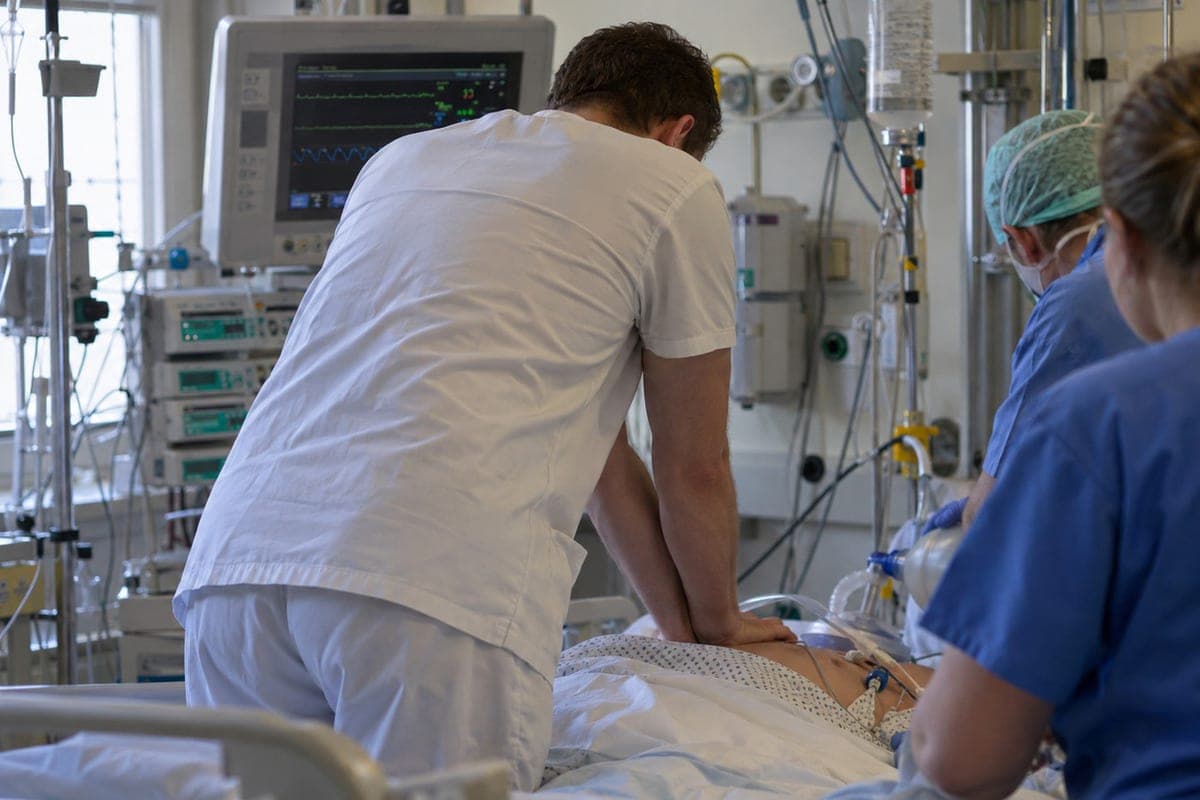
In 2002, the Oldenburg Clinic praised Högel for his work in critical situations. The nurse "acted thoughtfully and correctly" - this assessment was later cited by radio Deutschlandfunk.
**Photo 1**
Reconstruction. In the Oldenburg clinic, Högel was given a positive characteristic. Generated by the ChatGPT neural network, Peter Osintsev. *
In 1999, Hoegel got a job in the cardiac surgical resuscitation of this hospital. In December 2001, he switched to anesthesiology. Managers were alarmed that Hoegel often found himself near patients who suddenly needed emergency care. In September 2002, he left the clinic.
In December, he was admitted to the intensive care unit of Delmenhorst Hospital.
Resuscitation for recognition
As the court found, Hoegel administered drugs to patients without medical indications. The drugs caused cardiac arrest or severe circulatory disorders. He hoped that a successful resuscitation would cause doctors and colleagues to admire his skill, and rescued patients - gratitude.
In doing so, he allowed patients to die. In some episodes included in the sentence of 2019, to resuscitation did not come at all.
In 2014, Radio Bremen found that intensive care workers in Delmenhorst could order prescription drugs without a doctor's supervision.
Before Högel's arrival, the department used about 50 ampoules of one of the heart drugs per year. With him, the cost was up to 380. In 2006, after the departure of Högel, the department spent 30 ampoules. The order system was password protected after it was exposed.
**Photo 2**
Reconstruction. Resuscitation workers in Delmenhorst could order prescription medications without a doctor's supervision. Generated by the ChatGPT neural network, Peter Osintsev. *
# Last shift at the hospital
One of the paramedics told the deputy senior nurse of intensive care about empty ampoules after the patient died. As the court later found, the superior demanded that she not raise such suspicions and not go beyond her powers.
In June 2005, Nurse T. found a seriously ill man disabled device for administration of the drug. Before that, Hoegel injected him with a heart drug without a doctor's prescription. The patient had a dangerous rhythm disturbance. The nurse provided assistance, and an immediate threat to his life was eliminated.
**Photo 3**
Reconstruction. In June 2005, a nurse discovered a disabled drug delivery machine in a critically ill patient. Generated by the ChatGPT neural network, Peter Osintsev. *
The next day, the man died. However, the court linked his death to an underlying illness. So Högel's first case involved attempted murder.
A heart drug was found in the patient's blood. By June 24, the results of the analysis were already known in the hospital. But, as the court later found, doctors admitted that the medicine was prescribed by one of the doctors treating the patient. Some of them were on vacation at the time.
The nurse kept working. On June 24, he killed another patient. This was the last murder of the series. After the shift, Hoegel went on a planned vacation.
The clinic went to the police. On July 8, 2005, Hoegel was arrested and dismissed from hospital. He remained in custody until September 21, when he was released.
# One thing and years of waiting
The police officer who handled the case later told the court that as early as 2006 the prosecutor's office had information about the deaths of patients, duty and drug orders. At the time, he thought Hoegel was involved in other crimes.
**Photo 4**
Reconstruction. Police matched patient deaths with drug orders and duty. Generated by the ChatGPT neural network, Peter Osintsev. *
In December 2006, the Oldenburg court sentenced Högel to 5 years in prison. The sentence was quashed, and after a new trial in June 2008, he received 7 years and 6 months for attempted murder and a lifetime ban on working in the profession.
As reported by Radio Bremen, already at the first trials, the doctor from Delmenhorst spoke about other suspicious cases. However, Hoegel was tried for only one episode.
While the proceedings were going on, Hoegel was again working in a nursing home and an ambulance service. He began serving his sentence on May 6, 2009, after the sentence came into force.
The daughter of one of the deceased patients learned about Högel from the media and suspected his involvement in the death of his mother. In 2009, the woman’s body was exhumed, in 2010, the remains of seven other possible victims were examined.
In 2012, the prosecutor questioned Hoegel's cellmates. According to them, the nurse told them about other murders. But no mass exhumations were ordered. The prosecutor cited the severity of the procedure for families and the lack of evidence: traces of the drug had not yet indicated who administered it.
After his departure in November 2013, the successor, with the approval of the leadership of the prosecutor's office, continued to check only part of the episodes. As the court later explained, so expected to cope with the volume of work.
# In 67 cemeteries
In September 2014, a new trial of Högel began. During the hearing, there were reports of other possible victims. In November, a special commission called Cardio was set up to systematically check deaths in hospitals where he worked.
In February 2015, Hoegel was sentenced to life in prison for two murders, two attempted murders and another count of causing bodily harm. The court considered the punishment in the previous case.
In the same year, the Osnabrück prosecutor's office accused the prosecutor, who had been conducting the investigation until November 2013, of obstructing Högel's punishment. The court refused to start the trial. The Court of Appeal upheld the refusal, although it found the prosecutor’s inaction from July to November 2013 a violation of the procedure. This was not enough for criminal prosecution.
Meanwhile, the Cardio Commission reviewed more than 500 medical records. For forensic research, 134 bodies were exhumed in 67 cemeteries.
**Photo 5**
Reconstruction. 134 bodies were exhumed in 67 cemeteries. Generated by the ChatGPT neural network, Peter Osintsev. *
Experts looked for traces of drugs and checked whether the drugs could be prescribed for treatment. Their findings were compared with Högel's medical records, testimony and confessions.
**Photo 6**
Reconstruction. Experts examined the samples for traces of drugs. Generated by the ChatGPT neural network, Peter Osintsev. *
The remains tried on the day of the exhumation to return to the cemetery in a new coffin, and the grave — to put in order. This was reported in March 2015 by the representative of the Commission Stefan Klatte. Relatives were offered the help of specially trained staff and clergymen.
Christian Marbach, whose grandfather was one of the victims, has already gone through an exhumation in his family. He talked about a difficult choice: relatives need to know the cause of death, but to do so, you have to disturb the peace of a person they have long buried.
###85 names
The trial of Högel for the murder of another 100 patients began on October 30, 2018. The hearing was held at the Weser-Ems-Hallen complex in Oldenburg. The usual courthouse did not accommodate all participants. At the beginning of the hearing, 126 relatives of the victims joined the case in the status of additional prosecutors.
Hoegel was already serving a life sentence. The court will now determine what happened to each of these patients.
**Photo 7**
Reconstruction. Niels Hoegel testified at the trial for the murder of 100 patients. Generated by the ChatGPT neural network, Peter Osintsev. *
Among his relatives was Dietmar B. His father died at the Oldenburg Clinic. One possible cause of sudden death, the son saw in the shortage of staff.
Dietmar came to each meeting, traveling about 100 kilometers from home to Oldenburg. When the death of his father began to be examined in court, it became especially difficult for him. At half-time, in a room for relatives, an unfamiliar woman spoke to him. He talked about his father's death and exhumation, and he didn't understand why the hospital staff didn't stop the nurse.
The woman was a volunteer of the organization of assistance to victims “White ring”. At the request of the court, its staff accompanied relatives at the hearings. Dietmar later said that conversation helped him.
**Photo 8**
Reconstruction. During the court hearings, volunteers helped relatives of the deceased patients. Generated by the ChatGPT neural network, Peter Osintsev. *
The nurse admitted 43 episodes. In other cases, he either denied involvement or said he did not remember what happened. The court compared his testimony with medical reports and other evidence.
Some witnesses referred to lapses in memory. The presiding judge, Sebastian Bürman, considered them imaginary: behind them he saw an unwillingness to testify.
On June 6, 2019, the court found Högel guilty of another 85 murders. On 15 charges he was acquitted: there was not enough evidence.
At the sentencing, Burman read the names of the dead and the dates of their death. That list took 8 minutes.
**Photo 9 - final version**
Reconstruction. The judge read the names of the 85 dead and the dates of their death. Generated by the ChatGPT neural network, Peter Osintsev. *
Dietmar received confirmation that his father had been killed. Frank Brinkers, who also suspected Högel of the death of his father, remained without a definite answer: to prove the guilt of the nurse in this case failed. "It's very, very bitter," Brinkers told The Associated Press after the sentencing.
The court imposed a life sentence, established a special gravity of guilt and banned Högel from working in the profession for life. In September 2020, the Federal Supreme Court rejected the appeals of the convict and one of the victims’ relatives. The sentence went into effect.
###Seven acquitted
The next trial involved hospital staff. According to the prosecution, the managers and doctors could stop Högel, but did not intervene, including for fear of the reputation of the clinics.
In February 2022, seven doctors and heads of two hospitals were put on trial. Another accused was singled out due to a serious illness.
The court found out what these people knew at the time of the murders. In Oldenburg, there was a list comparing deaths to Högel's. But when it was made, it could not be established. The document could have appeared after the November 2001 murders in the case. So the list did not prove that executives knew about the dangers before those deaths.
The court confirmed that distrust of the nurse was growing. However, it was not possible to prove that the defendants considered the murders possible and consciously put up with the deaths of patients. For prosecution for careless causing death or harm to health, the statute of limitations has already expired.
On October 13, 2022, all seven were acquitted. In the debate, the prosecutor's office, representatives of victims, and the defense asked to acquit the defendants.
### After the sentences
Lower Saxony has revised patient safety requirements. From January 1, 2023, clinics were required to engage clinical pharmacists, create drug commissions and anonymous systems for reporting violations and possible crimes. Hospitals are also required to regularly review cases of death and especially severe disease.
But in November 2024, a representative of the Land Ministry of Health told parliament that the department had not yet conducted separate checks on the implementation of these requirements in hospitals.
In March 2026, the Oldenburg court gave Högel a minimum term of actual imprisonment of 28 years. In April, the court confirmed the entry into force of the decision. The expiration of this period does not mean mandatory release: before possible release, it will be necessary to check whether the convicted person remains dangerous, including through psychiatric examination.
Christian Marbach wanted a place of remembrance near Delmenhorst Hospital. In April 2024, a memorial stone was opened there.
The stone was placed outside the hospital area. Marbach said many relatives could not bring themselves back to the clinic. The inscription was dedicated to dead patients and survivors who received severe injuries. Högel's name was not written on the stone.
22-year-old daughter of a farmer raped and beat to death workers – revealed details
Apartment cannibal Spesivtsev became a trap for children in Novokuznetsk
Four complaints ended in rejection, and then the husband killed his wife and six children
Slivko hung children under the guise of filming: Honored mentor hid death in the tourist club
"Prison romance" Madueva ended with nagan in "Crosses"
Chikatilo was released with a knife and ropes, after which the murders continued
They beat the family to death in a dream: Colonel of the Ministry of Internal Affairs Gosht was brutally killed along with his relatives
10 years of the blood of the rostov gang “amazon” – they killed and returned home
Angara maniac Mikhail Popkov took women to their deaths in his car for years
Major Yevsyukov shot people in a supermarket and became a symbol of the failure of the interior Ministry
Children's voices heard in the basement, but the police went home
Maniac took women to the forest and began hunting them: in the taiga found dozens of bodies
Supplemented sleeping pills and raped locked up: 2 years of hell from a good grandfather from Yakutsk
Reliable news is always at hand - in the channel "MK" in MAX