OCG of Central Kazakhstan in zero
In the 2000s, the coal and metallurgical heart of the country - the Karaganda region with adjacent lands - experienced a profound transformation of the shadow environment
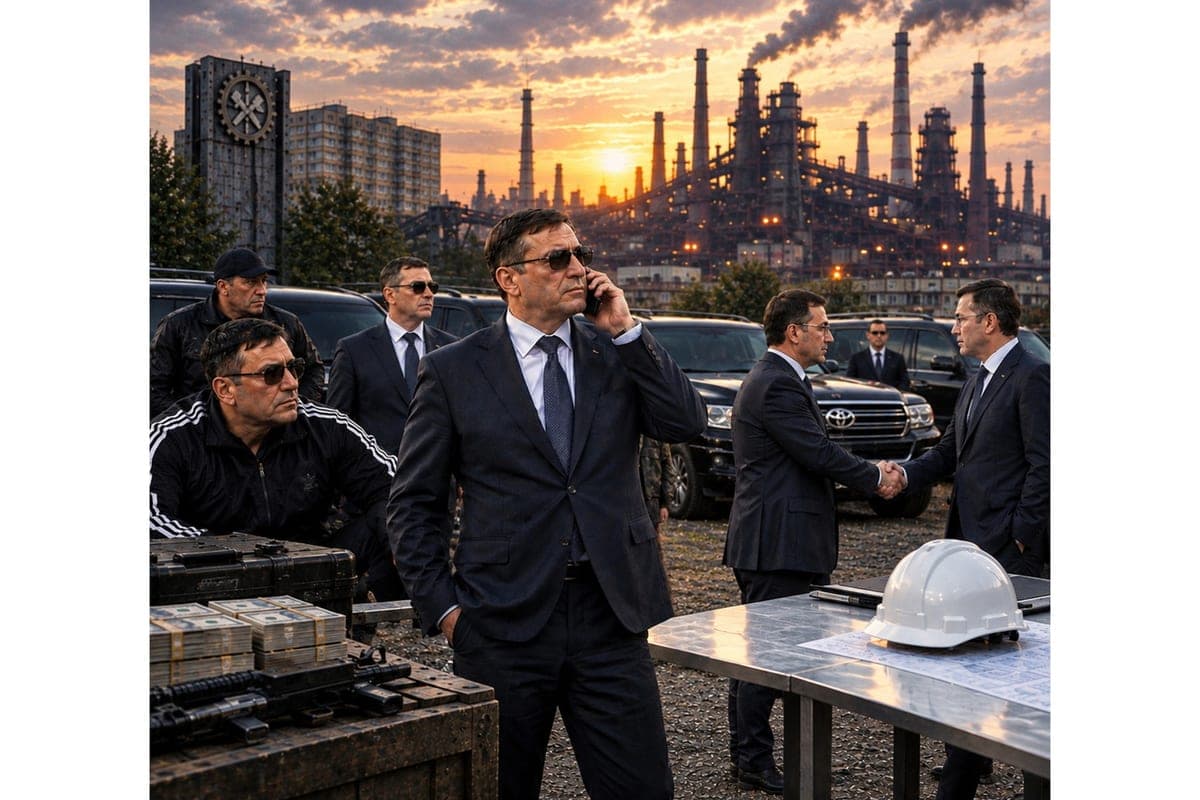
- The main struggle in the period 2000-2010-ies among criminal groups and groups unfolded for ferrous and non-ferrous metals, — says our interlocutor.
Change of shoes, and alga!
Central Kazakhstan is a territory whose history and industrial specificity have determined the unique flavor of local crime. The Karaganda coal basin, the largest metallurgical combines of Temirtau and Zhezkazgan, as well as an extensive transport network connecting the northern and southern borders of the state, in the 1990s laid a powerful foundation for organized criminal communities. By the end of the twentieth century and the beginning of the next decade, this atmosphere began to transform rapidly.
If in the previous decade, crime was associated with banal extortion, racketeering with soldering irons and irons for entrepreneurs and spontaneous showdowns in the clothing markets, then zero brought intellectualization and commercial bias to almost the entire criminal environment of the former Soviet republics. The influx of huge money from the export of raw materials, the rise in the price of metals in world markets and the gradual strengthening of state institutions forced the criminal structures of Central Kazakhstan to adapt to new realities.
The main feature of the criminality of Central Kazakhstan in the zero years was the legalization of acquired capital. And the capital was "earned" serious. And the leaders of criminal communities, who survived the bloody internecine strife of the past period, quickly realized that open violence becomes economically unprofitable and attracts excessive attention of the law enforcement agencies that have gained strength. Huge money needs legality and stability. Therefore, in Karaganda, Temirtau, Balkhash and Zhezkazgan, former “authorities” massively changed sports tights to strict costumes. Criminal funds poured into the legal economy. Yesterday’s “bandos” were actively invested in commercial real estate, acquired and built shopping complexes, markets, entertainment venues.
In the sphere of their interests fell everything that brought quick and legal money. Including the sphere of services, and the car business, which included the establishment of control over gas stations, official and illegal parking, repair shops. Of course, this is also the construction industry. Bandit money was invested in the construction of residential buildings and commercial space at a time when the construction boom was rapidly gaining momentum.
But the interests of criminal communities were not limited to small and medium-sized businesses. The specificity of Central Kazakhstan was the direct penetration of crime into the production chains of city-forming enterprises.
Three fat whales
The main feature of the Karaganda region is a large concentration of industrial giants. In the zero years, on the wave of rapid growth in world prices for steel, copper products and coal resources, these areas attracted shadow dealers.
In Temirtau and Balkhash, a whole shadow industry was formed for the illegal export of metal products from the territories of giant combines. Such schemes included collusion with the guards and managers: the removal from the factories of cars and trucks with wire rope, fittings, sheet iron and copper on false papers.
Highly profitable were the collection and theft of scrap. In those years, unauthorized reception points of chermet and colormet multiplied everywhere. This fishery involved large segments of the socially vulnerable population. They are unemployed and low-income people. They did not disdain to cut cables, disassemble inactive (and sometimes operating) workshops, elements of the railway track.
Further, according to the scheme, raw materials were legalized, when the stolen metal was passed through a chain of shell companies-one-day ones and returned for remelting or sent for export.
Within the boundaries of the coal basin, shadow fishing for illegal extraction and sale of solid fuels flourished in the same decade. Along with the theft of coal from freight trains, the so-called “digging” and illegal cuts appeared at the nodes. Criminal elements controlled the sale of coal to private households and small consumers, creating artificial shortages and overestimating prices in the cold season.
Finally, the third fat whale in organized crime networks was the geographic location of Central Kazakhstan. It turned it into a critical node of the so-called “Northern Route” of the movement of Afghan drugs (heroin and opiates) to the territory of the Russian Federation and further to European countries.
Key highways and railway arteries ran through the area. At that time, the security forces regularly stopped attempts to create large transshipment bases of drugs in the vicinity of the regional center and nearby monotowns. And they came back again and again.
In parallel with the transit, the domestic consumption market grew. The industrial region experienced a difficult stage of restructuring, primarily due to the mono-profile economies of such cities as Abai, Shakhtinsk, Saran, Balkhash, and the accompanying social disadvantage in individual quarters. That is, if the largest city-forming enterprise was closed, it threatened unemployment for half of the citizens, one way or another connected with this enterprise. This formed fertile ground for the spread of drug addiction, which, in turn, spurred the growth of street crime - theft, robbery and robbery.
Shadow of the Gulag
Speaking about Central Kazakhstan, it is impossible not to mention the historical and geographical factor. The region in the past served as a place of concentration of the largest camp associations (Karlag, Steplag). In the zero years on Karaganda land continued to operate many correctional institutions of different regimes.
And this feature exerted powerful pressure on the overall criminal situation. The first is the marginalization of the liberators. Moreover, a significant proportion of people who served time in local colonies remained in the region, without social ties and honest earnings.
At the same time, the effect of prison aesthetics on young people took place. In such areas as Maikuduk, Prishakhtinsk or the outskirts of Temirtau, thieves’ concepts were firmly held. Adolescent associations copied the prison hierarchy, imposing tributes on schoolchildren and students (the notorious “gathering on the zone”).
At the same time, there was a struggle for control over the colonies, because the zero years were marked by a fierce confrontation between the prison administration and the authorities who sought to keep the “black” way of life behind bars. This resulted in high-profile protests, riots and mass disobedience in prisons.
Despite the fact that the top of the criminal world was rushing to legalization, on the street front, the zero years retained many relapses of the past. The division of spheres of influence between district groups in large cities remained a harsh reality.
However, a feature of this era was the mitigation of forms of street violence. The open firefights of the 90s were replaced by more hidden, but tough methods of disassembly. As a rule, these are “arrows” outside the city limits, the use of traumatic and cold arsenal.
It should be noted that in those years, apartment and car rackets became widespread, that is, the seizure of property from citizens under the pretext of fictitious debts, theft for ransom.
Robbery attacks on highways have increased. Using the huge distances between the settlements of the region, gangs operated on interregional roads, robbing truckers and shuttlemen with impunity.
Defeat of the OCG
The second half of the zero years was marked by a turning point in the fight against organized crime in Central Kazakhstan. The state apparatus, which accumulated financial resources due to high export prices for raw materials, began a systemic offensive against the shadow economy.
Security agencies have changed their tactics. In particular, instead of raiding ordinary performers, the focus shifted to documenting the actions of the top of the organized crime groups and undermining their financial base. The state established strict control over the circulation of metal. Mandatory licensing of scrap reception points and toughening of the criminal article for theft in production were introduced. This undermined the profitability of the metal business.
We are also engaged in prevention in the youth environment. The work of inspections on juvenile affairs was intensified, and the sports base was developed. And the improvement of the socio-economic climate gradually reduced the attractiveness of the criminal path for young people.
By the end of the decade, the lion’s share of large classical organized crime groups of the 1990s and early 2000s in Central Kazakhstan either ceased to exist or completely dissolved in legal business, losing the ability to dictate their terms to society and the authorities.
It should be said that the decade of zero in Central Kazakhstan has become an era of complex restructuring. The criminal world of the region has evolved from direct physical pressure and street terror to subtle financial and economic schemes, built into the industrial and commercial infrastructure.
The special features of the region – a symbiosis of powerful industrial potential, transport highways and a rigid penitentiary past – have formed a unique context that required considerable efforts from the state to restore full-fledged law and order. Fortunately, in the early 2010s, street crime was a thing of the past, and the region itself lost the status of a criminal fiefdom.