Ivan Mitin went to the order, and his gang was later called the "Black Cat"
In February 1953, police officers came for Ivan Mitin. The young master of the defense enterprise lived in Krasnogorsk, was considered an advanced soldier and, according to departmental publications, was presented to the Order of the Red Banner of Labor.
The Moscow Criminal Investigation Service (MUR) did not look for such a person.
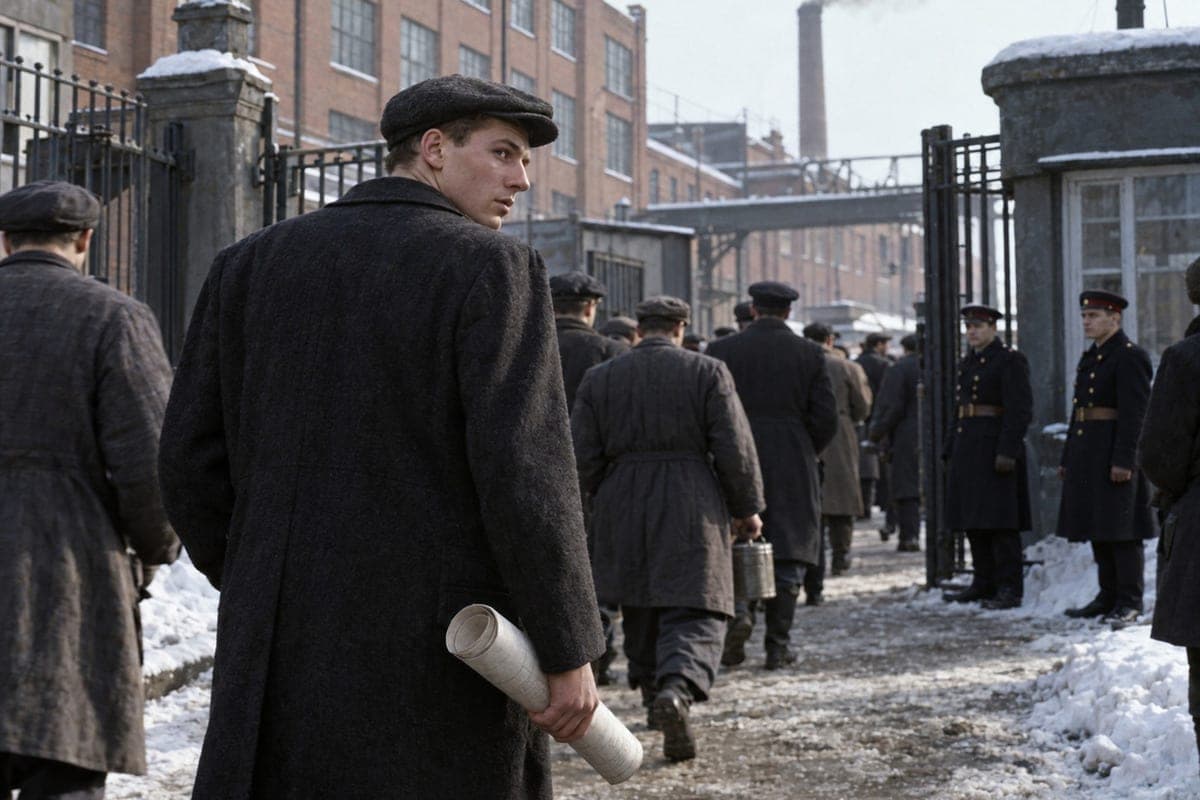
The operatives for almost three years checked convicted raiders, buyers of stolen goods and well-known participants in the criminal environment. But armed attacks were carried out by workers, students and athletes with good characteristics. After the crimes, they returned to the factory, study and training.
In the late reconstructions of the case, 28 attacks, 11 dead and more than 300 thousand rubles of stolen money are most often mentioned. The number of participants, wounded and the final amount of production in different sources do not coincide.
The Mitin gang was later associated with the legendary Black Cat. In fact, the raiders did not paint cats on the walls or leave notes. Their main cover was not a mystical sign, but an impeccable characteristic.
After the war, the name "Black Cat" was used by various teenage companies, petty thieves and hooligans. They left images of the animal and threatening notes. Stories of such groups arose in different cities of the USSR, until rumors united them in the legend of a single elusive gang.
Mitin’s gang did not call itself “Black Cat”, judging by the published materials. The familiar nickname attached to her later, when the criminal case mixed with urban folklore, books and cinema.
Mitin and his accomplices are often called one of the prototypes of the gang from the Weiner brothers’ novel “The Age of Mercy”. However, there is no direct confirmation of this version. The book is set in 1945, and the main series of attacks by the Mitina group dates from 1950-1953.
Reality and fiction were united by the main plot: an armed gang operated in Moscow, which the criminal investigation could not find for a long time. Here the reliably established similarity ends.
The series of departmental publications has been counted since February 1, 1950. At a grocery store in Khimki, senior security officer Kochkin demanded documents from suspicious young people.
Instead of a passport, one of them took out a gun. Kochkin was mortally wounded, the attackers fled. After the defeat of the group, the investigation linked the murder to Alexander Samarin, a worker of a defense enterprise and one of Mitin’s closest accomplices.
Already on March 26, several young people entered the manufactured goods store of the Timiryazevsky district. They introduced themselves as employees of state security agencies, locked sellers and buyers in a utility room, and then took the cash register. The size of production sources are estimated differently - at 63 or 68 thousand rubles.
The operative's murder raised the threat. Police checked known raiders and their entourage, but to no avail. In the criminal environment, nothing was known about the new group.
This was not the silence of accomplices. Mitin’s people really kept away from the usual criminal world.
Most publications name 12 gang members. Former employee of Krasnogorsk ROVD Ivan Spirin recalled 11. The other thing is not controversial: the gang was based on young residents of Krasnogorsk, many of whom worked in defense enterprises.
Mitin was born in 1927 and at the time of his arrest held a responsible factory position. One of the senior members of the group, Peter Bolotov, is named in a number of sources as a Stakhanovite of the Tushino defense enterprise. In other publications, his name is listed as Bolotnov.
Alexander Samarin worked as an engraver and participated in production competitions. Vyacheslav Lukin studied at the Moscow Aviation Institute and played hockey. Others also had jobs, studied or played sports.
Most authors associate the group members with the Krasnogorsk Mechanical Plant. Spirin described it as a closed security enterprise with strict personnel requirements. The very fact of working in such a production was perceived as evidence of reliability.
Therefore, good characteristics did not just hide the raiders. They took the check aside.
After the attacks, the group members did not disappear or become illegal. They lived at home, went to shifts and attended training. They did not need forged documents, secret apartments and intermediaries from the criminal world.
In the autumn of 1950, the group robbed the Moscow Channel shipping shop. In December, the raiders took a large sum from a retail outlet in the area of Kutuzovskaya Sloboda.
On March 11, 1951, several armed men entered the Blue Danube on the Leningrad Highway. First they sat at the table as regular visitors, then pulled out their weapons and headed for the checkout.
In the hall was the junior lieutenant of the police Mikhail Biryukov. He tried to stop the raiders and was killed. The departmental publication also reports the death of a worker at a nearby table and several wounded. In other accounts, the number of victims of this attack differs.
The criminals didn't take the money.
A few weeks later, they attacked a trading enterprise in Kuntsevo. According to later reconstructions, its director was killed. Victims of the gang were police officers, trade workers and casual visitors - everyone who tried to resist or just happened to be around.
Individual crimes could be linked by way of action, but this handwriting did not help to reach specific people. The raiders did not appear among the known criminals, but took mainly cash, which was not required to be sold through the buyers of stolen goods.
The fracture is associated with the attack on the savings bank in early 1953. The employee managed to turn on the alarm. The police officer called.
- Is that a savings bank?
- No, the stadium, the raider replied and hung up.
Even the location of this episode sources call different. "MVD Media" writes about Mytishchi, Spirin recalled Khimki. But the subsequent chain of events in the main versions coincides.
The operatives drew attention to the word “stadium”. The sites of several attacks were compared with sports facilities and competitions. Witnesses described young, physically strong men.
The version has changed. The police began to check not only criminals, but also athletes, fans, students and factory youth.
In Krasnogorsk, detectives were interested in a company that easily paid for a whole barrel of beer. Circumstances are conveyed differently by sources. According to one version, Lukin bought the barrel and began to treat the audience. According to another, the young people first drove her away from the outlet, and paid only after threatening to call the police.
It wasn't how the barrel got to the company that mattered. The unusually large expense gave operatives a reason to check on the young men.
At first, the test didn't work. Lukin studied, played hockey and was friends with factory workers. Mitin was particularly well characterized.
Then the police established contact Lukin with one of the places where the raiders were operating and began surveillance.
Soon the student went by train to Murmansk. According to the most common version, in his suitcase found 20 thousand rubles in bank packaging. The investigation considered them part of the money stolen from the savings bank.
Original documents allowing to check circumstances of inspection and origin of banknotes are not found in open access. However, in all major departmental reconstructions, it is this finding that leads operatives to the rest of the group.
After that, the good features stopped protecting them.
According to the most common version, Mitina was detained on February 14, 1953. Spirin confirmed that the operation took place early in February morning, but did not give an exact date.
He recalled that about 50 police officers were involved in the detention. The weapon allegedly lay next to the beds of Mitin and Lukin, but the capture group did not shoot or kill.
These details are known from Spirin’s later memoirs and are not confirmed by the published case materials.
The detainees were taken to the internal prison on Petrovka, 38. The investigation, according to a former ROVD employee, lasted about six months. People whom the police could not find for several years, after the arrest relatively quickly began to testify.
Mitin admitted involvement in the attacks and helped recover individual episodes. Publications say that the case file took 14 volumes, but it is now impossible to verify this figure from the original documents.
Only after the arrests did the reason for the years of failure become apparent. People wanted for murder and armed raids were not hiding under false names. They went to work, participated in competitions and received the approval of the management.
The court sentenced Ivan Mitin and Alexander Samarin to capital punishment. The rest received long prison terms. Lukin was sentenced to 25 years.
The final figures in later publications vary. Most often called 28 attacks, 11 dead, from 12 to 18 wounded and more than 300 thousand rubles. Spirin mentioned 11 or 15 dead and about half a million rubles.
The full text of the sentence and the materials of the criminal case in the public domain could not be found. Therefore, none of the divergent figures can be declared final only on the basis of late retellings.
For several years, the police searched for professional repeat offenders and did not notice young people with factory passes, sports categories and impeccable characteristics.
In February 1953, the two lines finally came together. At the company Mitina was prepared for the award. In the MUR collected materials on the leader of the armed gang.
It was about one person.
22-year-old farmer's daughter raped and beat workers to death
Apartment cannibal Spesivtsev became a trap for children in Novokuznetsk
Four complaints ended in rejection, and then the husband killed his wife and six children
Slivko hung children under the guise of filming: Honored mentor hid death in the tourist club
"Prison romance" Madueva ended with nagan in "Crosses"
Became known about the “gang of gamekeepers”: dozens of murders in the Siberian taiga were hidden for years
Chikatilo was released with a knife and ropes, after which the murders continued
They beat the family to death in a dream: Colonel of the Ministry of Internal Affairs Gosht was brutally killed along with his relatives
10 years of the blood of the rostov gang “amazon” – they killed and returned home
Angara maniac Mikhail Popkov took women to their deaths in his car for years
Major Yevsyukov shot people in a supermarket and became a symbol of the failure of the interior Ministry
Children's voices heard in the basement, but the police went home
Maniac took women to the forest and began hunting them: in the taiga found dozens of bodies
Supplemented sleeping pills and raped locked up: 2 years of hell from a good grandfather from Yakutsk
Reliable news is always at hand - in the channel "MK" in MAX