Shabolov's murderous killer lured home horse buyers and carried bodies in bags
The Moscow cabbie Vasily Komarov (also known as Shabolov’s exterminator) invited horse buyers home for a deal, killed and took the money. He hid the bodies in bags. When the police came to him with a search, another dead man lay outside the door of the closet on the stairs.
In May 1923, the house No. 26 on Shabolovka was searched. Komarov was told that they were looking for moonshine. Two policemen were left on the street, the rest went up to the second floor.
Several wallets, lighters and mouthpieces were found in the room. The investigator then became interested in a locked closet on the landing.
Komarov said that the closet is shared, and the key is in the neighbors downstairs. The driver was put near the window under the supervision of a police officer. The investigator decided to go get the key.
Soon he heard a noise, returned and found that Komarov was gone. He jumped out of the second floor window and threw himself into the garden. In the dark, the investigator lost sight of him. The cordon didn't stop the fugitive either.
The locket was knocked down. A body bag was found inside.
On March 13, 1921, two passers-by peered through the broken floor in the dilapidated house No. 12 in Horse Lane and noticed human legs. They reported to the police.
Two bodies were found in the house, men and women. They were sent to the Lefortovo morgue. Two days later, the janitor Lopatin identified the dead: it was his brother Mikhail and sister Irina.
Lopatin said that on March 4, a stranger offered Mikhail to buy flour for 100,000 rubles per pood. The seller was wearing a soldier's cloth garment and a black hat. On March 6, the brother and sister went for the goods, taking about 1 million rubles. They never came home.
Lopatin also said that the seller was a cab driver and lived in the area of the Kaluga Gate.
Findings in Zamoskvorechye continued. On February 9, 1922, workers inspecting the stoker of house No. 24 on Shabolovka found two knotted bags behind the boiler. In each was the body of a man.
On April 14 of the same year, people inspecting the plot under the garden in Horse Lane noticed a bag in the basement of the destroyed house. There was a dead man in it, too.
The findings combined similar lesions, the position of the bodies and the method of binding. Identification was difficult because the dead were often found without clothes and long after their deaths.
Mosquitoes were looking for people willing to buy a horse or food. Among the dead were Moscow merchants and peasants from the suburbs.
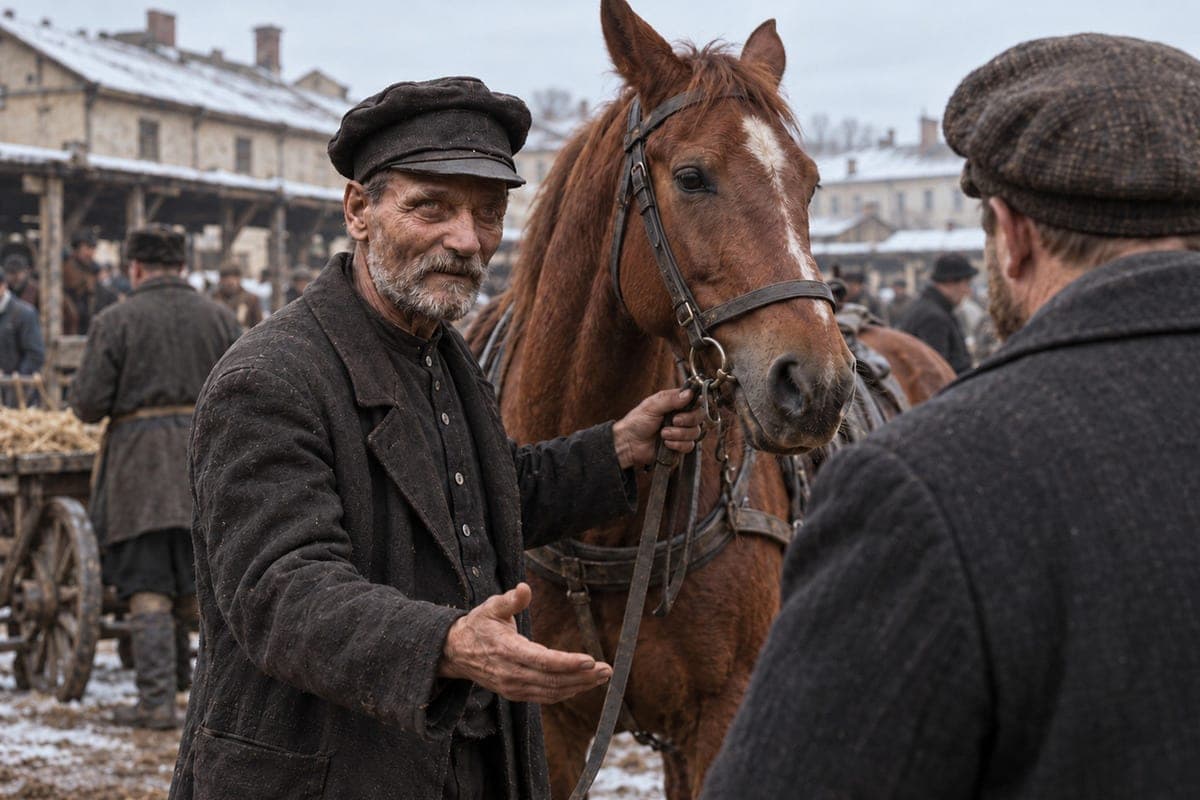
The series continued at the beginning of the NEP, when private trade was again allowed. In the equestrian square Komarov offered his own horse. I invited you to arrange a purchase home.
During the meeting he sent his wife and children. The guest treated him to alcohol, then killed him with a hammer and took the money. Body tied, put in a bag and hid.
The horse stayed with the owner. He could look for the next buyer.
Komarov said that one of the dead resisted: after the first blow, he grabbed him by the throat and entered the fight. The mosquito killed him with subsequent blows.
He left his bodies in ruins, unfinished baths, buried near his home. Later he began to take bags to the Moscow River.
There were stories about pillowcases stuffed with money in the city. A huge fortune Komarov was not found. The buyer had approximately the value of the horse; the abducted cabbie spent on booze, food and family maintenance.
Characteristic nodes became one of the leads. This is how people used to harness horses. At the bottom of some bags found oats.
22 bodies have been found, but only seven have been identified. It was all about buying horses.
The search was checking horse-drawn areas, carts, tea houses and inns. However, it was not possible to trace the last journey of buyers. It was known why the man came to Moscow, found his body, but could not restore the meeting, after which he disappeared.
Then another deceased found a fresh baby diaper, which was wrapped in the head. After that, among the cab drivers began to look for a family man with a small child.
The detectives also had a description of the flour seller, which was given by Lopatin’s brother. Komarov’s appearance was compared with this description: it coincided. Komarov worked as a passenger cab driver under No. 639 and lived on Shabolovka.
Komarov was monitored, which increased suspicions of the search.
Komarov appeared often on the equestrian square, but he almost did not agree on trips with passengers. He had money all the time and drank a lot.
The same night after his escape, Komarov was found in Nikolsk near Moscow, with a friend of a milkwoman. At the time of his arrest, he was sitting and writing a confession on the back of his ID card.
In the same text, he stipulated neighbors, attributing them to participation in crimes.
On Shabolovka he was known as Vasily Ivanovich Komarov. The real name of the driver is Vasily Terentyevich Petrov.
After the arrest, Komarov was presented with Lopatin. He recognized a man who came to negotiate the sale of flour and to whom Mikhail and Irina went.
We also had to check Komarov’s words about accomplices. He named three neighbors. They were detained, but the testimony was not confirmed. One of the men worked as a conductor and was able to confirm that he was among people during several murders. In the end, Komarov admitted that he slandered neighbors out of personal dislike. They were released.
Komarov himself showed the places where he hid the dead. Several bodies were buried near his apartment.
One of the trips almost ended in lynching. Around the convoy gathered a crowd, people began to push on the police chain, trying to get to the detainee. Officers were able to protect him and take him away.
Komarov told about a night trip to the Moscow River before his arrest. He was carrying a body bag when he was stopped by a guard and asked what was in the cart. The mosquito offered to feel it.
The policeman touched the bag and missed the cart without opening it.
Later, Komarov began to export the bodies together with his wife Sophia.
When her husband brought the buyer, Sophia left the apartment and locked the door outside. At least once she invited a man to see a horse. In 1922, she helped her husband commit crimes.
At the trial, Sophia said she was afraid of her husband. He abused her and the children.
June 6, 1923 in the Polytechnic Museum began the trial of the couple. Among the correspondents in the hall was the writer Mikhail Bulgakov.
Bulgakov saw an elderly man, in whose appearance he found nothing to explain dozens of murders. The defendant then spoke.
Komarov responded with chuckles, calling people “crackers” and “chumps”. To the question of how he killed, he threw: “Once and kvass!”
To the question of the presiding officer, what made him kill people one after another, Komarov replied: “Because he killed that no one caught.”.
The court questioned the neighbors. Barinov said that in winter Komarov rumbled, his wife screamed and cried. Neighbors quarreled over the noise. Asked if he knew about the killings, he replied, “I don’t know anything.”.
Sophia testified in the absence of her husband, at which time he was taken out. Bulgakov felt that she was not telling.
The newspaper definition of “man-beast” Bulgakov considered meaningless. In his essay, he called Komarov "a case from a man.".
Three psychiatrists spoke at the trial. When asked about Komarov’s sanity at the time of the murders, the expert replied: “Yes, we are quite sane.” Sophia was also found sane.
Komarov confessed to 33 murders and found the bodies of 29 victims. The prosecution covered 29 murders.
On June 7, 1923, the Moscow provincial court sentenced Vasily and Sophia Komarov to death. The couple appealed the decision, but the cassation board of the Supreme Court of the RSFSR upheld it.
Both were shot in 1923. The children were placed in public care.
On June 20, 1923, Mikhail Bulgakov’s essay “Komarovskoe case” was published.
The crime weapon was transferred to the Moscow Forensic Museum, the successor of which was the Museum of the History of the MUR. On the materials of the disclosure of this case, police officers were trained. In the collection “The Criminal World of Moscow”, published in 1924 under the editorship of Mikhail Gernet, published photos of the hammer and Komarov’s room.
During the investigation, 17 victims remained unidentified.
22-year-old daughter of a farmer raped and beat to death workers – revealed details
Apartment cannibal Spesivtsev became a trap for children in Novokuznetsk
Four complaints ended in rejection, and then the husband killed his wife and six children
Slivko hung children under the guise of filming: Honored mentor hid death in the tourist club
"Prison romance" Madueva ended with nagan in "Crosses"
Chikatilo was released with a knife and ropes, after which the murders continued
They beat the family to death in a dream: Colonel of the Ministry of Internal Affairs Gosht was brutally killed along with his relatives
10 years of the blood of the rostov gang “amazon” – they killed and returned home
Angara maniac Mikhail Popkov took women to their deaths in his car for years
Major Yevsyukov shot people in a supermarket and became a symbol of the failure of the interior Ministry
Children's voices heard in the basement, but the police went home
Maniac took women to the forest and began hunting them: in the taiga found dozens of bodies
Supplemented sleeping pills and raped locked up: 2 years of hell from a good grandfather from Yakutsk
Reliable news is always at hand - in the channel "MK" in MAX