Tear gas and serious injuries: mass protests of schoolchildren continue in France
Police used tear gas and grenades to push back protesters. In the city of Lens, a 15-year-old boy lost his brush after a police noise or trauma grenade exploded
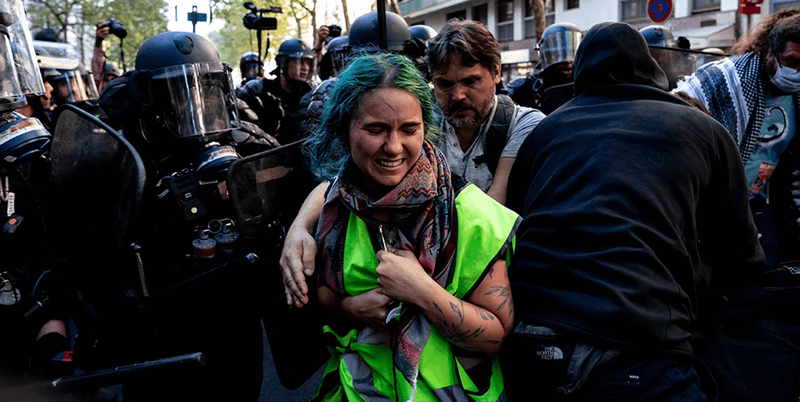
In France, the wave of protests of high school students and students, who demand to improve the conditions of education, continues. Police clashed with police amid the mass protests, with authorities reporting 215 students injured, and in several cities, teenagers suffered severe injuries ranging from the loss of an arm to injuries to their eyes and faces. This is reported by the portal France24.
How the protests started
Discontent among French students has been building for weeks. Students complain of overcrowded classrooms, teacher shortages, congested schedules and poor conditioning of school buildings.
A number of educational institutions, according to protesters, lack desks and chairs, leaking roofs, and heating and ventilation are not working properly. Later, high school students were joined by university students, parents, teachers and trade unions.
French Prime Minister Sebastien Lecornu acknowledged that the demands of schoolchildren are connected with real problems of the education system. At the same time, the authorities urged protesters to renounce violence and prevent attacks on police and destruction of property.
How many people came out on the streets
On October 6, protests took place in several regions of France. They were attended by high school students, students, teachers and trade union representatives.
According to official figures, at least 256,000 people took to the streets, including about 56,000 in Paris. The organizers of the action called a much larger figure – about 450,000 participants across the country and about 100,000 in the capital.
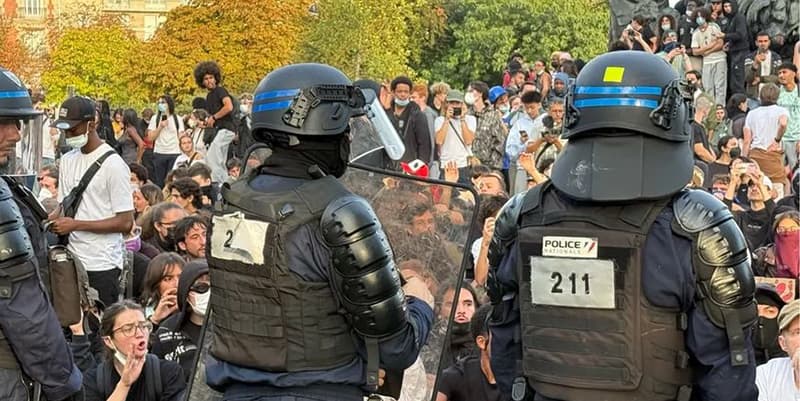
The protests affected the work of educational institutions. Authorities reported earlier this week that hundreds of schools were closed or operating with restrictions. According to the French government, thousands of people have been detained since the start of the protest movement, with a significant proportion of those detained being minors.
The teenagers suffered severe injuries
The most serious incidents occurred during clashes between protesters and police. In the town of Lens, a 15-year-old boy lost his brush after a police noise or trauma grenade exploded. According to the preliminary version, which leads the French media, the young man raised the ammunition, after which it exploded in his hand. The circumstances of the incident are being investigated.
In Tours, the 16-year-old suffered a severe eye injury after being hit by ammunition fired from an LBD weapon - a special means that French police use to hit targets at a distance. In Saint-Uen-l'Omont, a 14-year-old schoolboy suffered serious facial injuries.
Another 17-year-old protester in Montpellier suffered an eye injury after being hit with a police baton. French journalists have also reported other teenagers with head, face and teeth injuries.
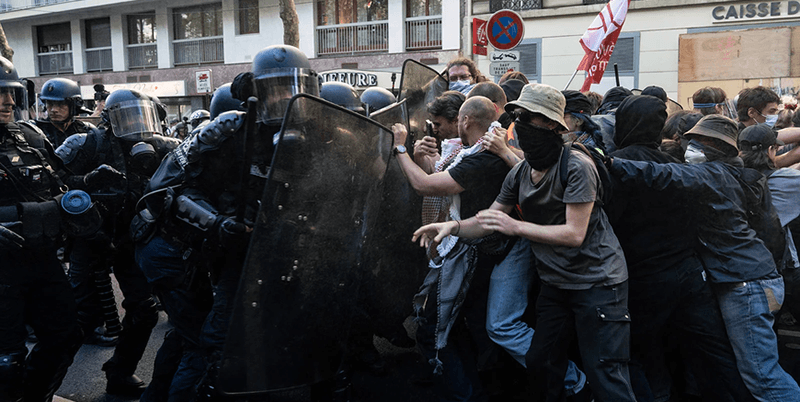
Authorities specify that the total number of 215 affected students includes injuries sustained both in clashes with police and as a result of the actions of the rioters themselves. In parallel, 715 police and gendarmerie officers were reported injured.
Politicians demand investigation
Cases of serious injuries caused a sharp reaction of representatives of the opposition. MPs say authorities must establish the circumstances of each incident and determine whether force by police was proportionate to the threat.
Representatives of the Invictus France party accused the government of trying to suppress the protest instead of dialogue with schoolchildren. Deputies also urged to find out who ordered the use of grenades, batons and other means against the protesters.
Marin Tondele, the leader of the French Environmentalists, said that the lack of clear instructions from the police to exercise restraint was a serious political mistake. According to her, we are talking about minor protesters, so the actions of security forces should be evaluated with special care.
Human rights activists demand to publish recordings from police chests and videos from the scenes of clashes. The French police inspectorate has already started several investigations.
There were clashes in Paris
In the capital, the action ended with clashes on the Nation Square. Police used tear gas and grenades to push back protesters.
Videos posted on social media showed clouds of gas, running protesters and people with bloodied heads. The authenticity of the individual recordings and the exact circumstances of their appearance are being established, but French media confirm that special police means were used during the protests.
Authorities said they would not tolerate attacks on law enforcement officers and damage to property. Protesters, in turn, argue that security forces use excessive force even against teenagers who do not pose an immediate threat.
Macron called an emergency meeting
Amid growing protests, French President Emmanuel Macron called an emergency meeting. Authorities are trying to simultaneously respond to student demands and stop the escalating clashes.
Prime Minister Lecornu promised measures to improve the situation of schoolchildren and education workers. The government intends to discuss the condition of the buildings, the shortage of teachers and the overload of curricula.
Protesters say promises alone are not enough. They demand specific timelines, additional funding and assurances that school problems will not go unaddressed once the protests are over.
French education showed a weak result
The situation was complicated by the results of the international study PISA. In September, it became known that the French 15-year-olds showed the worst results for the entire period of observation since 2000.
The study assesses students' skills in mathematics, reading and natural science disciplines. The data has intensified public debate about the state of the French education system and has become one of the arguments of the protesters, who demand not only the repair of schools, but also the revision of approaches to teaching.
Protests may continue
Despite the statements of the authorities, the actions in France have not stopped. Students and unions continue to join high school students, and school blockages and local clashes persist in different cities.
The main question remains whether the government will be able to translate the protests from the street phase into negotiations. After reports of severe injuries to teenagers, the pressure on the authorities is increasing: they are now expected not only to make decisions on funding education, but also to fully assess the actions of the police.
Photo: Screenshot of BFMTV video, lefigaro.fr, ZUMA Press Wire