Forgotten for 38 years DNA sample led to the investigation of the killer of the Golden state
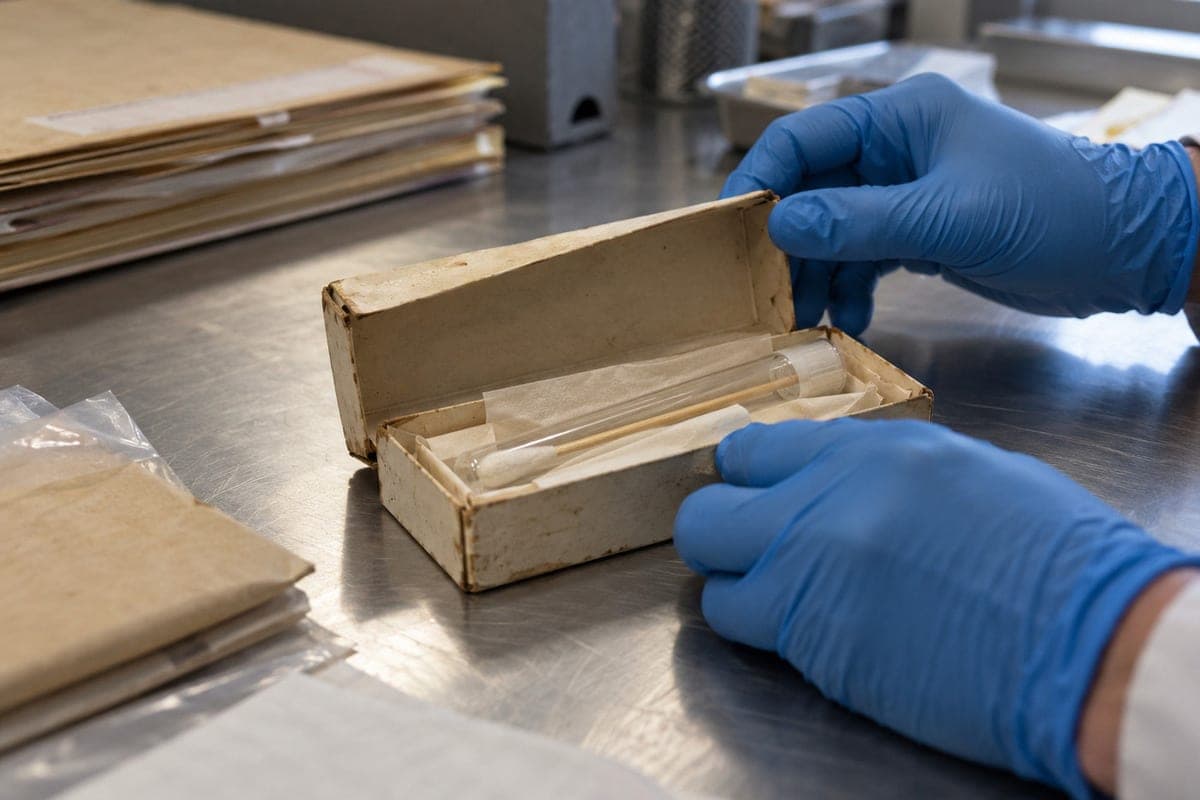
In March 1980, after the murder of Lyman and Charlene Smith in Ventura County, California, a medical examiner collected two sets of biological samples
On the night of September 11, 1975, a masked man entered the Snelling family home in Viseilia. At gunpoint, he took 16-year-old Beth out of the bedroom. Her father, journalism teacher Claude Snelling, rushed to get her daughter. The attacker shot him twice, hit the girl and ran away. Claude died on his way to the hospital.
"My father died that night, saving my life," Beth told the court years later. After the murder, she slept in her mother’s room for another year: it was scary to be alone in her bedroom.
Investigators retained the bullet recovered during the autopsy. She was later linked to a revolver that was stolen from the home of local resident Patrick Mono shortly before the murder. Where the weapons came from, they found out. Who shot him, no.
In those years, numerous home invasions were investigated in Viseilia. Unknown followed the tenants through the windows and turned things over. Later, he was given the nickname of the Weseilian burglar.
In the Sacramento area, police were searching for a man who attacked women and couples at night. He was called the Eastern rapist. The connection to the crimes in Viseilia was not yet established.
On the evening of February 2, 1978, newlyweds Brian and Katie Maggiore went out for a walk with a dog in Rancho Cordoba. A seventeen-year-old runner noticed a man hiding by the bushes near their path. Soon the couple were shot.
Brian died in the backyard of a house. Katie tried to get out through the side gate, but it was locked. The owner of the house heard her cry, “Help me!” Help me! The attacker caught up and killed her.
Next to Brian's body, they found pre-tied shoelaces. The same knots have been seen in attacks in the Sacramento area. The find gave grounds to link the murder of the spouses with the series, but it did not help to establish the perpetrator.
On the morning of December 30, 1979, Debra Manning and Robert Offerman were going to play tennis with friends. When the friends arrived at Robert's home in Golet, Santa Barbara County, the door was not opened. One of the visitors found an open glass door and entered. Debra and Robert were lying dead in the bedroom.
Later, the investigation found that the attacker entered through this door and tied both. He shot Debra. Robert was able to free his hands and resist, but the killer shot him.
Less than three months later, the Smiths were murdered in Ventura County. Crimes continued in other counties. Investigators did not yet know which of these cases were linked.
The last murder, later charged, occurred in May 1986. Janell Cruz, 18, died.
On the evening of May 4, she was alone in the family home in Irvine. The girl was afraid to spend the night without relatives, and a colleague visited her. Before he left, he heard a noise outside. Without seeing anyone, they thought it might be a cat or a washing machine.
The next day, the realtor found Janelle murdered. Her younger sister Michelle was 17 at the time. In her appeal to the court, she recalled that when the body was discovered, the radio in Janelle's room was still playing.
Michelle was unable to return to the sealed house. I spent the night in hotels and friends, stopped going to school.
Ten years after Janelle's death, DNA tests linked her murder to other crimes in Southern California. The Smith case was later added. In 2001, experts linked rape to the Contra Costa region.
Biological traces in these cases left one man. But there was no match to the profiles in the available police bases. DNA helped to unite the crimes, and the name of the person who committed them remained unknown.
In 2016, Sacramento authorities and the FBI announced a $50,000 reward for information about the criminal. The following year, investigator Paul Holes proposed using genetic genealogy. A more detailed DNA profile allowed us to find possible relatives of the attacker, and through them to reach him.
Preserved biological material was required for analysis.
"I don't have any DNA left," Holes recalled of samples from three attacks in Contra Costa County.
He spoke to colleagues in Southern California. At Ventura, an investigator picked up the Smith case file and found a second set of samples in the coroner's office. The first was handed over to police in 1980. The second one remained intact.
In January 2018, a genealogical profile was obtained from the biological trace of the attacker in the Charlene Smith case. The comparison pointed to possible distant relatives of the perpetrator.
Investigators, FBI Specialist Steve Kramer and genealogist Barbara Ray-Venter began to rebuild family ties. First, they searched for the common ancestors of the found relatives, then traced their descendants – generation after generation. Family ties were checked by birth, marriage and death documents, as well as by population censuses.
From the received list, men of the right age were selected and found out whether they could live in crime scenes in the right years.
On March 18, 2018, Sacramento County Attorney's Office employee Monica Tchaikowski informed the team of a new person for review. His name was Joseph DeAngelo.
During his early crimes, he served as a police officer in Exeter near Viseilia. Then he worked in Auburn - just in time for the Sacramento area attacks. He was fired in 1979 after being arrested for stealing dog repellent and a hammer.
Another detail matched. During one of the attacks, the perpetrator pronounced Bonnie's name. That was the name of DeAngelo's ex-fiancée.
The investigation has a specific suspect. Now I had to check if he had DNA from criminal cases.
On April 23, 2018, investigators used an empty garbage truck to collect waste from a container that DeAngelo put outside for disposal. Among them was used napkin with biological material.
The profile matched the assailant's DNA in three rapes in Contra Costa County and eight murders in Southern California. The next day, DeAngelo was detained outside his home in Citrus Heights.
The case file includes two identifications conducted in 2018. Patrick Mono recognized DeAngelo from the photograph. He remembered his face during a separate meeting in November 1975: caught a man near his home, stalked him and managed to look at him.
Beth Snelling recognized DeAngelo, too. About a month before her father's death, she saw the man at her bedroom window. At the time of the murder, the assailant’s face was covered with a mask.
After the interrogation, left alone, DeAngelo said, “I did all this...” I ruined their lives and now I have to pay for it. He later pleaded guilty before the court.
On June 29, 2020, DeAngelo pleaded guilty to 13 counts of first-degree murder. Among them are the murders of Brian and Katie Maggiore, Debra Manning and Robert Offerman.
He also pleaded guilty to 13 kidnappings for robbery and crimes against 61 others, for which he was not charged separately. According to prosecutors, the series included nearly 50 rapes. The case covered 87 victims and 53 crime scenes.
Prosecutors discussed guilty pleas with victims and relatives of the victims. Some witnesses had died by then, others were getting older. The case file totaled more than 1.3 million pages. Prosecutors estimate that had DeAngelo disputed the charges, the proceedings could have stretched for ten years.
On August 21, 2020, the court sentenced him to 11 consecutive life sentences without the right to release. They were given a separate life sentence for kidnapping and eight years for using weapons.
Michelle Cruz told the court she had been actively searching for her sister's killer for the past decade. She turned to journalists, sometimes spending six to eight hours a day searching. At night, she propped the doors with dressers and left the lights on. Now, Michelle said, she wants to spend time with her children and grandson, go fishing.
Beth Snelling Happ also found out who killed her father. Of DeAngelo's detention, she told the court:
“I never thought I would live to see this day. Unfortunately, my mother did not live.”.
22-year-old farmer's daughter raped and beat workers to death
Apartment cannibal Spesivtsev became a trap for children in Novokuznetsk
Four complaints ended in rejection, and then the husband killed his wife and six children
Slivko hung children under the guise of filming: Honored mentor hid death in the tourist club
"Prison romance" Madueva ended with nagan in "Crosses"
Became known about the “gang of gamekeepers”: dozens of murders in the Siberian taiga were hidden for years
Chikatilo was released with a knife and ropes, after which the murders continued
They beat the family to death in a dream: Colonel of the Ministry of Internal Affairs Gosht was brutally killed along with his relatives
10 years of the blood of the rostov gang “amazon” – they killed and returned home
Angara maniac Mikhail Popkov took women to their deaths in his car for years
Major Yevsyukov shot people in a supermarket and became a symbol of the failure of the interior Ministry
Children's voices heard in the basement, but the police went home
Maniac took women to the forest and began hunting them: in the taiga found dozens of bodies
Supplemented sleeping pills and raped locked up: 2 years of hell from a good grandfather from Yakutsk
Reliable news is always at hand - in the channel "MK" in MAX