The mystery of Ebola in Nigeria
The first case of Ebola in a decade in Nigeria, the wife of a Swiss diplomat, has sparked a major investigation and alarm over the further spread of the virus, which has already affected four African countries and killed nearly half of the more than 9,500 cases
The first case of Ebola in a decade in Nigeria, the wife of a Swiss diplomat, has prompted a major investigation and alarm over the further spread of the virus, which has already affected four African countries and killed nearly half of the more than 9,500 cases. Controversial accounts of the origin of the infection, diplomatic differences and calls for international cooperation form a complex picture of the fight against the largest Ebola outbreak in the history of the region.
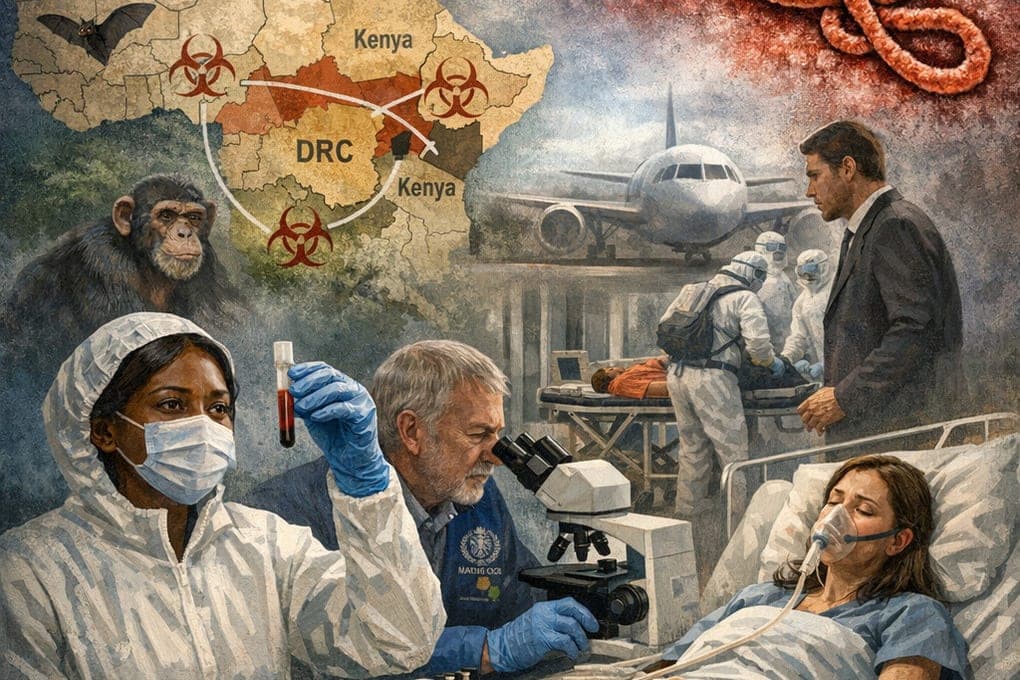
On Friday, October 23, 2026, global media attention was focused on Nigeria, where the first case of Ebola in more than a decade was confirmed. The patient was a Ugandan woman, the wife of a Swiss diplomat living in Abuja. The Swiss foreign ministry said the woman had not visited the Democratic Republic of Congo (DRC), where the outbreak began in May, and was likely infected while traveling in Uganda with her husband. This version contradicts earlier reports from Uganda, which claimed that the patient visited the eastern part of the DRC. Ugandan authorities, in turn, insist that there are no active cases of Ebola in the country, and if there were, the information would be made public.
An investigation into the source of the infection is being conducted by the World Health Organization (WHO), and the African Center for Disease Control and Prevention (Africa CDC) is considering a possible contact of a Nigerian patient with a patient from Kenya at Entebbe airport on October 3. Dr. Wessam Mankula, head of emergency preparedness at Africa CDC, said both passengers were flying out of Uganda that day, which could theoretically lead to transmission of the virus. However, WHO Ebola expert in the DRC Catherine Smallwood stressed that to confirm this hypothesis, it is necessary to compare the timing of the onset of symptoms in the patient. Marion Koopmans, a Dutch virologist and member of the WHO emergency committee, expressed skepticism about this version, noting that an accidental stay at the same airport is not a proven epidemiological link: “It is very speculative if there is no confirmation of a joint presence in the same space, which could explain the transmission,” she said.
Nigerian Health Minister Muhammad Ali Pate assured that the situation is under control, contacts are actively monitored, and the authorities are doing everything possible to prevent the spread of the virus in communities. Meanwhile, Prosper Global’s vice president for Africa, Melaki Jirga, stressed the importance of rapid information sharing between countries and supporting local health professionals to prevent further transmission.
The current outbreak is caused by a rare strain of Bundibugyo ebolavirus, for which there are no approved vaccines or specific treatments. The virus was first identified in mid-May in the DRC, before spreading to Uganda, Kenya and now Nigeria. More than 9,500 people have been infected since the outbreak began, almost half of them have died. It is the largest Ebola outbreak in history and the deadliest in the DRC. In comparison, more than 28,600 cases and over 11,000 deaths were reported in West Africa between 2014 and 2016.
Special attention is paid to the fate of victims and their families. The outbreak affected not only patients, but also health workers who risk their lives on a daily basis, as well as entire communities facing isolation, fear and economic hardship. In the absence of a vaccine and effective treatment, the fight against the virus requires maximum resource mobilization, trust in official information and international solidarity.
Analytics and forecast:
This situation demonstrates how vulnerable even large African countries are to rare and dangerous infections. Contradictory statements by officials and a lack of transparency about patient movements make investigations more difficult and could further spread the virus. In the coming weeks, the speed and efficiency of interstate cooperation, as well as the readiness of health systems for emergency response, will be key. If it is possible to quickly localize the hearths and establish information exchange, there is a chance to avoid a repeat of the catastrophe of 2014-2016. However, with the current rate of spread and the absence of a vaccine, the risk of the epidemic extending beyond the region remains high.