Gas prices in Europe have updated the maximum since 2022
Exchange gas prices in Europe accelerated the rise on fears of a long-term shortage in the market due to a decrease in the supply of liquefied natural gas and the need to replenish reserves in UGS
The exchange price of thousands of cubic meters of gas in Europe has updated the maximum since 2022. The value of November futures at the TTF hub in the Netherlands increased by 2.89% and at its peak reached €86.79 per MWh, or $ 1019.83 per thousand cubic meters, taking into account the current rate in the forex market. The last time at such levels gas was traded on December 22, 2022.
By 13:11 MSK, growth slowed to 2.1%, gas was trading at €86.125 per MWh, or $1011.47 per thousand cubic meters.
In September, the exchange price of thousands of cubic meters of gas in Europe for the first time since December 2022 exceeded $1,000, but then fell back to $870. In October, gas prices in Europe continued to rise due to fears of a shortage in the market amid a long conflict in the Middle East. The gas crisis is linked to the closure of shipping in the Strait of Hormuz for more than eight months. The near-complete closure of the strait after the start of the conflict between the US, Israel and Iran has reduced the supply of liquefied natural gas to the world market by almost 20%.
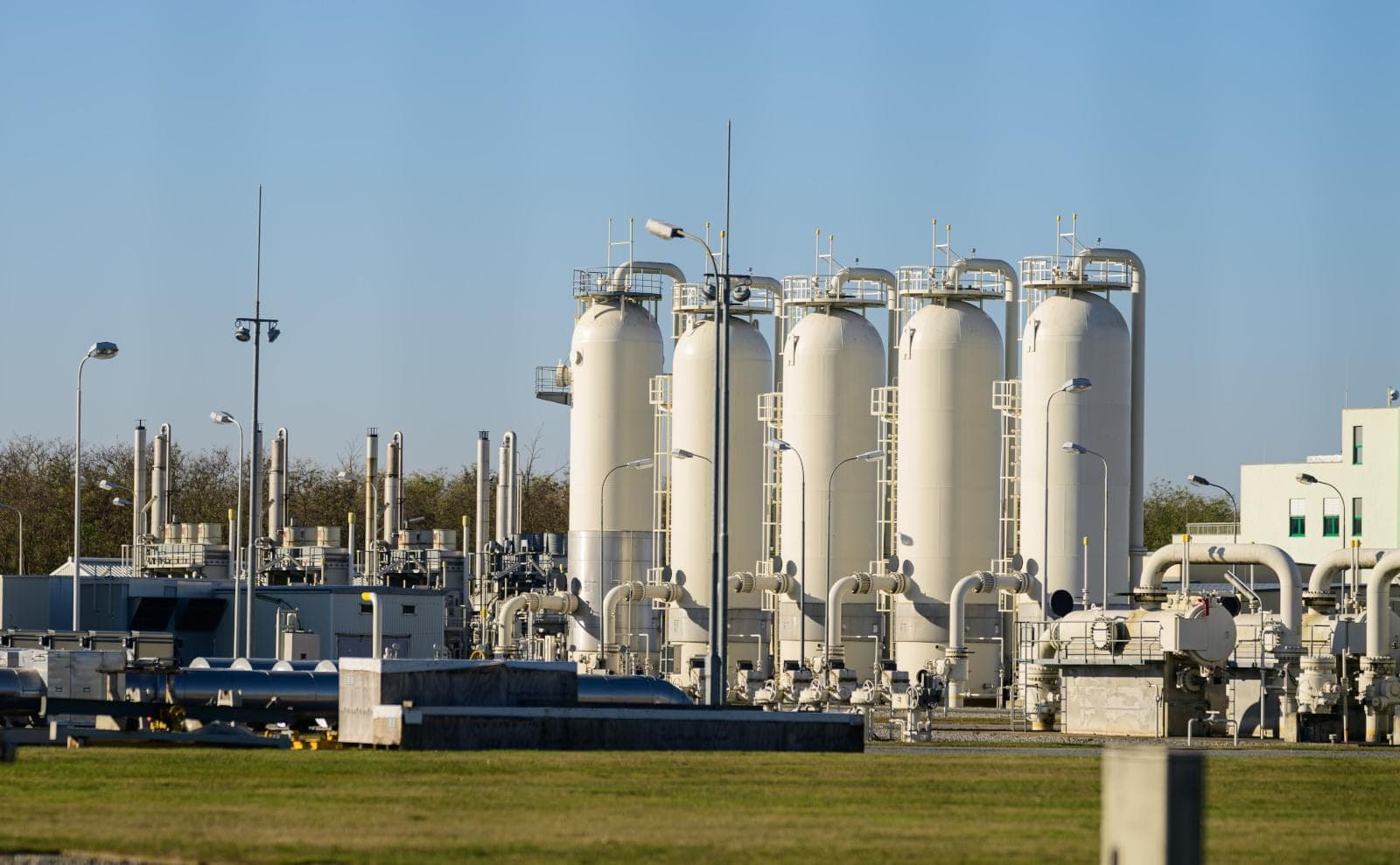
The reduction in LNG supplies due to the conflict in the Middle East has increased competition for remaining volumes. This negatively affected the filling of underground gas storage facilities in Europe during the summer. UGS smooth out consumption peaks and sudden supply disruptions.
As of October 12, gas storage facilities in Europe were only 73.75% full. For comparison, a year earlier, the indicator was at the level of 83.03%, in October 2024 - 94.89%.
“The market is trying to realize that we will spend most of the winter with almost no LNG supplies from the Persian Gulf,” ING analysts said. The low occupancy of European gas storage facilities and the need to resupply support prices, raising the risk of increased competition with Asian buyers and a potential jump in gas prices in the winter.
Analysts and industry experts polled by Reuters expect that by November 1, European gas storage facilities will be filled by 75-78%. This day is considered the end of the replenishment season, after which the dependence on reserves to meet winter gas demand increases. That's about 10 percentage points below the five-year average.
Underground storage typically provides 25-30% of the winter gas consumed in the EU, making the region highly dependent on pipeline supplies and LNG supplies, especially from Norway and the US. According to ABN Amro energy expert Mutaza Altaglibi, any supply disruptions could lead to a further jump in gas prices in Europe, with buyer competition from Asia for LNG supplies likely to keep gas prices high.
ABN Amro said a cold winter could reduce UGS stocks in Europe by up to 10 to 15 percent. Altaglibi called the level "very critical and challenging" for next season's gas resupply.
The situation is reminiscent of the energy crisis of 2021-2022, when European gas prices exceeded €350 per MWh. Most energy analysts do not expect a return to these values, but believe that a jump in prices by 25%, above €100 per MWh, is quite possible.