"What shall we do with this mountain?" Lukashenko praised the experiment to revive the “poor” lands potash sludge
Alexander Lukashenko inspected the experiment on the use of salt dumps to increase the fertility of poor lands in the Minsk region.
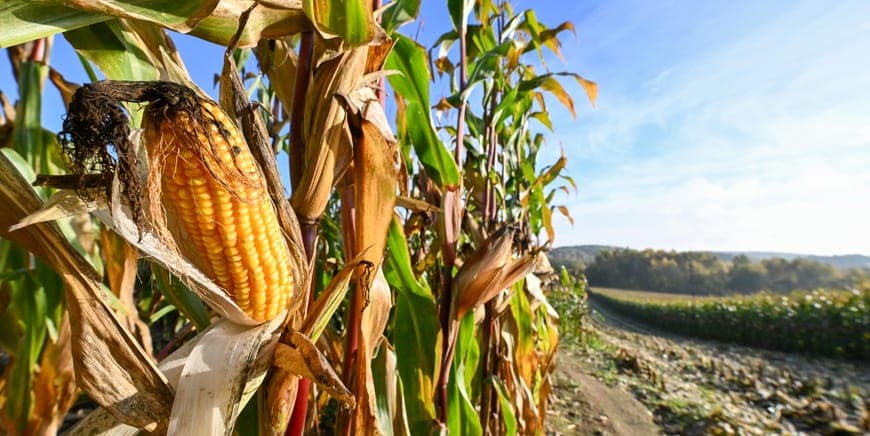
What to do with the salt mountains of Belaruskali and what does corn have to do with it? This was discussed today in the Minsk district – the President inspected the implementation of the instructions to farmers. And the task was to conduct an experiment - to use as fertilizer the waste of mining ore from the mines near Soligorsk, because scientists assured - it has useful properties of potassium residues.
In the spring, Alexander Lukashenko voiced the theory so that it would be put into practice. On the one hand, this idea will help the “heavy” sandy soils to give a decent yield, on the other hand, it will solve the problem of those salt dumps in the south of the Minsk region, which have been talked about for decades. There were opponents of the proposal – some environmentalists and economists. Still, with all the freeness of such nutritious waste, loading and logistics costs must be taken into account. But at one of the agribusinesses they undertook to check and calculate everything.
The culprit of today’s mass gathering of citizens at the edge of the field near the Ostroshitsky Town is the queen of fields, that is, corn, before which farmers have an ambitious task – to give good yields in difficult soil conditions. For these lands towards Logoisk look beautiful, of course, as in Switzerland, but the fertile layer here is thin, and then - sand. Actually, due to the fact that the land here, to put it mildly, is so, here it was decided on behalf of the President to conduct an experiment. And already its culprit is the famous salt mountains near Soligorsk.
It is also beautiful, but in fact it is industrial waste, which is formed when processing potash ore into fertilizers. There are a lot of fertilizers, ore is even more – in fact, as well as its waste, which form around the enterprise high salt dumps and terricons. The question “What to do with these mountains?” was heard periodically, until Alexander Lukashenko added specifics to the search for an answer. So sounded quite a logical assumption of scientists: all potassium to get from the ore is impossible, in the waste it is also in some concentration, so in fact it is fertilizer. The President instructed to test the scientific theory on agricultural practice.
Alexander Lukashenko, President of Belarus: We agreed that something should be done with these sludges. Maybe on such slides, where fertility is not, this is how I have on the field, you need to make. Well, I suggested to the scientists: let's try to make and see. Where they are, where they are not, it makes no difference. Then everyone started to say, somehow fashionably, "ban." Salination, acidification, etc., the soil will be lost. That she'll be lost? She's already gone. If you look at the growth phases, we already see the benefits, the results. But dynamics matter. How positive will it be? Because one thing is sand and empty ground, and another thing you brought. Not even this sludge. And if you put in some peat and organics, look, it's beautiful. Soil structure is improving and yields will certainly be better. But the question is to compare how much better it is and so on. I want to answer the question: what will we do with this waste? What are we going to do with this mountain? One, two, three around Soligorsk.
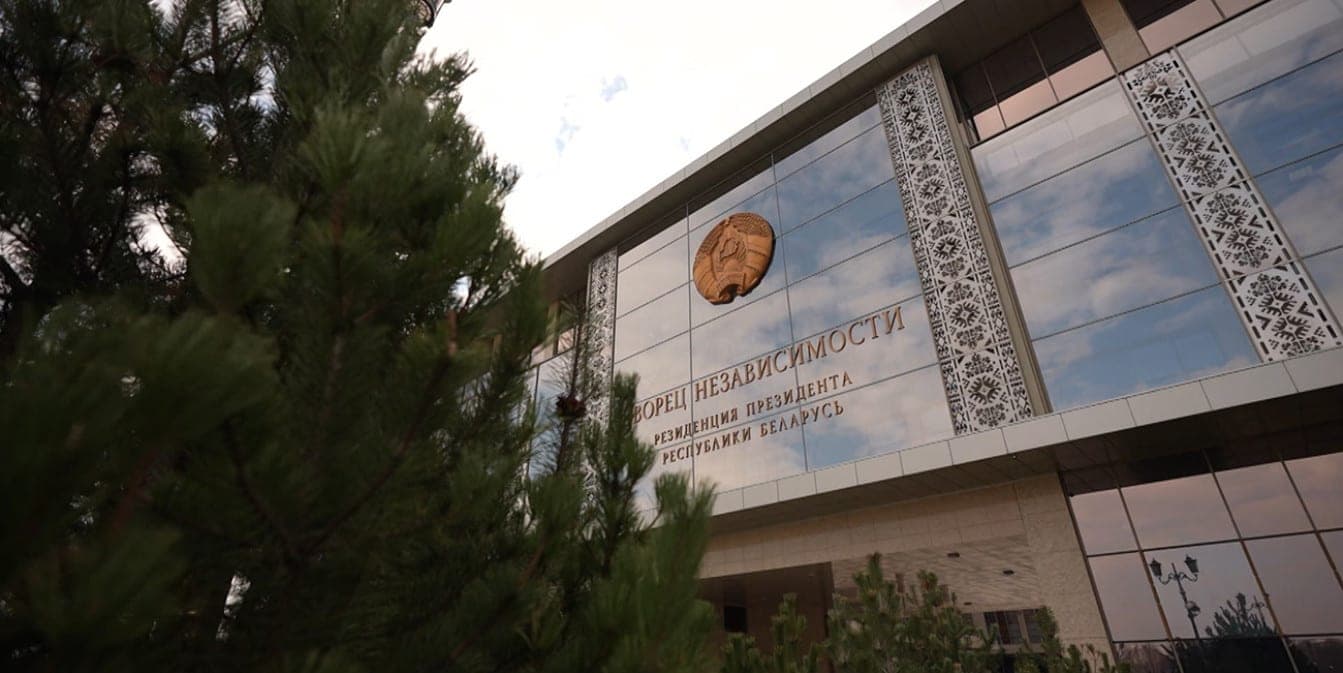
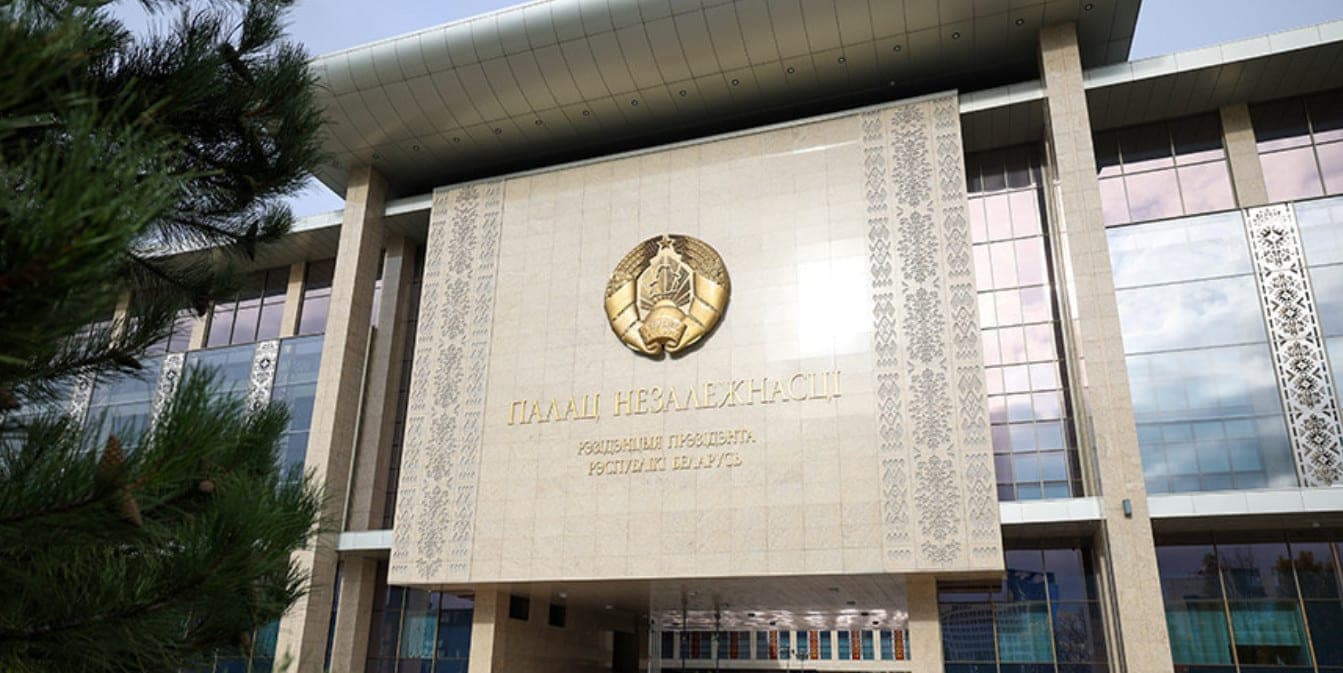
The President’s attention to this topic is special. In March of this year, at a meeting in the Palace of Independence, not only the task was set, but also specific options for its solution were issued.
Alexander Lukashenko, President of Belarus: I even thought: what if you take a layer of waste from potash salts, a layer of organics, a layer of peat, mix all this? It probably won't get any worse. There is still some potash fertilizer remains. Smell them, and then add peat and organic fertilizers. What will improve the soil is for sure. But as far as it is economically feasible, we need to experiment. I'm ready to watch. You need to look at some "poor" field and try it on some site. Or maybe we will solve the problem with the dumps around Soligorsk.”.
The main requirement of the agro-industrial complex is the bet on quality
The most “poor” field is the patrimony of the agricultural plant “Dzerzhinsky”, which recently has a lot of tasks from the state. But, as they say, they are lucky on the one who is lucky - and Vladimir Lukyanov, the general director of Dzerzhinki, is exactly one of them. By the way, with a conversation with him, the President began this trip immediately upon arrival: he clarified the situation as a whole on sowing, talked about the development of meat production (the agroholding, we recall, took on the balance sheet the lagging Orsha meat processing plant), discussed prospects for work in the Krupsky district and much more. Alexander Lukashenko reminded that quality is above all else.
Alexander Lukashenko, President of Belarus: Look only at quality. Do not reduce the quality under any circumstances. Even if you fail somewhere. Quality will take its toll anyway. Some businesses, seeing a good pace, start joking with quality. Not us. And people want quality goods. Especially food”.
And, apparently, the agricultural plant "Dzerzhinsky", it seems, will be able to realize the long-standing dream of all dogs and cats - Belarus will have its own production of dog and cat food.
Economics vs. Sights: Relations with Neighbors
Just outside the cornfield, they talked about foreign policy – it still relies more on the economy, which is actually more important for people than the weather. Perhaps not only Lukyanov, but the President will tell everyone: we must work with our neighbors, everyone.
Alexander Lukashenko, President of Belarus: I am surprised by the Poles. And in Lithuania, all the neighbors have increased the price of wood. Well, take wood, pellets and other things at an affordable price. They fight. Don't do that. We can't sell them tomorrow. Why? Because we massively began to switch ourselves to these wood and pellets. Good technology. Gomel makes an automatic boiler. Pellets in the bunker filled these, and automatically fed into the boiler. These markets are very important now. They don't want to take it. But in this situation, when food is in trouble in Europe due to this drought, it is necessary to quietly cooperate with them. Neighbors are neighbors. When we not only look at each other through the crosshairs, but start to cooperate economically, it suggests that we may be able to avoid war. It's coming, it's time. People in the leadership will be new, we see that. People are very unhappy with what is happening. I do not applaud what is happening in France, unlike our journalists, because it is unacceptable. It's the same thing we had. Politicians use children for political purposes. What good is that? Of course, Macron is tough on these things. What we had was the only thing to blame them for. It was good for them and bad for them. Double standards are unacceptable. Use children who are 12-15 years old. Why are you unhappy? You haven't started yet. It is clear that politicians are being exploited.”.
Preliminary results and a three-year perspective
The work of the Belarusian National Biotechnology Corporation, cooperation with which is important for any agricultural enterprise in the country – and for the country as a whole, was also discussed by the entire team. The governor of the Minsk region quickly reported on the sowing of winter crops, but in response, a remark was made: they say, the President sees that sometimes a powerful modern tractor with an expensive plow digs too deep, when to harm, and not for good, so that the rules of plowing technology are instructed to update everyone in memory. And finally, to the corn – although two months ago, Alexander Lukashenko at a meeting with farmers of the region already admitted that he saw a preliminary result. And he's gorgeous.
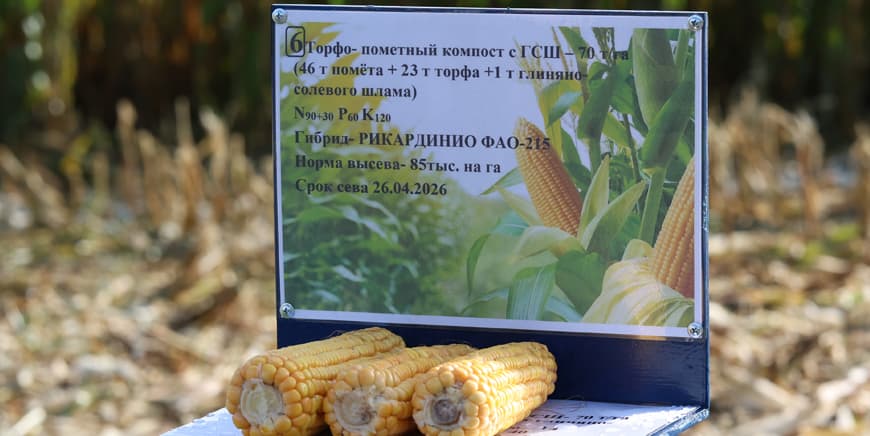
Alexander Lukashenko, President of Belarus: Remember, I said that these wastes of the potash plant should be taken somewhere more and invested in poor lands. Here we took the field... This waste was introduced, the second field is organic, and the third field is organic with this waste. Corn was sown. Well, of course, this year is so atypical - corn is the most gorgeous. In all three areas. That's what scientists do there.”.
Specifically, the scientists did the following: 20 hectares were divided into six parts, and before sowing corn, the soil was treated in different ways – both without applying fertilizers and with them: from traditional organic and mineral to experimental batches with peat and those very clay-salt sludges. It is quite obvious that corn on almost bare sand grew worse, but then it was necessary to understand in more detail what the yield affects more - organics, minerals, sludge or their combinations in specified proportions.
However, it is too early to conclude the experiment. To begin with, you need to assess the yield of corn and the energy value of grain, after spring to study the effect of sludge on the fertility of the soil itself. And, in the end, to calculate the economy, because from Soligorsk not to every field in the country to carry waste is advisable. For everything, three years.
But if the task is to give an answer to the question "What to do with the Soligorian terricons?", the answer will be. And in general, to benefit from agriculture even from ore waste is very Belarusian.
Photo: BELTA