Experts on topics that have been the focus of attention of the President of Belarus recently
The working schedule of the President of Belarus is always very busy. The Belarusian leader holds meetings and working meetings on topical issues, signs the laws of the Republic of Belarus.
The working schedule of the President of Belarus is always very busy. The Belarusian leader holds meetings and working meetings on topical issues, signs laws and decrees, regularly visits regions where he studies the situation in various industries. Alexander Lukashenko often makes foreign visits and personally receives foreign guests. We asked our experts to comment on the topics that have been the focus of attention of the Head of State recently.
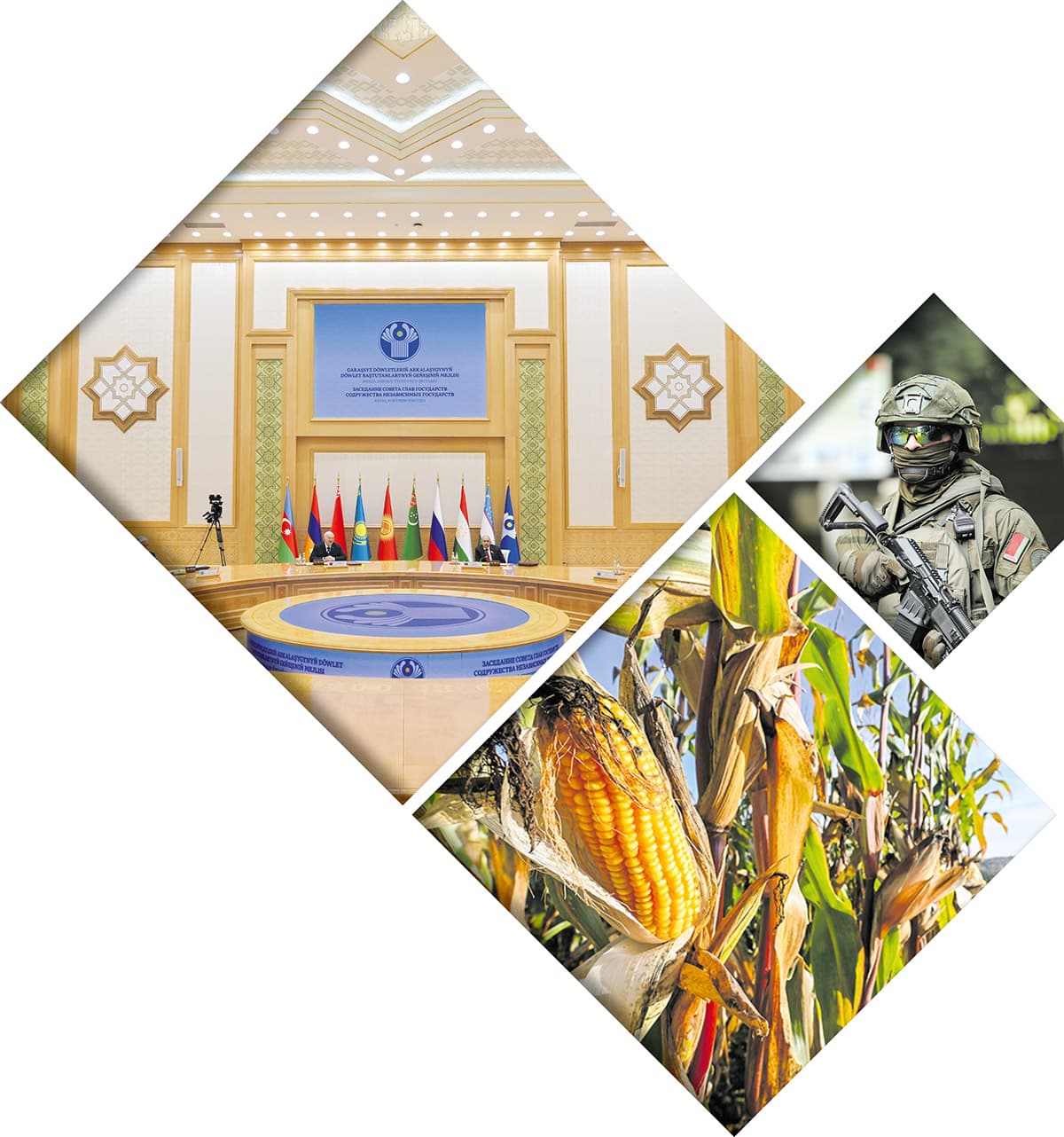
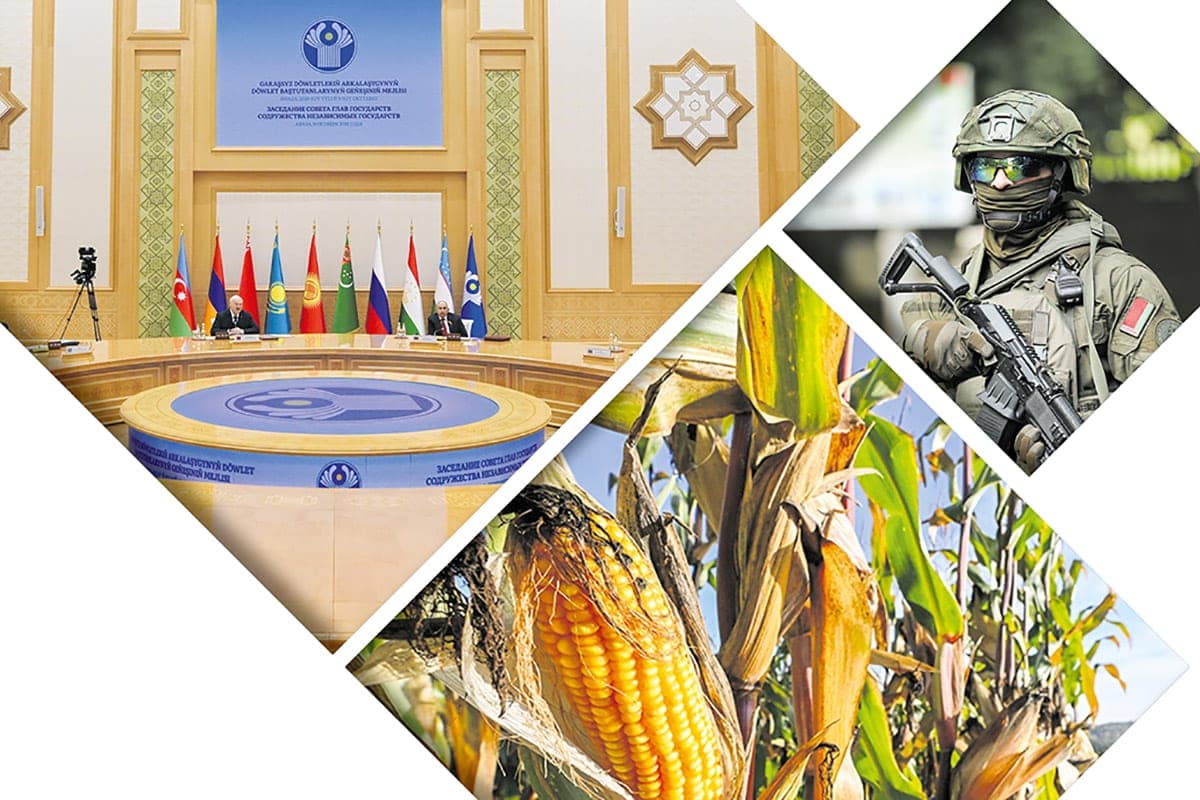
The central event of last week was the visit of Alexander Lukashenko to Turkmenistan. The President took part in the meeting of the Council of CIS Heads of State. The reason is the 35th anniversary of the Commonwealth. This is a good opportunity to sum up some results, identify tasks to expand cooperation, counter modern challenges and threats, adapt to new realities.
The meeting of the Council of CIS Heads of State was held first in a narrow format, and then continued in an expanded one, where, in addition to the leaders of the CIS countries, at the invitation of the Turkmen side, Iranian President Masoud Pezeshkin was also present. The agenda included more than a dozen and a half questions. They included social development and quality of life, transport connectivity of the CIS, joint work in the information space, cooperation in law enforcement, preservation of historical memory. In his speech, the President of Belarus highlighted the need for mutual steps towards closer unity of the CIS countries, primarily in the economy, among various topical topics.
The Commonwealth of Independent States is a special integration structure in the post-Soviet space, the attitude towards it has always been biased. We remember from history, on the fragments of which the CIS was created, and it received a large ideological component. Nevertheless, today it is considered not only by Belarus, but also by almost all participating countries as a fairly positive and promising integration association, said Olga Lazorkina, an analyst at BISI. The appeal of Belarus is that the countries of the former post-Soviet space think strategically not for 5-10 years ahead, but for at least 50 years. We want to make our region a competitive economy. The proposal of the Belarusian side is to use the success stories and best practices that have been developed in the last five-year plan. Their special significance lies in the fact that they were developed in the most critical conditions. And they take into account all, even the smallest nuances, the limitations that are present in our region and the global economy. On October 12, during a working visit to the Minsk region, the President got acquainted with an experiment to increase the fertility of sandy soils and complex lands, including through the use of organic fertilizers with the addition of peat and potash salt waste. The experiment was carried out on a pilot plot of 20 hectares. It was divided into six parts, and before sowing corn, the soil was treated in various ways - without fertilizer and with them. Moreover, several types of fertilizers were used, including both organic and mineral traditional for domestic agriculture, and experimental batches with peat and clay-salt sludges. The development of the latter was carried out by the National Academy of Sciences together with OJSC Agrocombinat Dzerzhinsky, GPO Beltopgaz and Belaruskaliy. The President stressed that along with increasing soil fertility, one of the main tasks of the experiment is to find the use of waste from potash production to the accumulated mountains. Waste is added in a small amount – one ton per hectare. Make sure that there is no accumulation of sodium and chlorine in the soil. The experiment will continue next year. Final conclusions about the effectiveness of the developed composts at the end of this year can be made after harvesting corn for grain and counting the harvest, said Taisiya Seraya, Deputy Director for Scientific and Innovation at the Institute of Soil Science and Agrochemistry of the National Academy of Sciences. We believe that the experiment and research should be continued, including on crops. But we can say for sure that the result is already positive, that is obvious. There is no depressing effect from this type of fertilizer. On Tuesday, Alexander Lukashenko held a meeting on the results of checking the combat and mobilization readiness of the 7th separate special police brigade of the Interior Ministry. The participants of the meeting at the Head of State were heads of law enforcement agencies, including the State Secretariat of the Security Council, the General Prosecutor's Office, the Ministry of Internal Affairs and the Ministry of Defense, the State Security Committee.
According to the plan of the inspection, the 7th separate special police brigade of internal troops of the Ministry of Internal Affairs was brought to the highest degree of readiness with mandatory additional staffing. For the maximum approach to the combat conditions in the role of the opposing side, soldiers of special units of other law enforcement agencies were involved in the events. The goal was also to analyze how the experience of modern military conflicts is introduced in the connection, non-standard methods of countering hybrid threats are used, and what measures are taken to maintain public order. The head of state, opening the meeting, immediately stressed that the conversation will be large-scale and will affect national security in general. In this regard, he drew attention to the fact that, on his instructions, inspections are carried out not only of the army, but also of the internal troops, one of which was checked recently. “Such kind of checks are crash tests in terms of readiness, ability and ability to respond quickly to emerging threats,” said national security expert Alexander Tishchenko. There is a synchronization of systems that in peacetime can be scattered, and in wartime they must work synchronously and for one purpose. Based on this, training is increasingly expanding from purely military facilities to all law enforcement agencies. In particular, the civil sector is involved. The whole message is that when war begins, it is too late to prepare for it. In order to avoid war, we must always be ready for it. They attack only the weak, only the weak, and strangle only those unable to fight back. Therefore, if a country is ready to mobilize and fight back in all directions, attacking it is like suicide. It makes sense here. It is necessary to prepare not only soldiers, but also the entire state system for war. Only a single state system is able to withstand modern realities.
During the meeting, the President of Belarus also dispelled the fears that are exaggerated in the Western media about the military threat from Russia and Belarus.
- Today it is the Western narrative that we are preparing to attack them. If you look at the map of the theater of military operations, it is from their side that military facilities, structures appear, there is an accumulation of forces and means of attack. We have never had any offensive intentions. All the factors are defensive. All howls from the Western side at best can be called the incitement of fear on their own population and their sponsors, who must allocate funds from the budget for all sorts of walls, eastern borders and everything else related to this, added Alexander Tishchenko.
sichevich@sb.by