Dzerzhinsky: a man of incredible passion. 20 facts about Iron Felix / LIKBEZ BY
“There is nothing more terrible than my name,” said Dzerzhinsky. 20 facts about the great revolutionary.
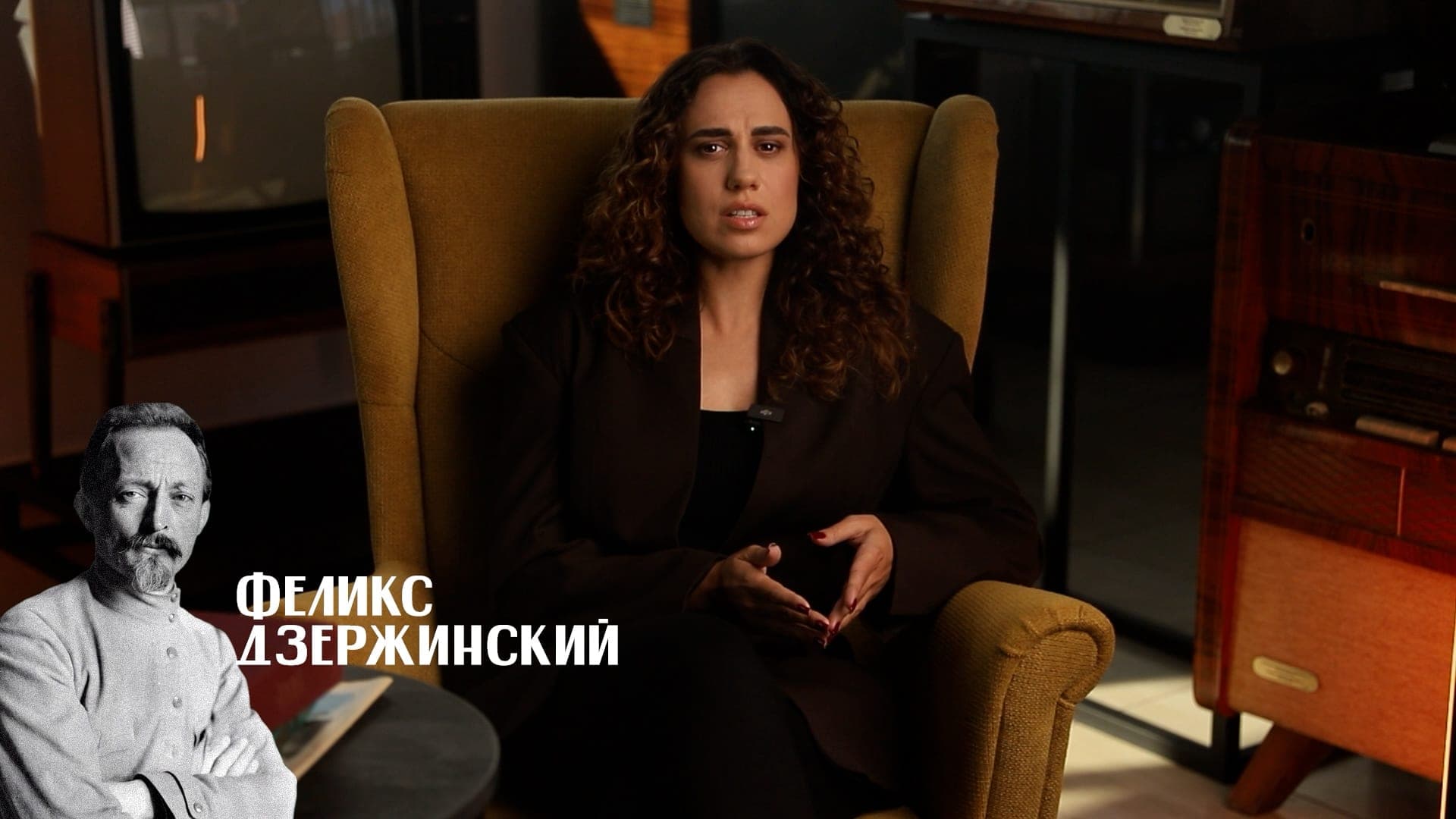
“Dzerzhinsky was one of a kind. And we don't have that anymore. The precisely boiling lava of the revolution, not simple human blood, was flowing and bubbling in his veins. It is strange to imagine Dzerzhinsky sleeping. It is almost impossible to imagine him dead. For it was the true fire of the revolution, bright as a torch, indomitable as a hurricane, incinerating as a great passion that devours everything. Who saw Dzerzhinsky tired? Who saw him inactive? These are not questions about Dzerzhinsky. For he seemed to work, to struggle, to boil, never knowing rest or time. Such was the property of his nature. – Nikolai Bukharin
In July 1926, Soviet politician Nikolai Bukharin wrote an obituary titled "Felix Dzerzhinsky Is Dead." It was published immediately after the sudden death of the chairman of the Cheka from a heart attack. “Iron Felix”, “Proletarian Jacobin”, “Knight of the Revolution” and a man of incredible passion – so described his contemporaries.
“There is nothing more terrible than my name,” said Dzerzhinsky. 20 facts about the great revolutionary.
Felix Dzerzhinsky was born on August 30 (September 11 according to the new style) in 1877 in the Vilna province of the Russian Empire, in Dzerzhinovo - the family estate of his father, in the family of a small-local Polish nobleman Edmund Dzerzhinsky. Now it is Stolbtsovsky district of Minsk region in Belarus. There were nine children in the family, but the firstborn, Witold, died in infancy. Felix became the sixth child.
At baptism, he was given a double name – Felix Schensny, which means “Happy” or “Lucky”. Parents believed that the son was miraculously born. Eight months pregnant, his mother, Helena Dzerzhinskaya, stumbled on a step and fell into the cellar, but everything went well. Felix was born prematurely, but completely healthy.
Felix Dzerzhinsky’s father was a teacher, his mother was the daughter of a professor. Despite this, he himself studied mediocrely. There are two reasons for this.
That he had a keen sense of justice, and he constantly argued with his teachers. And that Felix actually wanted to be a priest. And the only good thing about him was according to God’s law. In Russian and Greek, he received twos, in other subjects - threes.
As a child, Felix was really very devout, strictly observed Catholic rites, fanatically believed in God. In the gymnasium, he actively participated in the patriotic circle “Heart of Jesus”, constantly forced his older brother to pray. He once said, “If I ever come to the conclusion that there is no God, I will shoot myself in the forehead.”.

Dzerzhinsky was going to enter the theological seminary, but he was dissuaded by the teacher of the Law of God: he believed that Felix was too cheerful and fell for girls for such a ministry.
So Dzerzhinsky, one might say, directed his fanatical faith in a different direction. At the age of seventeen (then Felix was still a gymnasium student in Vilna, present-day Vilnius), he began to engage in revolutionary activity: first he joined the circle, and a year later he joined the party of the Lithuanian Social Democrats. There he received his first party pseudonym: Astronomer. It is believed that this is due to his enthusiastic and romantic nature, they say that his reasoning was too “heavenly”.

In general, throughout his revolutionary activity, Dzerzhinsky changed many pseudonyms and nicknames. He was Jacek, Jakub, Franek, Józef and... Binder.
The fact is that in March 1897, while working underground in Kovno (now Kaunas), he went to work in a binding workshop. The last pseudonym of Felix Edmundovich was the surname Domansky.
And the most famous nickname of Dzerzhinsky was “iron Felix”. Many believe that this is due to his steadfast and tough character, ideological and principled. But there is a very specific version that in 1918, after moving to Moscow, Felix Dzerzhinsky occupied an office in the building allocated under the Cheka on Lubyanka Square. A hand grenade flew into his windows, and Dzerzhinsky barely managed to hide from the explosion in a huge iron safe.
For his revolutionary activities, he was arrested six times, spending a total of about 11 years in prisons and hard labor. He was exiled to remote regions of the Russian Empire three times, but each time he managed to successfully escape and return to underground work.

Dzerzhinsky’s only official wife was the revolutionary Sophia Mushkat. They married in 1910 in Warsaw, but in fact, due to constant arrests and exiles, they did not really live together. A few months after the wedding, they were both arrested. Sophia gave birth to their only son, Jan (or Janek), in 1911 in a women's prison. In 1912, Sophia was sentenced to eternal settlement in Siberia. But she escaped and on someone else's passport went first to Leipzig, then to Switzerland.
At this time, Dzerzhinsky continued to travel to prisons. They did not see each other for eight years and were reunited only after the revolution, in 1918, when Sophia and her son were able to return from Switzerland to Russia with her husband.

She survived him by 42 years and died in 1968, while until the end of her days Sophia remained faithful to her husband and did everything to preserve the memory of him.
But the Dzerzhinsky family did not share his views at all. They lived by the ideas of Polish nationalism and Catholicism, did not support the Soviet regime and stayed in Poland or emigrated to the West. Brother Vladislav Dzerzhinsky became a well-known professor-neurologist in Poland, in 1942 he was shot by the Nazis. Another brother Kazimir Dzerzhinsky generally shared right-wing views and participated in the Army of the Kraiova.
In 1906, the Fourth Congress of the Russian Social-Democratic Labour Party (unification) was held in Stockholm. At it, the party “Social Democracy of the Kingdom of Poland and Lithuania”, one of the leaders of which was Dzerzhinsky, united with the all-Russian RSDLP. Dzerzhinsky was introduced to the Central Committee, at the same time he met Vladimir Lenin, and by the way made the most pleasant impression on him with his dedication and energy.

In general, Felix Dzerzhinsky was one of the most loyal associates of Vladimir Ilyich. However, this did not prevent him from engaging in fierce political and ideological disputes with Lenin on various issues.
The national question and the right of nations to self-determination. Dzerzhinsky categorically opposed Lenin’s idea of the right of nations to self-determination (up to secession). He saw this as a concession to bourgeois nationalism, which harmed the cause of world revolution. He was against the conclusion of the Brest Peace Treaty, considering it shameful and betraying the interests of the world proletariat. Dzerzhinsky supported Trotsky’s idea of rigid “militarization” of labor and direct state administration of trade unions. Lenin, on the other hand, proposed a more flexible approach, saw in the trade unions a “school of communism” and such a buffer between the state and the workers. In 1922, the so-called “Georgian incident” took place. Joseph Stalin proposed to include Georgia, Armenia and Azerbaijan in the RSFSR as autonomous republics. The leadership of the Communist Party of Georgia was against and insisted on joining the future USSR on equal rights with the RSFSR. Dzerzhinsky headed a commission to investigate the conflict, and supported the position of Stalin and Ordzhonikidze against the local communists. Lenin, who advocated equal rights for the republics in the union, accused Stalin and Ordzhonikidze of “great-power chauvinism,” and Dzerzhinsky of bias.

In the spring of 1917, Felix Dzerzhinsky formed Red Guard units in Moscow. During the October Revolution, he was one of its military leaders. He successfully captured the post office and the telegraph. And he himself took a direct part in the decision to start the revolution and entered the Military Revolutionary Center.
On December 7 (20), 1917, the All-Russian Extraordinary Commission under the Council of People’s Commissars for Combating Counter-Revolution and Sabotage was established. And the head of the new structure, Lenin chose Dzerzhinsky. What was needed was a man devoted to the ideals of the revolution, reliable and incorruptible. Dzerzhinsky met these requirements.

Dzerzhinsky and his small team settled down in Petrograd in the building of the former “guard” on Gorokhovaya Street. Yakov Peters, one of the leaders of the Cheka, recalled “the whole apparatus of the Cheka consisted of several persons; the office was in Dzerzhinsky’s portfolio, and the cash register, first a thousand rubles, and then 10 thousand rubles.” Over time, the organization expanded: there were departments and units, territorial cells (GubChK). With the beginning of the Civil War, the powers of the Chekists (this is how the Cheka employees were called) expanded: if until the summer of 1918 the body conducted only a preliminary investigation of the crimes committed, then after the uprising of the Left Socialist-Revolutionaries, fighters against the counter-revolution received almost unlimited rights in passing and executing sentences.

On June 20, 1918, in Petrograd, a SR fighter, worker Nikita Sergeev killed the famous Bolshevik agitator V. Volodarsky. His car on the way to the rally was stopped and shot by a politician. On August 30, 1918, the head of the local Cheka, Moses Uritsky, was killed there (the SR, the poet Leonid Kannegiser did this), and in Moscow the SR, Fanny Kaplan, seriously wounded Vladimir Lenin himself. It was an individual white terror, and the Soviet government decided to respond as harshly as possible. Thus the Red Terror was born, and its purpose was to destroy or intimidate all enemies of the revolution in order to maintain power in the country. The Cheka took up the case: the Chekists began to massively arrest former nobles, officers and rich people, take them hostage and shoot them without trial at any suspicion of rebellion. On September 5, 1918, the resolution “On Red Terror” was issued. This law officially authorized the sending of “class enemies” to camps and the shooting of anyone with any connection to whites.

In 1921, Felix Dzerzhinsky headed the Commission for improving the lives of children and personally led the fight against mass homelessness after the Civil War. Under his strict control, Chekists and teachers created hundreds of orphanages, boarding schools and labor communes. Iron Felix proposed to create a system of free baby food and baby food stamps in the country. And sometimes he met the children in person. It was like this: the Chekists caught street children in Moscow, took them to the Lubyanka and fed them tea with sandwiches. During one such meeting, Dzerzhinsky communicated with little Kolya Dubinin, who will then enter Moscow State University and become a famous geneticist and academician.

Felix Dzerzhinsky became famous not only as the head of the Cheka, but also as the main "rescuer" of the Soviet economy. In 1921, he was appointed head of the country's transport (NKPS), which after the Civil War was completely destroyed: trains stood, rails were dismantled, and cargo was robbed by bandits. Dzerzhinsky introduced strict military discipline on the railways, defeated theft and quickly restored movement. In 1924 he was placed at the head of all industry of the USSR (VSNKh). In this position, he managed plants and factories, helped develop metallurgy and laid the foundation for industrialization.

Felix Dzerzhinsky was surprisingly modest in everyday life and did not have a craving for wealth and luxury. He wore old, worn clothes, ate like a regular worker, and often slept on a bunk right in his office.
Dzerzhinsky loved animals and nature. In his prison diaries, he described in detail how he enjoyed the singing of birds outside the cell window, how he liked to watch clouds, trees and flowers. Already in power, he forbade cutting down forests around Moscow and lovingly cared for pets.
Back in 1901, during his imprisonment in the Sedletsk prison, Felix Dzerzhinsky contracted tuberculosis - there he cared for a sick cellmate. The disease worsened due to long years of prisons and hard labor. In addition, many years of overwork and work to wear and tear ... all this undermined the health of the revolutionary. On July 20, 1926, Dzerzhinsky delivered his last, emotional, two-hour speech at the party plenum. He returned home and died of a heart attack.
After the death of Dzerzhinsky, his name began to be called enterprises and military units, streets, squares and cities. Or, for example, the massive Soviet arithmometer Felix, which was produced from 1929 to 1978. And one of the most famous Soviet cameras (it will be used by military officers during the Great Patriotic War) is FED, Felix Edmundovich Dzerzhinsky. In 1934, it began to produce the labor commune named after Dzerzhinsky, which was organized by the famous teacher Anton Makarenko as part of the activities of the Homelessness Commission.

On November 14, 1932, Stalin was proposed to establish a special order for employees of the organs of the GPU (as the special service became known after 1922). “Exceptional services to the revolution are performed by individual workers in an environment that cannot be classified as combat in the conventional sense,” and therefore remain unpaid. The establishment of a new order was proposed to coincide with the fifteenth anniversary of the Cheka, which was celebrated in 1933. But on the note with the sentence handed by Stalin is written only one word: "Against." And as a result, a special “Chekist” order was never established, and none of the employees of the Soviet special services received it.
It was Likbez.by.
The project was created at the expense of targeted collection for the production of national content.