
The second was replaced by an hour. Why is World Time Reform necessary
World time decided to stop regularly adjusting to astronomical, abandoning leap seconds in favor of leap hour. Why such a reform was needed - in the material RBC
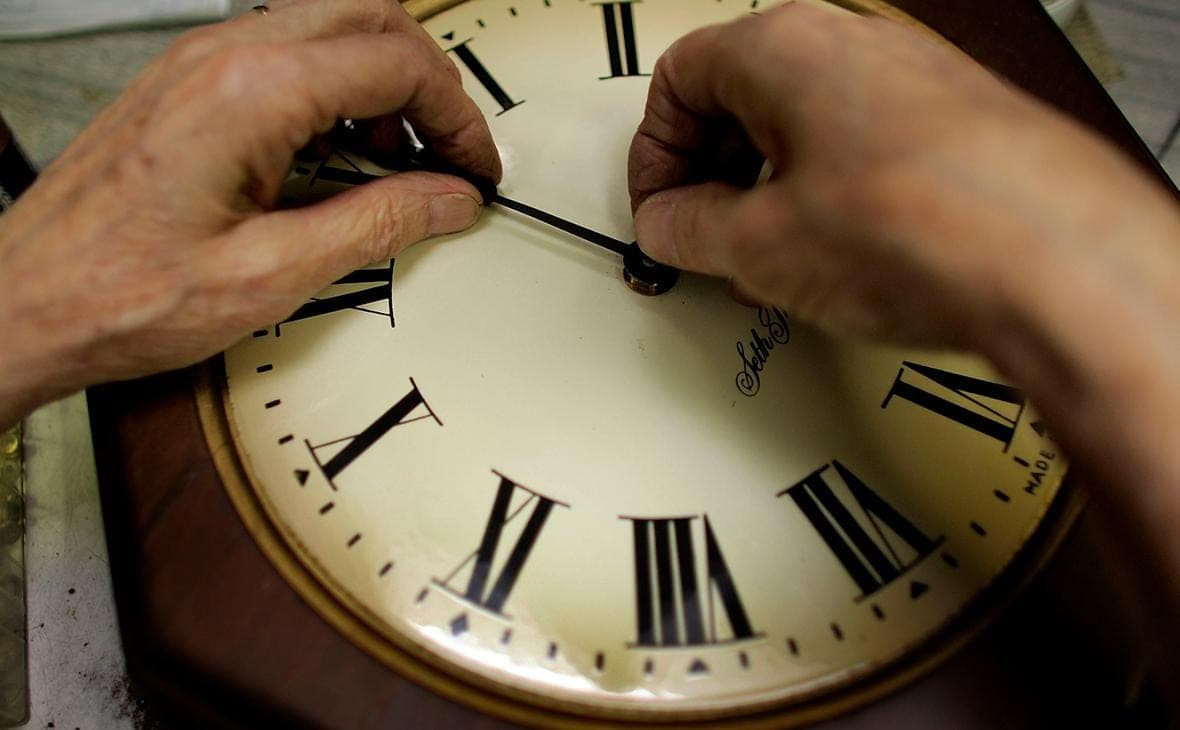
At the General Conference on Weights and Measures, representatives of 69 countries voted to replace the leap second with a leap hour when adjusting for World Coordinated Time (UTC). This will allow it to diverge from the astronomical for up to one hour. Thus, the next adjustment may not be necessary for thousands of years. The new system will be operational from 2027.
The need for time reform arose due to the fact that from about 2015 the Earth began to rotate faster. Because of this, until 2035, for the first time, it would be necessary not to add, but to remove one leap second from UTC. This has never been done before and, as scientists have warned, such a move potentially poses a risk of disruption and "digital chaos.".
Why Adjust Time
Time is now regularly adjusted due to the fact that the Earth rotates unstablely, and atomic clocks count time with high accuracy. “For our clock to somehow synchronize with the rotation of the Earth, it is adjusted. Until now, time has always been added, in the region of a second, said Nathan Eismont, an employee of IKI RAS.
This adjustment is called a leap second. If a second is added, it is a positive leap second; if removed, it is negative.
Astrophysicist, associate professor of Moscow State University Vladimir Surdin said that the atomic clock became the basis of our time in the mid-1970s. Later it turned out that atomic time and time based on the rotation of the Earth diverge. So that the difference does not accumulate, our usual time is periodically adjusted.
“Usually, when the New Year comes, we add one extra second to our civil time, and then it is compared with the speed of the Earth’s rotation,” Surdin explained.
The speed of the Earth's rotation is influenced by several factors - the tidal forces of the Sun and, above all, the Moon, internal processes, ocean currents and the movement of air masses. Another reason is the redistribution of the planet’s mass. Eismont compared this to a man rotating on his axis: if you spread your hands to the sides, the rotation will slow down.
Why is the time reform needed
Time reform involves avoiding regular adjustments to add an hour when the discrepancy is significant.
In recent years, the Earth has accelerated its rotation, so given the current system, it would be necessary not to add, but to remove one second. For humans, this process is almost invisible, but there are difficulties for digital systems. Surdin cites GPS satellite navigation and other similar systems as an example, they determine the position of the user, including by the time the signal travels from the satellite to the device.
“Satellites reset us the value of the exact time, and we compare it with the time that goes in the gadget.” This will show how long the satellite radio signal has been coming to us. Where the satellite flies, we know, so we will know, and where we are on Earth, he explained.
Such systems "difficulty digest" time jumps a second forward or backward.
Nuclear physicist Alexei Anpilogov told RBC that the most option with the removal of a leap second would affect astronomers. “For powerful telescopes that observe distant galaxies and other objects in the universe, even one second of Earth’s rotation is of great importance – it can affect the accuracy of guidance, but modern telescopes can be tuned with a software update,” he explained.
At the same time, the reform does not mean that scientists will stop monitoring the rotation of the Earth - it will continue to be studied, Surdin said.
Estimates of how serious a negative leap second is for digital systems differ among scientists.
Surdin believes that it is technically possible to remove a second, but it will be "a big headache for programmers around the world." According to Eismont, fears are exaggerated: "It is claimed that this will lead to problems." Problem, I'll tell you right away, no. Some additional work is probably needed for this, but ... there is nothing terrible here.
Will leap years be cancelled
Regardless of the addition or subtraction of a leap second, leap years do not disappear anywhere, said RBC Doctor of Physical and Mathematical Sciences Sergey Bogachev. “Leap years have nothing to do with it. The Earth just rotates unevenly. And midnight may come a second later. To prevent this from happening and midnight is always midnight, add a second. This happens quite often, sometimes once or even twice a year, although in the last ten years they seem not to have been added.
Director of the Competence Center for Unmanned Aviation Systems of MIPT, Doctor of Physical and Mathematical Sciences Alexander Rodin explained that the leap year solves another problem. “As for leap years, this technique solves a completely different problem on a different time scale – the problem of synchronizing the periods of rotation of the Earth around the Sun, with which the change of seasons is associated, and the daily rotation of the planet around its axis,” he said.


