
Bear Attacks on People in Russia in 2026: Map and Recent Cases
In a number of regions of Russia since the beginning of August, bears have attacked people. Experts called among the reasons for the release of animals to people the lack of berry food due to dry spring
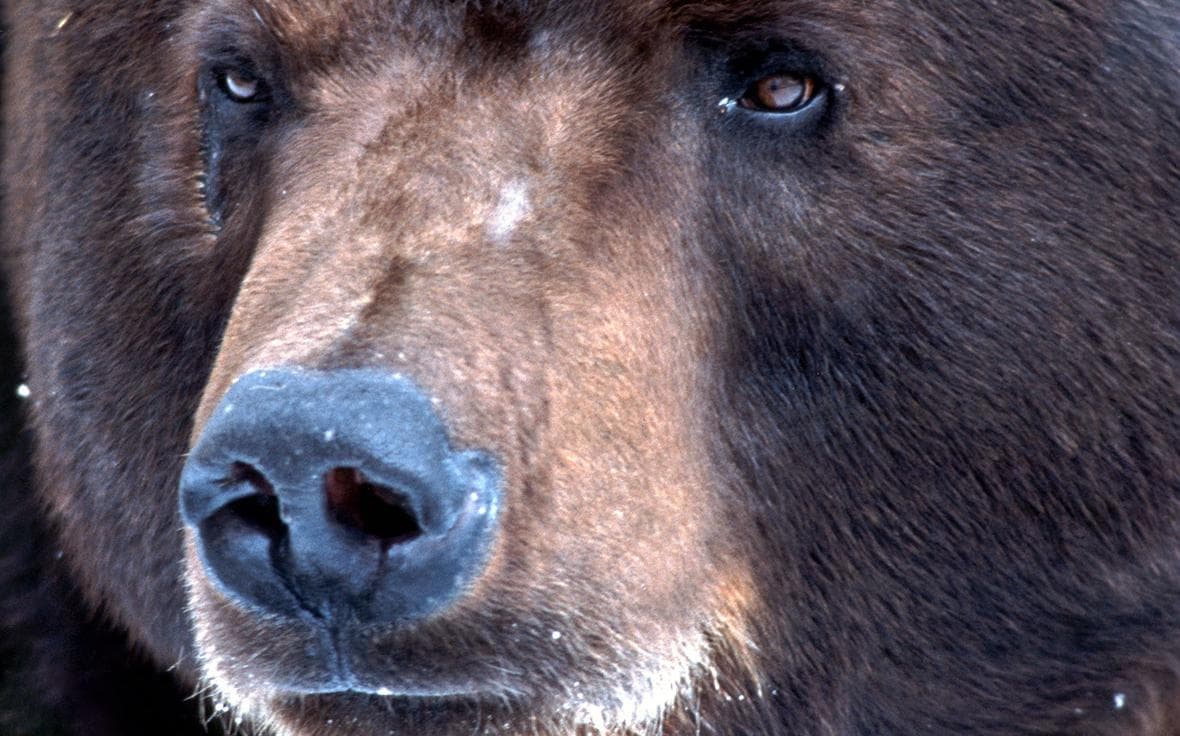
According to official data from August 1 to October 5, 2026, bear attacks on people were recorded in 13 Russian regions. The most resonant case in 2026 was in the Altai Republic, where on August 19, near the village of Artybash, a bear attacked a tent with two tourists, pulled a 29-year-old girl out of it, killed her and buried her in the forest. Other areas where these animals have been attacked:
Altai Republic (19 August); Kemerovo region; Novgorod region; Amur region (August 30); Kamchatka Krai (on the border with Chukotka on August 31, on the night of September 19, September 29); Krasnoyarsk Krai (August 31, September 6, September 16, on the night of September 23, September 25); Buryatia (6 September 7, September 26); Irkutsk region (September 12, September 13, September 16, October 2 and 4); Tomsk region (18 September); Republic of Tyva; Vologda region; Chukotka Autonomous District (25 September, 4 October); Trans-Baikal Territory.
The government is preparing changes to the regulatory framework so that the regions can more quickly regulate the population of brown bears, Deputy Prime Minister Dmitry Patrushev said on September 30.
On September 23, the Investigative Committee opened a criminal case on negligence after people died as a result of bear attacks in the Krasnoyarsk Territory. On the same day, the deputy head of the neighboring republic of Khakassia, Dmitry Buchenyk, said that the city of Abaza was “actually in a bear siege”, and on October 1, the situation, according to the local administration, remained tense. On September 29, a bear was killed in Kemerovo, which wandered the streets of the city for several days, and on October 5, a bear was shot in Kyzyl, which appeared near attractions in the national park of culture and recreation.
In addition, in September, due to the frequent outings of bears to people, a high-alert regime was introduced in 11 districts of Tuva, in Ust-Ilimsk and Bratsk of the Irkutsk region, in several cities of Kuzbass, in Petropavlovsk-Kamchatsky and in the Trans-Baikal Territory. In Zakamensk (Buryatia), two schools and a technical school were transferred to distance learning - the reason was the appearance of a bear in the city. In the Krasnoyarsk Territory, a reward for bear hunting was established in the amount of 36,500 rubles. for one extracted individual, more than 700 bears were shot there, and more than 330 in Buryatia. In Baikalsk (Irkutsk region) because of bears imposed a curfew in the Tomsk region for this reason limited mass events, and on Sakhalin canceled the race scheduled for October 3.
Cases of brown bears reaching people are always recorded - throughout the entire period when people live near the forest, taiga, where there are bears, the Ministry of Natural Resources told RBC. In recent years, about 20-30 cases of bear attacks are recorded annually, an abnormal spike was only in 2014 – 166 cases. Another thing is that now everyone has a smartphone, and information quickly spreads through the Internet, social networks, and there is a feeling of mass.
According to “Medialogy” (calculated for RBC), in the summer of 2026, the number of reports in the media and social networks about the attack of bears on people doubled compared to the summer of 2025. For the period from June 1 to September 9 of this year, there were 23 thousand such reports in the media, in 2025 - 12.7 thousand. In social networks, the number of mentions of a bear attack increased by 2.2 times: in 2026, 151.8 thousand messages were found, last year for the same period - 67.2 thousand.
How many bears in Russia and in what regions they live
The press service of the Ministry of Natural Resources told RBC that in 2026 there are 307.9 thousand brown bears in Russia, while in 1990 there were 130 thousand individuals. During this time, their number increased by more than 2.3 times.
According to the agency, the largest populations of brown bears today are concentrated in the following regions:
Krasnoyarsk Territory - 26.6 thousand; Khabarovsk Territory - 26.2 thousand; Kamchatka Territory - 24.2 thousand; Irkutsk region – 22.4 thousand; Republic of Sakha (Yakutia – 18.8 thousand; Amur region – 13.3 thousand; Tomsk region — 11.2 thousand; Republic of Buryatia — 6.1 thousand; Republic of Altai — 4.7 thousand.
Why bears go out to people and what increases the risk of attack
The main reason for the output of bears to people is affordable food in landfills and in open containers, as well as waste that accumulates near the campgrounds, the Ministry of Natural Resources says. “It is strictly forbidden to feed bears. The predator gets used to light food, he does not have to hunt or collect berries himself. And if at first he can still beg for food, then he will demand it, they warn. This causes bears to stop being afraid of humans, and fear of humans is one of the key factors keeping the brown bear at a safe distance.
The fact of the appearance near the settlement does not mean that the animal should be seized, the Ministry of Natural Resources continues. If the bear does not show aggression, behaves carefully and is not used to “light food” from the landfill, then it can be frightened away. But the decision is made by the region taking into account the specific situation. “In addition to emergency cases where an animal poses a threat to human health or life, production limits are set for each region based on the number of brown bears. It should not exceed 30% of the population, the Ministry of Natural Resources adds.
Head of the Laboratory of Bioresources and Ethnography of the Federal Research Center for Integrated Arctic Studies of the Ural Branch of the Russian Academy of Sciences Vladimir Anufriev told RBC that bears do not go to people more often than usual with plenty of food in the forest. However, this year’s early and dry spring caused the berries to overripe and crumble by August, leaving the bears without berry food in September.
Ecologist and public figure Yaroslava Ditsevich cites several reasons for the frequent exits of bears to people. In addition to the availability of natural feed, according to her, this is influenced by human activities - the creation of food sources for predators (open garbage containers and landfills, food waste, pet food, fish and carcasses, apiaries) and the growth of economic and recreational activity, including in areas that are the natural habitat of bears.
The bear has a very good sense of smell and quickly remembers places where it is relatively easy to get high-calorie food. If an animal once successfully fed near a person and did not face repellence, the likelihood of re-exit increases, said Ditsevich.
According to the expert, bears can not be fed, approach them for the sake of photography and leave food and food waste in the access zone. “The fed bear gradually loses its natural caution, and it is these animals that can subsequently create the most dangerous situations,” she said.
Meanwhile, zoologist, Candidate of Biological Sciences, hunting expert Mikhail Krechmar believes that the main reason for the frequent encounters of bears with people is that the number of predators “has greatly exceeded the maximum permissible in the land”, which is additionally superimposed by the poor harvest of the main feed of the brown bear this year. A similar situation with poor feed harvest in the South Siberian regions occurs every eight to ten years. This is a natural cycle, he said.
“Settlements are replete with dumps and landfills where food waste is discarded. Bears feed on them and inevitably come into conflict with people. Bears are territorial animals. If they occupy some highly productive territory, then they protect it, Krechmar explained in an interview with RBC.
What to do when meeting a bear and how to avoid it
According to the GU EMERCOM of Russia in the Kamchatka Territory, in order to avoid a meeting with a bear in the forest, it is recommended:
move in large groups; make noise and talk loudly; cook and store food away from tents; burn food waste in a camp immediately after eating; do not fish in bearish places; do not go off popular hiking trails and do not walk animal trails.
Do not provoke the bear to attack at a meeting will help several rules:
do not approach the bear; do not run away; do not look the bear in the eyes; do not wave your hands, do not shout or throw objects at the bear; when the bear approaches, you should slowly and calmly retreat without sudden movements.
You can understand that the bear wants to attack by the fur raised on end, standing ears and the direct look of the predator.