
How to start preparing for the exam in 2027. Instructions
You need not leave training until the last moment, make a plan for yourself in advance, and also decide who is better to work with before the exam - with a school teacher or a separate tutor
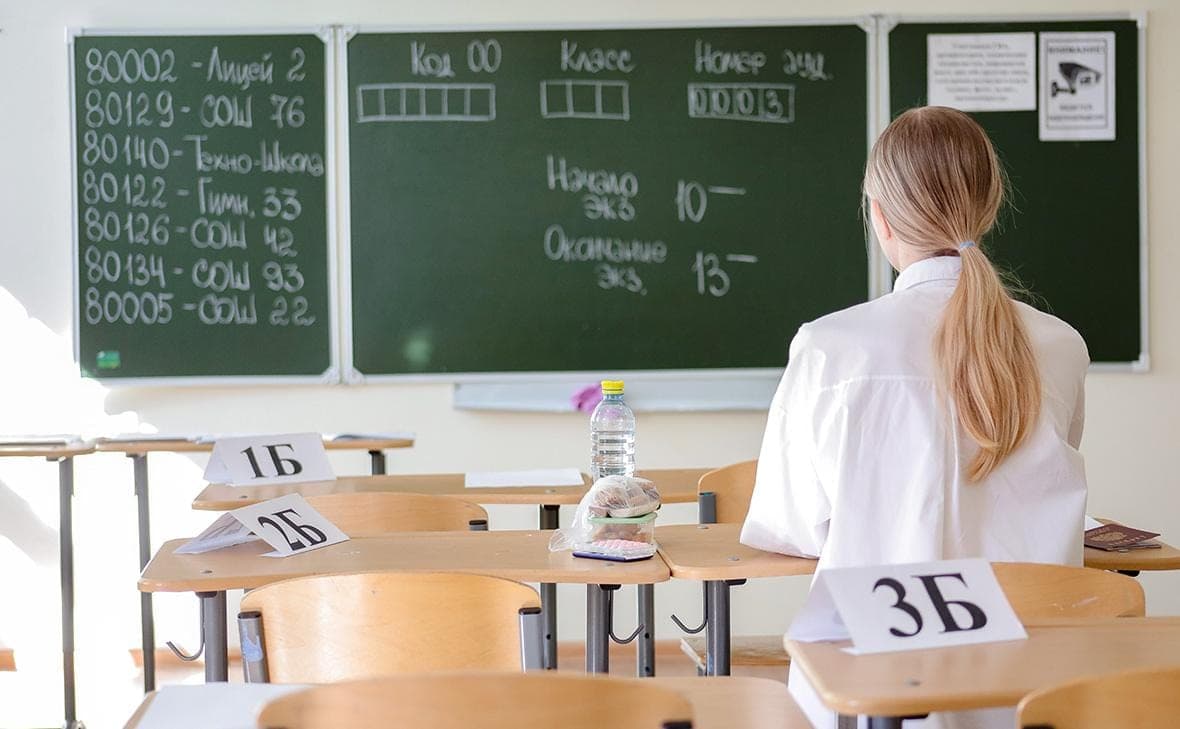
To pass the exam in 2027, a detailed preparation plan for the exam is necessary, but the need to remain involved in schooling should also be taken into account. The teachers interviewed by RBC described how to choose the right strategy for preparing for the unified state exam next year.
How to make a plan for the preparation of the EGE-2027
According to the teacher of the Russian language at the Letovo school, the teacher of the highest category Tatiana Mezhina, first you need to study the current demo versions, specifications and evaluation criteria published on the website of the Federal Institute of Pedagogical Measurements (FIPI), and mark what changes have occurred compared to the previous year: this will be useful when searching for various materials for subsequent preparation for the exam.
“If we talk about the Russian language, there were no changes in the demo version this year, which means that the materials of the last year will be relevant in this,” she said.
Next, the expert continued, you need to perform the tasks of the demo version and determine your starting level. Proceeding from this, you need to set a specific goal, then make a preparation plan for the academic year, think about how to build preparation for the exam into your training schedule. “And it is important to immediately accept the fact that it is almost impossible to prepare only in lessons on the subject, without independent work, and this must be taken into account when planning,” Mezhina stressed.
Mathematics teacher Konstantin Markov, in turn, recommended to determine the topics needed for preparation and study the structure of the exam.
How to go basic preparation for the exam
Tutor in Russian language and literature Igor Shalimov stated that the preparation for the exam is a stable regular study of all topics included in the exam, and their development. He also gave the following advice.
You should not sit for hours at a time at work. It is better to study regularly, allocating less time. It is worth going back to what was studied a few months ago, constantly updating the information passed. Do not rush through new topics until you are sure that the current one is 100% worked out. Allocate at least one free day of study for active rest. Observe the regimen: healthy sleep is very important for the brain.
Mezhina added that it is not necessary to simply mechanically perform tasks one after another - you need to analyze every mistake made, fill gaps in knowledge, repeating topics on which tasks cause difficulties. Tasks with a detailed answer are better to give for verification to a specialist - usually a teacher - to get high-quality feedback.
“In addition, it is necessary to perform the whole work regularly, preferably at least once a month, with a fixation of the time allotted for the examination option. This helps to assess not only your progress relative to the starting level, but also your ability to allocate time, stay focused.
Markov noted that the training strategies for each graduate are individual, and advised to divide the preparatory stage into two mandatory parts: the solution of exam options - to repeat and consolidate the studied - and in parallel the development of new material.
He also said one should devote at least two to three hours a week to each subject, calling it the minimum for productive preparation.
“Many children start school in 10th grade and some start in a couple of months. If you are worried about mastering the current program, it is worth leaving the preparation for the exam after doing homework from school, although this is not always the best plan.
Is it worth memorizing the material by heart and repeating what was passed
It is not necessary to repeat the entire school curriculum in order - it is better to move from the structure and content of the exam and sequentially analyze the topics associated with each type of task, says Mezhina.
“Special exceptions—complex words, formulas, definitions—will, of course, have to be memorized. But in general, mechanical memorization of the material without understanding it is ineffective, she added.
Shalimov, in turn, stressed that this is the most individual moment and the need depends on the current level of the student, his performance and learning preferences.
Each of the teachers interviewed by RBC called three “harmful tips” that should not be followed when preparing for the exam. They concern not only the preparation itself, but also the attitude towards it and the exam itself.
Tatiana Mezhina:
It is presumptuous to start training two weeks before the exam; mechanically perform many tasks without disassembling the mistakes made; train only in comfortable home conditions without taking into account the time spent.
Igor Shalimov:
Think that there is still a lot of time and you will have time; fear large and complex material and do not approach it; treat the exam as the main goal in your life.
Konstantin Markov:
To be lazy and non-systematic to prepare; to analyze only examination tasks (solve) without studying the topic itself; not to draw up a preparation plan.
Schoolteacher or tutor
As Mezhina noted, the choice between a teacher and a tutor in the matter of assistance with preparation for the exam depends on the individual situation. An experienced teacher knows the format and intricacies of the exam, regularly checks the work and helps track progress - its support with the appropriate motivation of the student is usually enough. A tutor may be needed if the student for various reasons is difficult to organize independent work or engage in class conditions, she said.
How to use FIPS Bank and other materials
According to Markov, FIPI Bank is one of the sources of materials, but it is better to take tasks from there in the middle and at the final stages of preparation. Shalimov also indicated the materials of the FIIPI as a help in the trial of the exam, but advised to visit one of the special centers that conducts such trial exams.
“This is primarily for psychological training. At home, in front of a computer, it is much easier to solve tasks than in an unfamiliar audience with an inspector, the tutor explained.
Mezhina also drew attention to the open bank of FIPS assignments as one of the sources of training. She advised to use the materials of the “Navigator of independent preparation for the exam” on the FIIPI website, noting that there is a lot of useful information for the graduate. In addition, you can and should use various collections with standard versions of the exam and online resources.
“Any unofficial material, however, should still be critically evaluated: sometimes there are errors, controversial assignments. Orient in the huge amount of information available in free access, and its quality will also help an experienced teacher, – said the teacher.
Will there be innovations in the EGE-2027
“There are innovations, as well as many rumors about them, but so far I would not say anything before the official decrees,” said Markov. According to Shalimov, there will be no changes in the Russian language exam.
Is it possible not to take the exam
The exam for compulsory subjects and a set of the minimum threshold "3" are a mandatory point for obtaining a certificate of secondary education, so if a graduate needs this document, it is impossible not to pass the exam. Otherwise, only a certificate of training will be issued, with which it is impossible to enter state higher educational institutions.
“You can not take additional exams, but you should think about where you are going to go,” said Markov.


