
The driest desert in the world was covered with flowers after the rains. Photo Photo
With the arrival of spring in the Southern Hemisphere bloomed the most arid desert in the world - Atacama (Chile). The cause of a rare natural phenomenon was anomalous precipitation at the beginning of the year. What a "blooming desert" looks like - in the photo
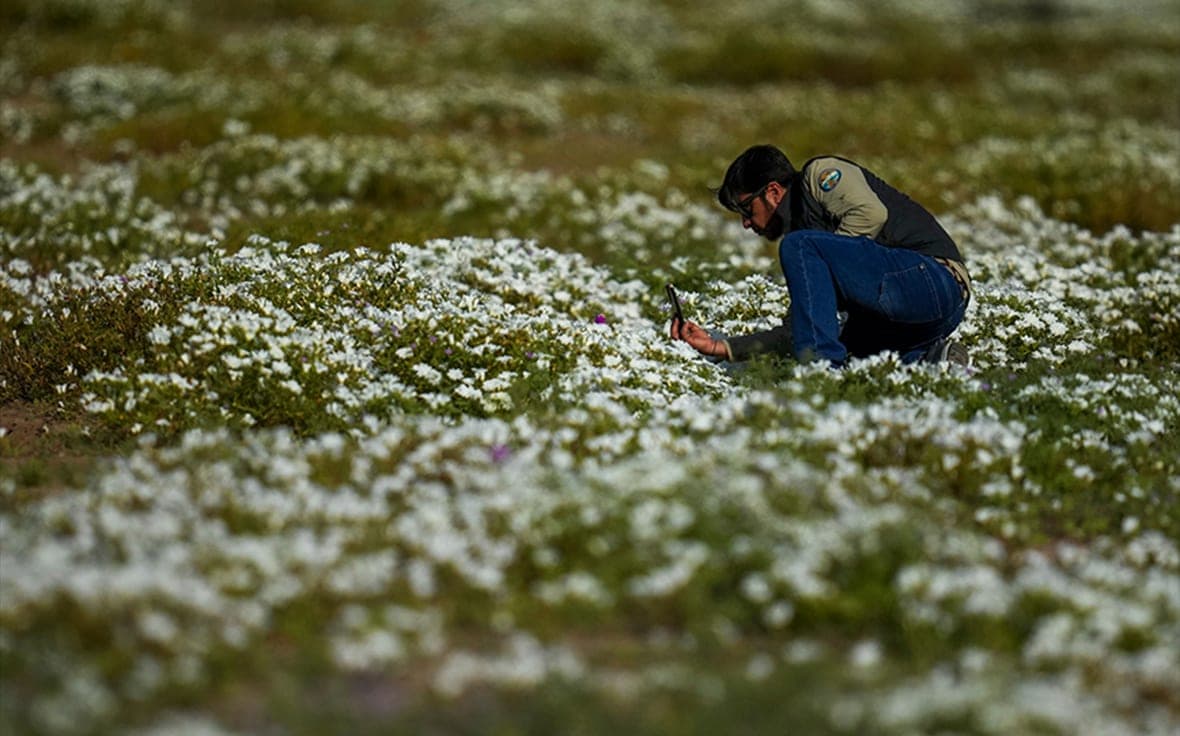
The Atacama Desert in Chile, considered the driest desert outside the polar regions, blossomed after heavy rains earlier in the year, writes the Associated Press (AP). A rare natural phenomenon has already attracted tourists from Chile and abroad to the desert.
The abnormally high amount of moisture led to the fact that in the Atacama began to grow more than 200 species of plants, said the Agency representative of the National Forest Corporation of Chile Jorge Carabantes. "Certainly this is an unusual and exceptional phenomenon, very different from other blooms that occur in other parts of the world," he said.
From July to August, several regions of Chile experienced record rainfall, with in some cases the highest since the start of weather observations in the 1950s. The reason for such rains is called a super-El Niño - a recent increasing climatic phenomenon that causes a sharp increase in temperature in the world.
El Niño is a climatic phenomenon in which the water in the equatorial part of the Pacific Ocean becomes warmer than usual by no more than 3 ° C. Its consequence is droughts, downpours, floods and other extreme weather events that affect crops and food prices.
Earlier, Bloomberg reported with reference to the forecast of the consulting company Verisk Maplecroft that the Philippines, India, Indonesia, Pakistan and a number of Asian countries are at risk of civil unrest due to the consequences of natural disasters associated with El Niño. They can have an impact on food security.


