
The Sun recorded the largest flare in a month
The Sun recorded an outbreak of M1.0 level, which occurred around 22:00 Moscow time and became the largest since September 5, according to the telegram channel of the Solar Astronomy Laboratory of the Institute of Space Research of the Russian Academy of Sciences (IKI Ras).
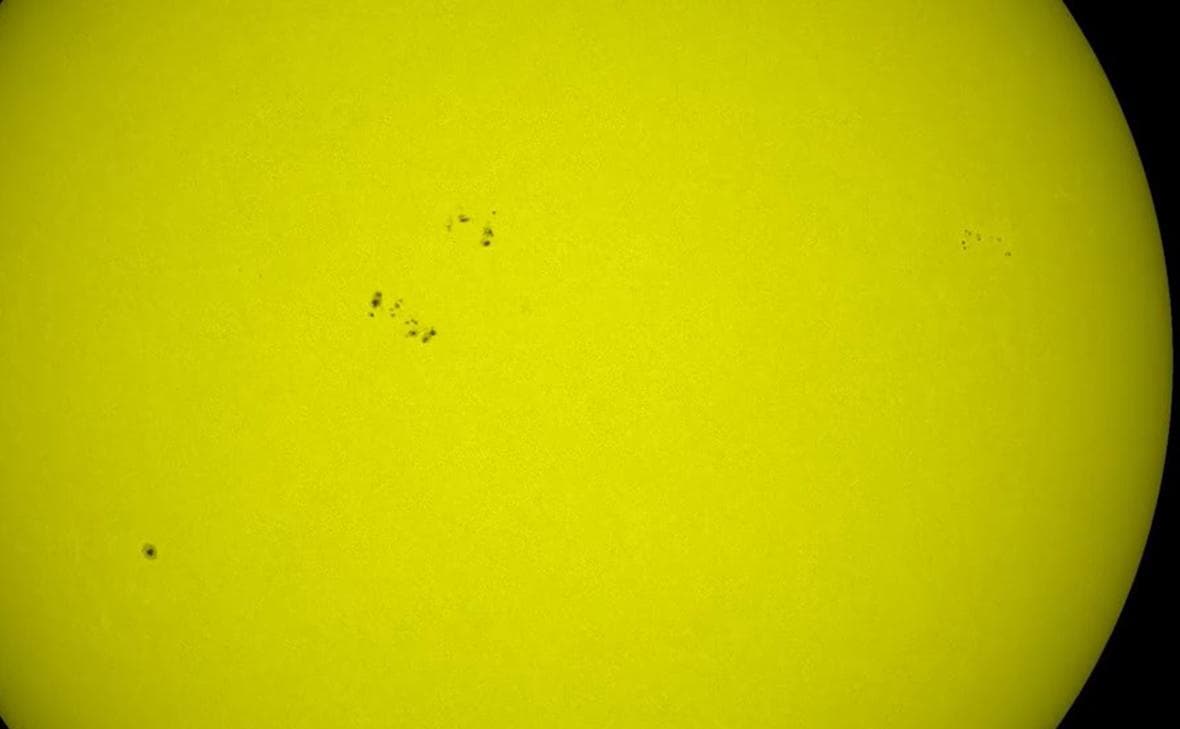
The Sun recorded an outbreak of M1.0 level, which occurred around 22:00 Moscow time and became the largest since September 5, according to the telegram channel of the Solar Astronomy Laboratory of the Institute of Space Research of the Russian Academy of Sciences (IKI Ras).
For almost a month, the star's activity remained suppressed, but in October a series of flares began on the Sun. At the same time, scientists have recorded two large groups of spots that form in the area of the appearance of solar radiation. The IKI Ras associates the current increase in activity with the energy accumulated in these areas.
"The current level of the outbreak is not yet a threat, but may be a sign of a long-awaited change in solar activity," the report said.
If the growth of a new group of spots continues, flash activity may approach the level of X in the coming days, the institute admitted. It is still difficult to assess the likelihood of such a scenario.
Solar flares are divided into classes A, B, C, M and X — from the weakest to the strongest. Each next class is about ten times more powerful than the previous one, according to NASA. Classes A—M are additionally indicated by numbers from 1 to 9, X has no upper limit. Strong flares can disrupt radio communications and affect satellites and spacecraft, but their radiation does not pose a direct threat to people on the Earth's surface due to the planet's atmosphere and magnetic field.
In August, there was an M7.0 class flare on the Sun, after which scientists allowed a strong magnetic storm. In September, the first magnetic storm of autumn covered the Earth.