
Winner of the 2026 Nobel Prize for Literature announced
The 2026 Nobel Prize for Literature was awarded to Canadian author Anne Carson.
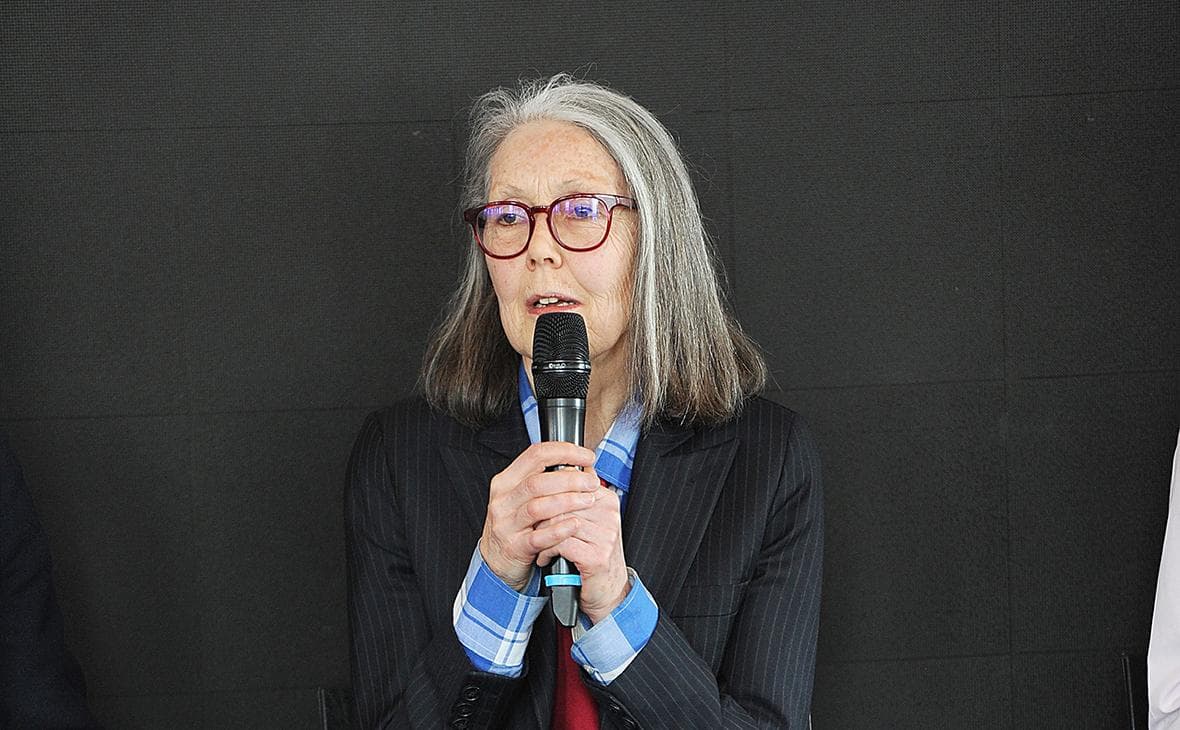
The 2026 Nobel Prize for Literature was awarded to Canadian author Anne Carson.
“For his bold and innovative work, which in playful dialogue with classical tradition has created new forms for contemporary literature,” the Nobel Committee said in a statement.
In her work, the writer uses images and motifs of classical mythology and ancient literature, linking with their help ancient and modern authors and thus destroying temporal boundaries.
Carson is not only a writer, but also a poet, teacher of classical languages and literature, translator of Simonides, Sappho, Aeschylus, Sophocles, Euripides, Catulla. He is the author of more than 18 books, two of which were published in Russian: a novel in verse “Autobiography of Red” and an essay on the nature of love “Bittersweet Eros”.
Carson was born on June 21, 1950 in Toronto, but spent her childhood in several small Canadian cities. Interest in antiquity, the future writer showed in high school. After attending St. Michael’s College at the University of Toronto, Carson dropped out twice at the end of her first and second year due to dissatisfaction with the academic framework. She switched to graphic arts for a while, but later returned to the University of Toronto, where she received successive Bachelor of Arts (1974), Master of Arts (1975) and Ph.D. (1981). She also spent a year at the University of St Andrews studying Greek metrics and textual criticism.
In August 2024, Carson reported in an article for the London Review of Books that she had been diagnosed with Parkinson’s disease.
The Nobel Prize is an international award for achievements in physics, chemistry, physiology or medicine, literature, as well as for contributions to the consolidation of peace. It was founded by the Swedish chemist, inventor and entrepreneur Alfred Nobel (1833-1896).
According to Nobel's will, the prizes are awarded annually from the proceeds of his fortune. The award in literature has been awarded since 1901, and the winner is determined by the Swedish Academy.
In 2025, the Nobel Prize for Literature was awarded to the Hungarian writer László Krasnahorkai. The award is given "for his fascinating and visionary writings, which in the midst of apocalyptic horror attest to the power of art.".
A year earlier, the prize for literature was awarded to South Korean writer Han Gang for “saturated poetic prose that confronts historical trauma and exposes the fragility of human life.”.
Among the Russian writers awarded the Nobel Prize in Literature in different years were Ivan Bunin (“for the strict skill with which he develops the traditions of Russian classical prose”), Boris Pasternak (“for significant achievements in modern lyrical poetry, as well as for the continuation of the traditions of the great Russian epic novel”), Mikhail Sholokhov (“for the artistic power and integrity of the epic about the Don Cossacks in a critical time for Russia”), Alexander Solzhenitsyn (“for the moral strength drawn from the tradition of great Russian literature”) and Joseph Brodsky (“for comprehensive creativity, imbued with clarity of thought and passion”).
The announcement of the Nobel Prize laureates in 2026 takes place from 5 to 12 October. The prize in physiology or medicine was awarded to American neuroscientist and psychiatrist Karl Deisserot and German biophysicists Peter Hegemann and Georg Nagel.
The Nobel Prize in Chemistry was awarded to Frenchman Henri B. Kagan and Japanese Kenso Soai. The winner in physics was the Belgian Francis Halzen. The award was awarded for his decisive contribution to the creation of the IceCube neutrino observatory and the discovery of high-energy neutrinos of astrophysical origin.
In 2026, the Nobel Prize celebrates its 125th anniversary. In honor of the anniversary, the Nobel Foundation increased the size of the monetary part of the award by 1 million Swedish crowns (about $ 101,000), to 12 million crowns (about $ 1.2 million). If the prize is awarded to several scientists, the amount is divided between them. No more than three winners can receive one award.


